Liza Soberano Carries the Beauty of Filipino Culture and Its Stories Worth Telling to the World
For the Filipina actress who voices Raissa in DreamWorks’ animated film Forgotten Island, leaving home can make you understand its beauty more deeply—and sharing those stories to the world can become a way of remembering.



When Liza Soberano moved to the United States to further her acting career, her nine-year-old sister worried that distance would mean forgetting her. “She was so scared that I would never visit her, that she’ll never see me again,” she recalls, her eyes turning glassy.
Soberano turns back to that memory as she recounts auditioning for her role as Raissa in DreamWorks’ new animated film, Forgotten Island, a story rooted in Filipino mythology and the enduring value of friendship, one that, ultimately, transcends cultures.
“After being separated on the island, Raissa comes to this realization of just why Jo is so important to her. And it’s not that she didn’t know this beforehand but sometimes it takes a little reminding,” explains Soberano on the specific scene that immediately reminded her of family.
“When I was doing this movie, it was, in my own little way, a love letter to her,” Soberano says of her sister, tears welling in her eyes. “Because even if I’m away, I want her to know that everything I do is for her.”
Voicing Raissa a Filipina teenager preparing to leave the Philippines to pursue her college degree in the United States, made Soberano see herself in the role, because she too knows what it means to leave home. “I really resonated with her immediately after reading the script because I feel like the journeys we were both going through were parallel at the time that I got the audition,” she shares.
That connection feels even more personal as Soberano voices a Filipino character. “I definitely resonated with that struggle of wanting more for yourself but scared of leaving the people that you love most behind and them feeling like you left them behind,” she continues. “So, when I got to read the script and I really put myself in Raissa’s shoes I was crying immediately because it was exactly what I was going through.”
Leaving home does not mean forgetting

Sharif Hamza
For Soberano, building a life in Los Angeles does not mean forgetting her roots. If anything, the distance has made her more aware of what she carries with her: the parts of herself that make up who she is and the Filipino values that continue to ground her.
“I would never want to forget just how brave and courageous of a person I am. In moments when I’m going through a hard time, I tend to forget how strong I actually am,” she says. “But then I’m always surrounded by people that really know me and really care for me. And they remind me of how much of a strong woman I am.”
Being abroad allows Soberano to connect with fellow Filipinos in the diaspora. “We’re just so nurturing as people and as a culture that naturally we attract people that are looking for a safe place and nurturing energy,” she says. “Now that I live in L.A, I feel like people kind of are naturally drawn to me because I make a house feel like a home, honey!” she jests. Despite quipping it as a joke, the sentiment reflects the gravity of how home, for Soberano, is becoming more than a place. It is now a community, a sense of belonging wherever you are.
Moving away from outdated beauty standards
But there are also parts of Filipino culture, especially when it comes to beauty, that she hopes the culture itself can learn to move beyond, one of them being colorism. “I feel like growing up, I would hear that a lot, even for someone who is on the fairer side,” she says. “I would often get comments that I needed to get whiter.”
What she also hopes for is a deeper understanding, so Filipinos no longer feel the need to alter the skin they were born with. “I wish that a lot of people could just learn to appreciate their natural skin tone and not feel insecure about it and find the beauty in all the different colors, all the different shades,” she emphasizes.
“I wish that a lot of people could just learn to appreciate their natural skin tone and not feel insecure about it.”
Soberano believes there is still work to be done in making diversity a shared language on the global stage. “What the world still misunderstands about Filipino beauty is that we all look so different,” she says. She acknowledges that even she does not necessarily get noticed as Filipino, and that people should understand that “there are Filipinos that look more chinito, there are morena Filipinos, [and] there are mestizos.”
With Forgotten Island marking a significant step as a Hollywood animated feature centered on Filipino mythology, having Filipino characters voiced by Filipinos—including Soberano, Gabriella Wilson (H.E.R.), Lea Salonga, and Dolly de Leon—gives Filipinos agency to tell their own story.
This is especially important because, as Soberano admits, “There’s a bit of a disconnect with what the world perceives the Philippines to be and what we perceive ourselves to be.”
Perhaps that is because, for a long time, Filipinos have existed at the fringes of the global cinematic picture: visible and familiar, breathing life into characters of other Asian descent, or playing supporting roles in Hollywood films that nonetheless make everyone back home swell with immense pride. But too often, our stories have been told through the voices of others. And when that happens, they can sometimes feel far removed from the people and culture they claim to represent, reduced to punchlines about our accents and flattened into familiar stereotypes.
More Filipino stories to be spotlighted
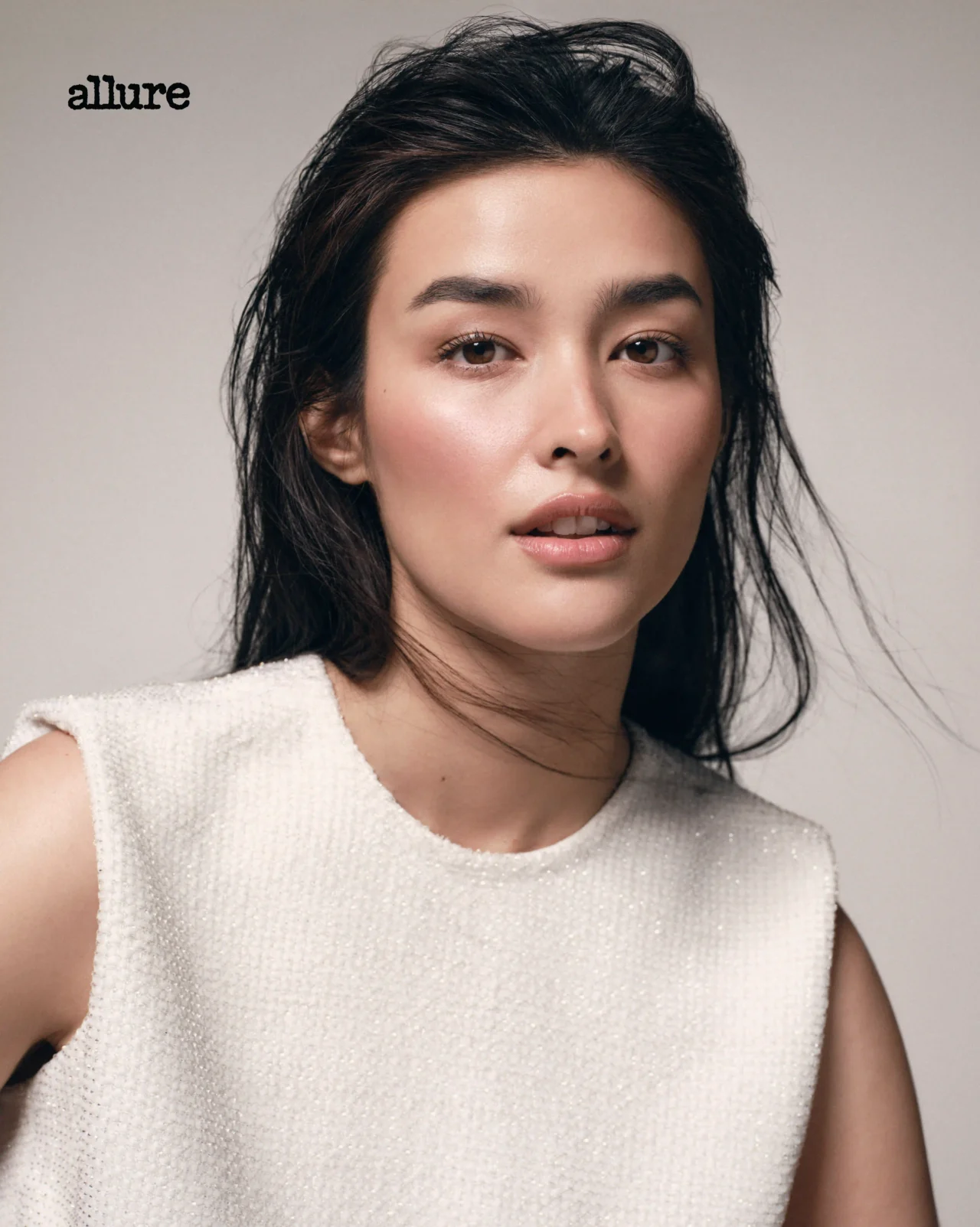
Sharif Hamza
So when asked what she wants more of in Filipino stories on the global stage, Soberano candidly shares the aspects of Filipino culture she hopes to see represented more often.
“Whenever people are asking about the Philippines and where they should go to in the Philippines everybody always thinks of Manila because it’s the capital,” she muses. “I love Manila, I grew up there, but there’s so much more to explore in the Philippines.” She wants audiences to see more of the country’s natural resources that are one of a kind. “I wish we could showcase more of our beautiful beaches because we have such a healthy aquatic life here in the Philippines,” she adds.
“I love Manila, I grew up there,
but there’s so much more to
explore in the Philippines.”
The same goes for Filipino food. She believes that the version of Filipino food presented abroad leaves out much of what Filipinos actually eat and know. “There’s so many other dishes that we actually eat on a day-to-day [basis] here in the Philippines that people aren’t familiar with,” she says.
Her choice for a Filipino dish the world should know better? Sinigang, her personal favorite. “It’s popular here in the Philippines, but other people don’t know it, and they’re kind of scared whenever I bring it up,” she says. “‘It’s sour pork soup,'” she adds, laughing at the reaction it sometimes gets. “‘Oh my gosh, that sounds crazy.’ But I’m like, no, it’s actually great. It’s delicious!”
Storytelling can help close that gap, and that is where representation becomes important.
She describes representation as a “double-edged sword”—empowering when it allows someone to inspire others to embrace their identity, but also accompanied by the pressure to represent an entire community accurately and positively. “I always like to be acknowledged for being a Filipino, [a] representation of Filipino excellence,” she says. “But what I always say at the same time is I’m not the first. There have been so many Filipinos who came before me that have tried to do what I did.” She continues, “And if they didn’t do that first, then I wouldn’t even have the courage to do that.”
Easter eggs hidden in Forgotten Island
The directors, Januel Mercado and Joel Crawford, she reveals, planted Easter eggs for her and fellow Filipino lead voice actor Gabriella Wilson, who voices Jo, to discover—details meant specifically for them rather than the audience.
“They did include my real name, which is Hope, in the movie,” she says with a smile. “You just have to find it. It’s somewhere there.” She has already watched the film two to three times, and every time, she discovers something new.
There is something fitting about “Hope” appearing quietly inside a film about identity and finding your way. Not simply because it holds the promise of Filipino stories being celebrated, but because those stories, however personal, can travel without losing the people, places, values, and memories that made them worth telling in the first place.
For Soberano, leaving home has only made those things clearer. And now, through Raissa, she gets to carry not only her experience, but the beauty of Filipino identity with her, giving it a place in a story that can finally be seen and remembered by the entire world.
Photography: Sharif Hamza. Styling: Katie Qian. Deputy Editor: Pam Quiñones. Art Director: Jann Pascua. Beauty Editor: Joyce Oreña. Fashion Editor: David Milan. Vogue Philippines Producer: Bianca Zaragoza. Executive Producer: Alexey Galetskiy. Producer: Ivan Shentalinskiy. Production Coordinator: Ashton Wilson. PA/ Studio Manager: Justin Barahona. Photo Team: Colin Jacob, Zack Hughes, Erick Mendoza-Ojeda. DP: Lukas Chmiel. Makeup: Leah Darcy. Hair: Rena Calhoun. Shot on location at AGPWEST. Special thanks to Vogue Philippines.
Liza Soberano wears Naeem Khan, Ralph Lauren, and Calvin Klein.
Frequently Asked Questions
Soberano recalls being told to “get whiter” despite already being fair-skinned. She hopes Filipinos learn to appreciate their natural skin tone, embracing every shade—from morena to mestiza—as equally valid Filipino beauty.
Liza Soberano voices Raissa, a Filipina teenager preparing to study in the United States, in DreamWorks’ Forgotten Island. The role resonated with her, as she was navigating a similar move when relocating to Los Angeles.
Forgotten Island features Filipino leads—including Liza Soberano, Gabriella Wilson (H.E.R.), Lea Salonga, and Dolly de Leon—voicing characters rooted in Filipino mythology, giving Filipinos direct agency over their own on-screen representation.
Soberano wants colorism to disappear, specifically the expectation that Filipinas should lighten their skin. She emphasizes Filipino beauty is inherently diverse, spanning fair, morena, chinito, and mestizo features, none more “correct” than another.
Directors Januel Mercado and Joel Crawford wrote Soberano’s real name, Hope, into Forgotten Island as a personal Easter egg. She’s rewatched the film several times and still notices new details each viewing.