
What Is Body Recomposition? Why Eating More Protein Isn’t Enough to Lose Fat and Build Muscle
Can you lose fat and gain muscle without losing weight? Two nutrition experts explain how body recomposition works, why protein is only part of the equation, and what progress looks like beyond the scale.



Many fitness beginners go through the same phase: jeans start to fit better than usual, arms look incredibly firm in photos, and the weights you used to dread lifting suddenly feel suspiciously lighter than before—yet the number on the scale remains the same.
This phase is called body recomposition, or body recomp for short, where you’re losing fat and building muscle at the same time. There’s little movement on the scale, but that doesn’t mean nothing’s happening.
The term has become a recent online buzzword, usually tied to one specific instruction: hit your protein goals. This oversimplification rarely explains what’s actually changing in your body, who it works best for, or how to tell it’s working.
To understand what’s happening, Allure Philippines spoke with Jo Sebastian, a registered nutritionist and dietitian in the Philippines, and Nicolette Bell, a Filipina dietitian certified by the Institute of Health Sciences (IHS) who practices in the United Kingdom. Below, they explain the basics for anyone just starting out.
What is body recomposition, exactly?
To understand what recomposition is, it’s best to start with what the scale actually measures. Sebastian explains that your weight is the sum of everything your body is made of: fat, muscle, bone, water, and organs. So recomposition, in this sense, means changing your body’s proportions—less fat and more muscle.
Bell describes how this plays out day by day: you stay at the same weight, but your clothes fit better, your waistline shrinks, and you feel stronger. That’s all because your body is losing body fat while gaining muscle at the same time.
Sebastian notes that people can’t just spot this by eye. “Usually, body composition will be measured via something like the Bioelectrical Impedance Analysis (BIA) or even a DEXA (bone density) scan. That’s not necessarily something you can just look at somebody and be able to tell,” she explains.
Who can do body recomposition?

Envato Images
The experience can be different for everyone. Sebastian says that recomposition tends to be easier for three groups: people with a higher body fat percentage because “there would be more body fat to lose and more muscle to gain,” athletes returning after a break, and beginners.
It’s also different for those at the intermediate level. “So if you’re more on the intermediate side, that might be the time when you would want to focus on either mainly losing fat or gaining muscle, rather than body recomposition,” says Sebastian.
She also points out that building muscle on its own is already a worthy goal, so is losing fat—they don’t always have to happen at the same time.
Bell agrees with this. “Someone who is completely new to strength training may notice changes in their body composition relatively quickly,” she says, but also notes that this can be different for someone who’s been training for years. “Gaining muscle while losing body fat can be more challenging and may take longer.”
How can you tell if it’s working?
The numbers on the scale aren’t always the answer, says both experts.
“Your weight is just one number, and it doesn’t tell the whole story about your health,” Bell says. “Body recomposition is not about looking different. It’s also about becoming stronger, maintaining muscle as we age, improving our health, and feeling better in our bodies.”
Sebastian lists a checklist to follow to see if it’s working: more muscle definition when you flex, clothes that fit better, feeling stronger, sleeping better, and having more stamina. For Bell, it’s also waist measurements and energy levels.
But Sebastian adds a caveat: “In some cases, clothes might fit tighter. If you’re seeing that, it’s because your muscles are growing rather than gaining fat. Then that would be one sign of the body composition or body recomposition going well.”
Bell encourages her clients to celebrate victories without the scale. Plus, she encourages answering this weekly check-in question for some motivation: “What are you most proud of this week?”
The answer, she says, often has nothing to do with weight. “It might be preparing healthier meals, completing their workouts, or finally getting enough sleep. These small wins build confidence and help people stay motivated.”
Why protein is on everyone’s radar
We’ve all heard the TikTok videos where gym bros say, “I can’t hit my protein!” Well, here’s why this macronutrient gets all the attention.
Protein is an important macronutrient that the body uses to build and repair muscle, tissue, and even hormones. “So when you’re trying to gain muscle, you usually have to do resistance training,” explains Sebastian. “And when you do resistance training, you’re breaking those muscles, or you’re tearing those muscles. And when those muscles tear, they have to rebuild.”
She also says that protein plays a bigger role in one’s overall nutrition. “Protein is also very helpful because it helps us stay more satiated, keeping us on track with our nutrition goals, and also very important for us to note that protein plays a role in other parts of our nutrition, not just in building muscle.”
But protein alone can’t solve everything. “You cannot just eat a lot of protein, and then all of a sudden you have more muscles,” Sebastian says. Bell agrees with this, saying, “Eating more protein doesn’t automatically mean you’ll build more muscle.”
You’ll still need to do resistance training, get enough food, adequate sleep, and time to recover to help your body recomposition journey.
Protein for the Filipino plate
Envato Images
Rice is an integral part of a Filipino’s diet. This carbohydrate source has always been thought of as something that can make someone gain weight, but both Sebastian and Bell say otherwise.
Bell calls this belief a big myth. “First of all, we don’t need to give up rice,” says Bell. “Instead, I encourage people to look at the balance of their meals.”
Sebastian points to the Pinggang Pinoy as a guide. “One fourth is protein, one fourth is carbohydrates, and one half is fruits and vegetables,” she explains, adding that this can change depending on a person’s lifestyle. “I would say first target one fourth of your plate with protein as a starting goal just to get you to those goals or to get you to eat more protein.”
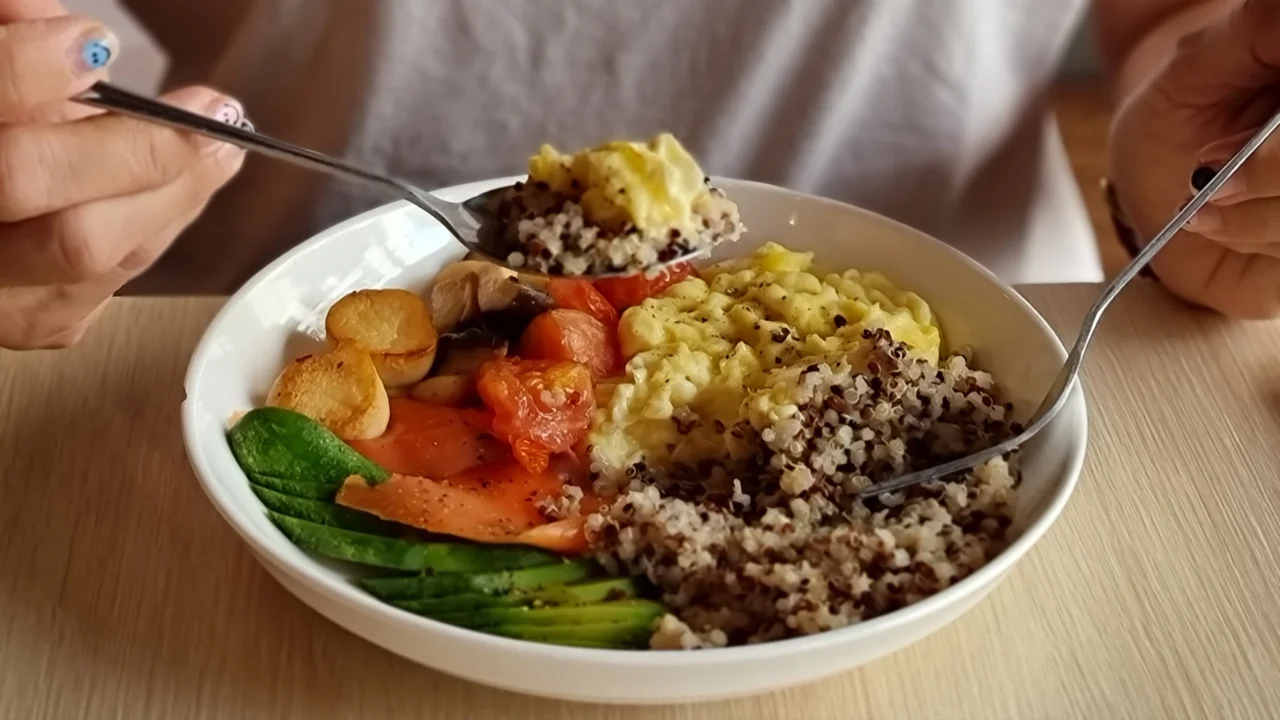
To get things started, Sebastian says there are many affordable options available on the market. She names eggs, chicken (depending on the season), fish, tofu, beans, and legumes, and stresses that everyone should buy what’s locally available and within their budget.
Bell adds taho, sardines, galunggong, monggo, and canned tuna as examples. She also suggests easy, healthier swaps: “A very simple change could be adding an egg to breakfast, increasing the amount of fish or chicken at lunch, or combining monggo with fish for dinner.”
You don’t need a separate menu to hit your macro goals. “If you’re having rice with adobo, you can keep the rice, but make sure you have a good portion of chicken, together with some vegetables,” Bell says.
Sebastian also doesn’t see fast food as inherently bad but adds different food groups to make it healthier. One example is a video where she shows how she eats Jollibee: chicken as the protein source, red rice with lentils and beans for fiber, and vegetables.
Sebastian shared her own realization: “I became so much happier when I realized that life isn’t about restriction but the addition of nutrients.”
To keep it sustainable, Bell shares one piece of advice: “The best nutrition plan is the one you can actually maintain.”
When can tracking become too much?
Body recomposition can easily slip into restrictive dieting, especially when you’re tracking your calorie intake, body fat, and protein at the same time.
Bell thinks this topic deserves more attention. “Tracking calories and macronutrients can be helpful for some people, but it can also become overwhelming, especially when someone starts feeling guilty about eating certain foods or missing their protein target,” she says.
Sebastian notes that body recomposition shouldn’t mean under-eating. “Anything that is related to you having a specific dietary requirement and having to track can always lean towards the side of obsessiveness,” she says. “So not necessarily restrictive in terms of you’re under-fueling and all of those things, but more of just becoming an obsessive restrictive behavior that you feel like you have to follow strictly, and you can’t go outside of those lines, or you cannot break the rules in that sense.”
Both Sebastian and Bell name similar warning signs: constantly thinking about food, feeling guilty when you eat something off-plan or miss a protein target, feeling anxious about eating out or avoiding social occasions, and exercising excessively.
“When food starts controlling your life instead of supporting it, that’s a sign that something needs to change,” Bell says. “If tracking becomes distressing or restrictive behaviors develop, professional support from a qualified dietitian or mental health professional may be needed.”
While body recomposition is a goal worth working for, Sebastian says, “life is the bigger goal.”
So if the scale hasn’t moved, but your clothes fit differently, your lifts feel lighter, and you’re sleeping better—that’s worth celebrating. These are signs your fitness is improving, and you’re gaining muscle, but only a body composition scan, like the BIA or DEXA scan Sebastian mentioned, can confirm it.
Body recomposition is a slow, steady process, and it doesn’t always show up through numbers. Whether you go after it or not, both Sebastian and Bell say this: your body is more than just a number on the scale. Start small, stay consistent, and let the scale be just one point of reference out of many.
Frequently Asked Questions
Body recomposition is losing fat and gaining muscle at the same time, so your body’s proportions change while your weight stays roughly the same. Weight loss only tracks the number on the scale. Dietitian Jo Sebastian notes it can only be confirmed by a BIA or DEXA body composition scan.
Yes, especially if you are new to strength training, returning after a break, or have a higher body fat percentage. Both dietitians say beginners see changes fastest. Intermediate lifters often progress more by focusing on one goal, fat loss or muscle gain, rather than pursuing both at once.
No. Protein supplies the building blocks to repair muscle torn during resistance training, but without the training stimulus, enough total food, adequate sleep, and recovery time, extra protein will not add muscle. Both dietitians stress that protein is one part of body recomposition, not the whole plan.
No. Dietitian Nicolette Bell calls the belief that rice makes you fat a myth. Both experts recommend balancing the plate using the Pinggang Pinoy guide: one fourth protein, one fourth carbohydrates like rice, one half fruits and vegetables. Keep the rice, and raise the portion of chicken, fish, or monggo alongside it.
Look for non-scale signs: more muscle definition when you flex, clothes fitting differently, a smaller waist measurement, lifts feeling lighter, better sleep, and more stamina. Clothes fitting tighter in the arms or legs can also mean muscle growth. Only a BIA or DEXA scan confirms the change precisely.