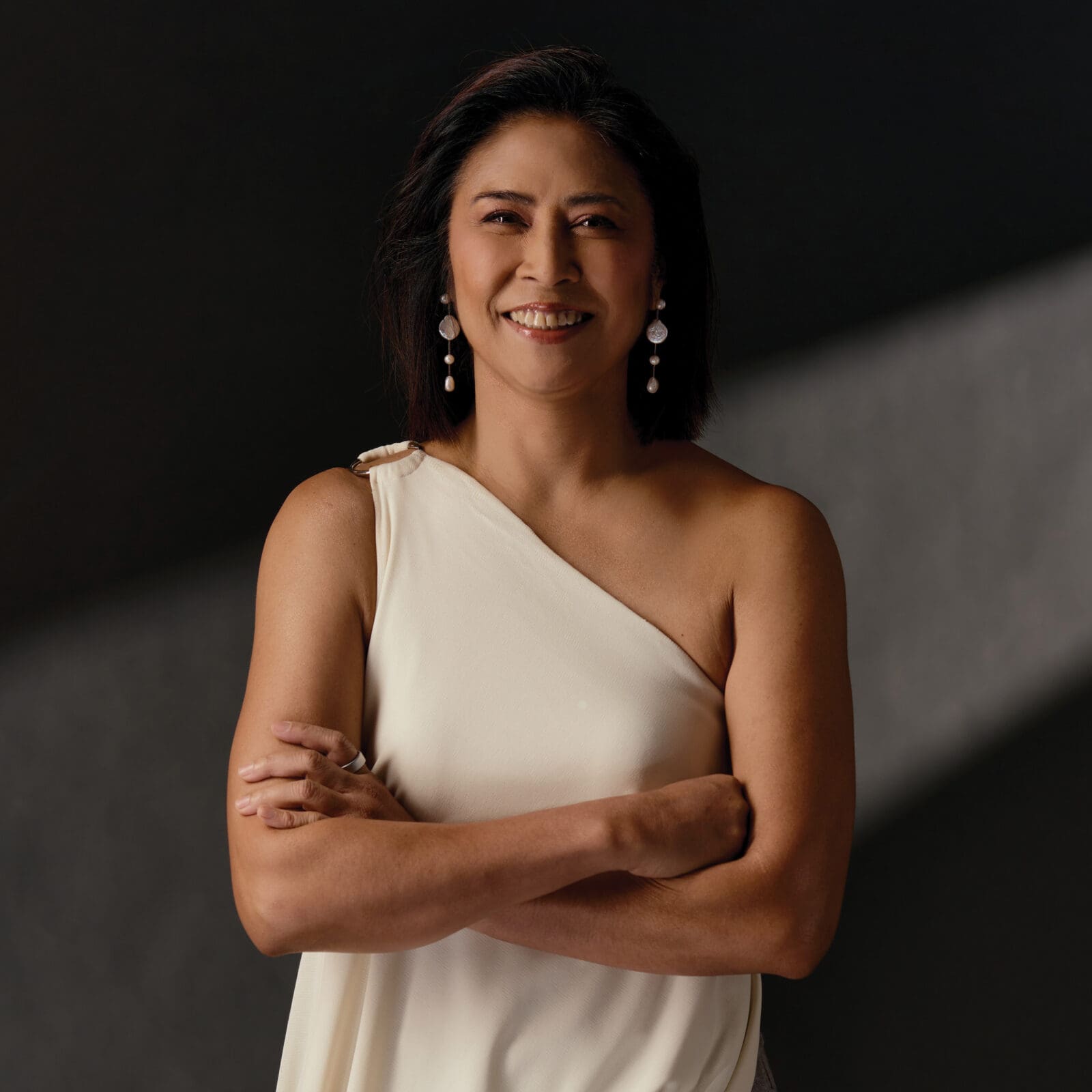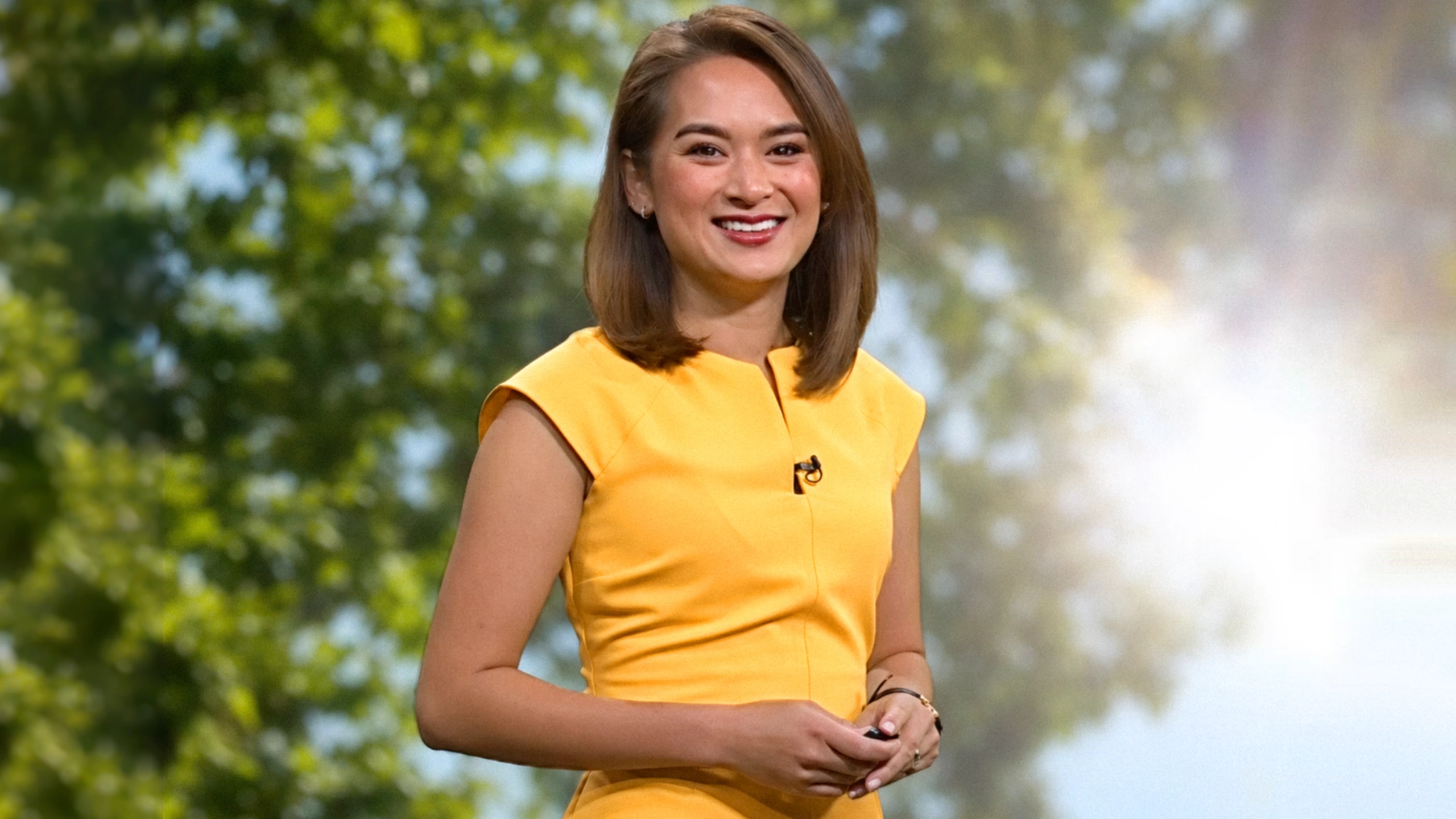
As Corazon Garcia breaks new ground as the BBC’s first Filipino weather presenter, she reflects on the barriers she observed in international journalism, the importance of being heard, and what it means to be a visible morena Filipina on screen.
Seeing someone who looks like you on television can mean more than recognizing a familiar face. It can mean seeing what is possible for someone who shares your roots.
“When I think of myself as a Filipino looking at other people—say, for example, Alex Eala being the first Filipino tennis star to make it on grass court at Wimbledon, that is a big deal,” Garcia tells Allure Philippines. “Or Manny Pacquiao being on a big global stage, fighting and representing the Filipinos, and Lea Salonga being the first Filipino artist to go mainstream and for Disney to sign her up as one of their princess voices. It’s a big deal when you see somebody on screen reflecting you back.”
Today, Garcia occupies that kind of space herself. As the BBC’s first Filipino weather presenter, she has become a familiar face on British television—not just for the Brits, but also for Filipinos watching from miles away. But her connection to the Philippines has never depended on her career or the visibility it has brought her. It is an essential part of who she is, wherever her career takes her.
Entering the BBC as a Filipina
“When I first entered the BBC, I walked in there, and I did feel like an alien. I felt like the other,” she recalls. “There might have been two other people in the room who were Asian or other. And everybody else was white, I’d say middle-class background, slightly older, male.”
It was an experience that made her acutely aware of who was represented in the media industry and, perhaps more importantly, who was not. “I think we’re still struggling,” she says, reflecting on diversity within the BBC. While she has witnessed progress since joining the organization, she believes there is still much to be done, particularly in leadership. “We could be doing more.”
She recalls attending numerous job interviews throughout her career, but only once encountering an interview panel that included someone from an Asian background. The lack of diversity at that level, she explains, can influence how people from underrepresented communities perceive their own opportunities. “If I can’t see another person on that level, how am I supposed to think that that’s achievable for me?” she asks. “And if we haven’t got that in management, then how does it filter down into the workplace and therefore into the output and the stuff that we’re putting out there?”
“I don’t want it to be just lip service, a tick in the box,” she explains. “I want to be there because first of all, I’m deserving of it, but also that I believe that I can work for a place like the BBC or other and feel like my voice is being heard.”
The bigger picture behind the forecast
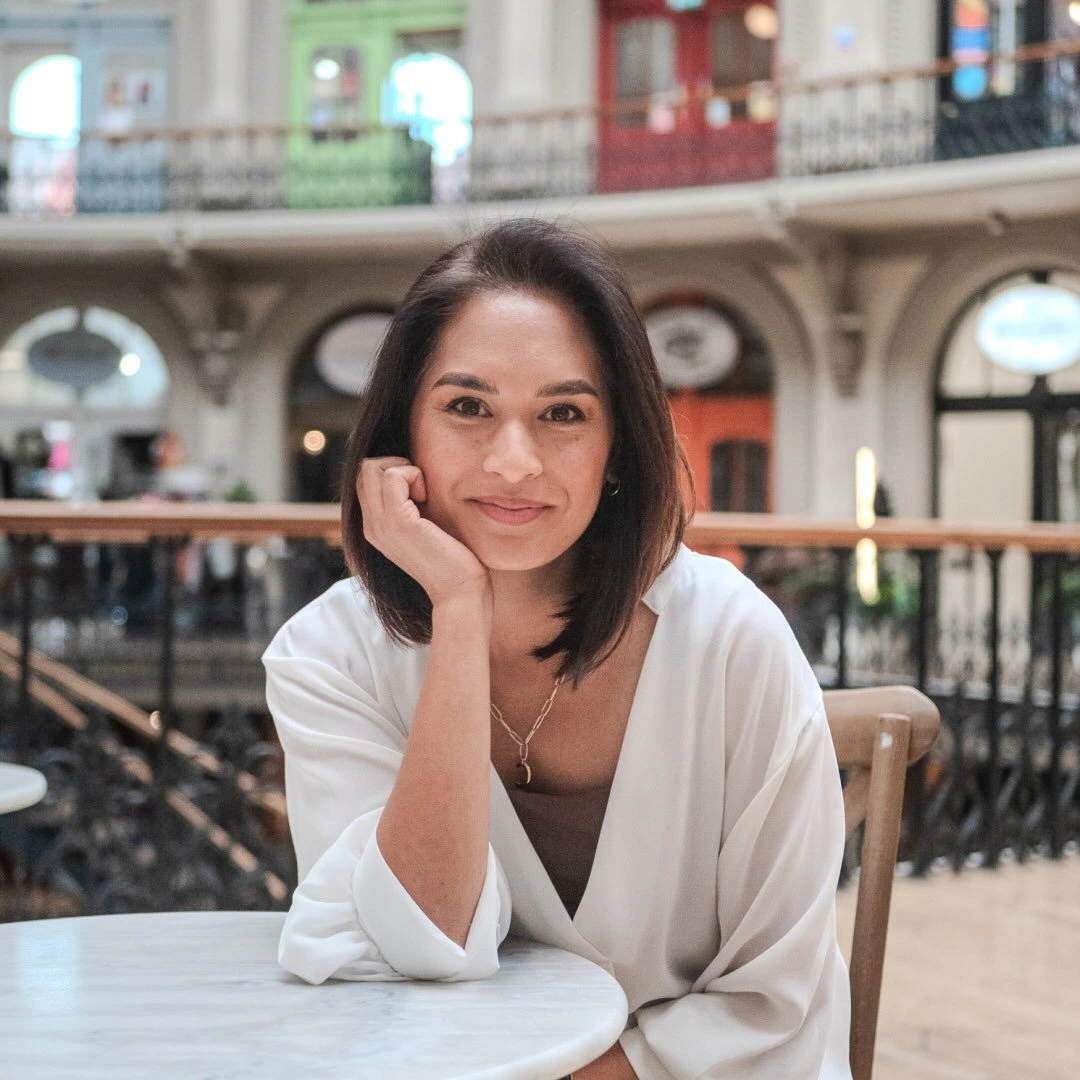
@mi_corazon_garcia on Instagram
Garcia shares that she worked hard to be where she is now. She did not get the position on her first attempt. “I came second, but eventually an opening came up behind it. It was to fill in behind the other weather presenters ad hoc. And that’s when I fell into it. And I started doing a few more weather shifts. And I thought I could really see myself doing this.”
Her first weather broadcast was on September 19, 2024, covering the East Midlands, West Midlands, and Northwest. “I was so nervous. I was so, so nervous because it was like a crash course. Not only was I learning new skills, but I just took the leap.”
Weather broadcasting may appear straightforward to viewers, but Garcia sees it as a form of journalism that requires interpretation, context, and an understanding of how environmental conditions affect people’s everyday lives. “It looks like it’s easy to do. It’s not. First of all, you know, there’s a whole load of data you’ve got to look at, radar models, tell the story,” she says. “You’re trying to find, what is the story of today? How is that going to impact your life today?”
The same responsibility, Garcia believes, extends beyond the immediate forecast. She points to the Philippines’ vulnerability to rising sea levels, plastic pollution, and the impact of changing climate conditions on agricultural production.
“I’m talking like, you know, food [prices are] going to increase. How can we afford to feed ourselves? The climate affecting rice production, how are we going to feed ourselves? Plastic pollution [is] not just [a] problem within our own countries, but around the world. Because it travels in the ocean and then it ends up in the oceans that surround places like the Philippines.”
She is equally emphatic about the need for government action, particularly when climate policy competes with other national priorities. “It is very political in the Philippines with all of the budgets and where money is being displaced in a way. It has to be a priority, how we tackle the changing climate,” she says.
Communicating these realities, Garcia explains, is part of the responsibility of weather journalism itself. “It is our job to highlight and stress how important this bit of data is, how it’s going to affect us, how the weather affects us and what we need to do as a country, what the government needs to do,” she says. “You can’t just think about just a few years down the line, how is this going to impact us? We’ve got to think about the years to come as well and our whole existence.”
Being a morena Filipina without compromise
Being the first Filipino weather presenter at the BBC is an achievement Garcia is proud of, but she does not see herself as the end point of representation. In fact, she hopes her presence will eventually make the distinction of being the first less significant for those who follow. “My biggest one is I don’t want Filipinas to fight to be seen,” she says.
Garcia’s relationship with representation is also deeply personal. Beyond her professional milestone, being a morena Filipina in international mainstream media has allowed her to arrive at a place of acceptance that she once struggled to find. “When I was younger, before all of this, I used to wear contacts that were green and hazel,” she shares. “I wanted lighter eyes. I dyed my hair with this really awful bleach spray, which, when I look back on it, was so bad for your hair.”
She no longer feels the need to make those adjustments. “For once, I can just be true to myself and not have to lighten my skin, lighten my hair, wear contacts to change my eye color,” she says. “Getting to this point is also very much a journey of acceptance. I had to fight to get to where I am now, and I’m still pushing for more,” she says. “I’m a morena Filipina. And that is 1000% okay.”
Making room for the next generation
Today, she wants to see more Filipinas occupying positions of influence, particularly in industries like journalism and broadcasting. “I want for us to gain that seat in that room full of big bosses, those who hold power and shape and influence decisions for more representation and diversity,” she explains. “I just want us to be seen and heard, to have not just one seat, but several seats within a room.”
For Garcia, the significance of being the first is not simply in having her name attached to a milestone. It is in what that milestone might make possible for someone else: a young Filipina who sees her on television and begins to imagine a career in journalism, a woman who no longer feels that her complexion needs to be changed to belong in mainstream media, or a journalist who feels encouraged to bring her own experiences into the stories she tells.
She knows that reaching a position like hers does not mean every barrier has disappeared. But she also understands what her presence can mean to someone watching from the other side of the screen. “I’m just so glad that other Filipinos have seen me and find that inspiring,” she says. “Because while it might not be a big story for other people, for us, this is very close to our hearts and what it means for us.”
And perhaps that is why visibility matters. It is not about being the only one in the room, or being celebrated simply for occupying a space. It is about helping make that space more accessible to those who come after. As Garcia puts it, “I’m just the start. There is plenty more to come.”