This Salon Owner Wants People to Express Themselves Through Hair Without Judgment
Rej Hidalgo, self-taught owner and head beautician of Magpatina Salon, is redefining beauty by creating a safe space for unconventional self-expression through hair.


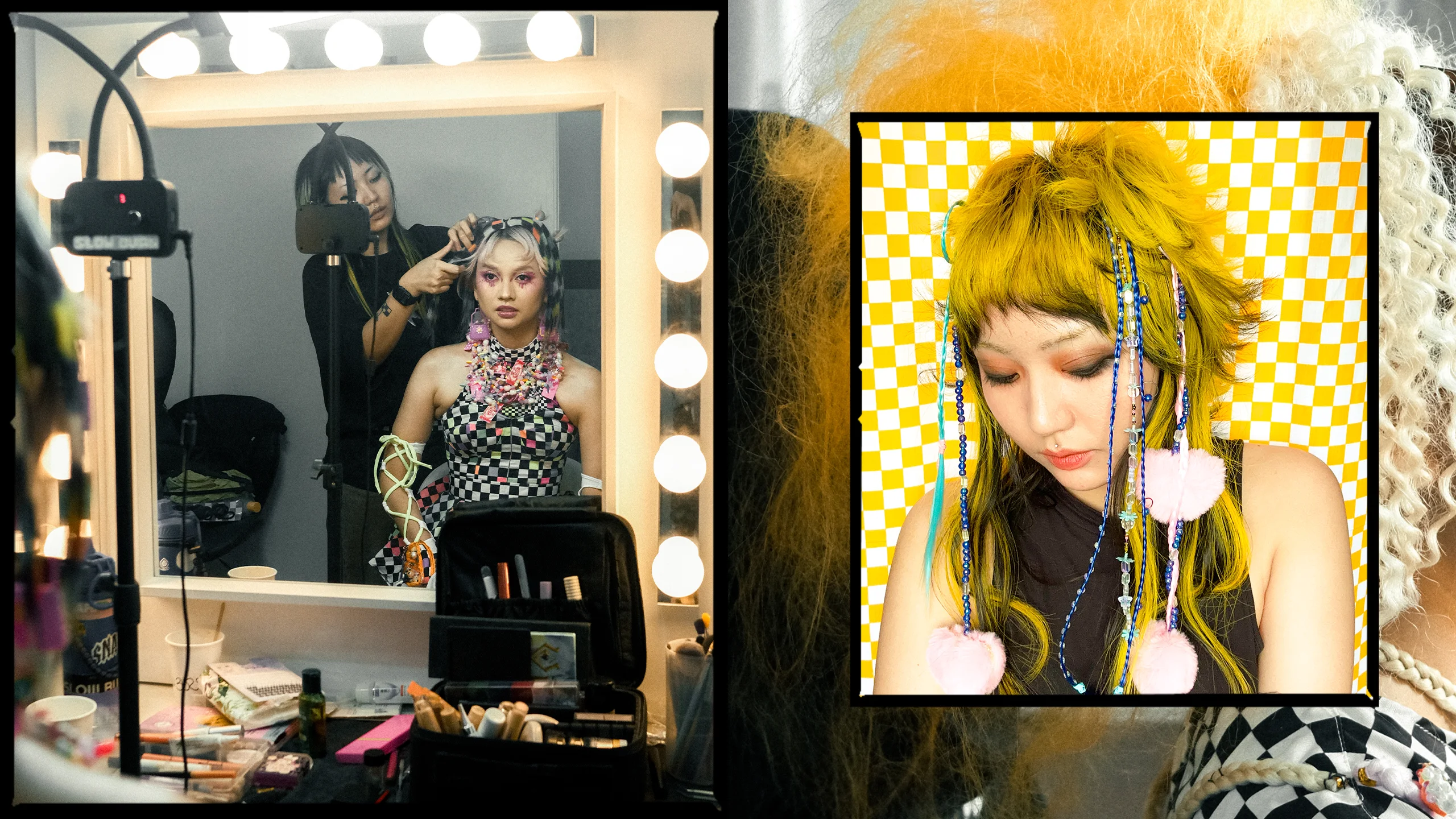
Ever since I was in sixth grade, I’ve had white hair. Whenever I visited a salon, hairdressers would inevitably point it out and say, “Ay, bakit may puting buhok ka na?” (“Ay, why do you have white hair already?”)
The way the question was often asked made it feel like there was something wrong with me. White hair is typically associated with aging, and as a child, I couldn’t help but feel conscious of my hair.
But that changed when I recently visited Magpatina Salon.
Instead of questioning my white strands, the team complimented my natural salt-and-pepper hair and told me that many clients actually come to their salon hoping to achieve a similar look.
For the first time, I felt seen. What I had spent years feeling self-conscious about was met with appreciation instead.
Creating that sense of acceptance is exactly what Rej Hidalgo, self-taught owner and head beautician of Magpatina, hopes to cultivate. The salon is known for its alternative approach to hair, embracing styles and aesthetics that don’t necessarily conform to mainstream beauty trends. “Gusto ko mag-provide ng space para sa mga katulad kong hirap i-explain yung trip namin sa persona na hindi ka ija-judge o hindi babaguhin yung initial idea mo,” Hidalgo says. (“I want to provide a space for people like me who sometimes struggle to explain what they’re into, where they won’t be judged or pressured to change their initial idea.”)
Magpatina welcomes people whose tastes and aesthetics may not always align with conventional beauty standards. Rather than pushing clients toward what’s considered more acceptable, the salon encourages them to stay true to their style. The desire to create a judgment-free space stems from her own journey with self-expression—one that started long before Magpatina existed.
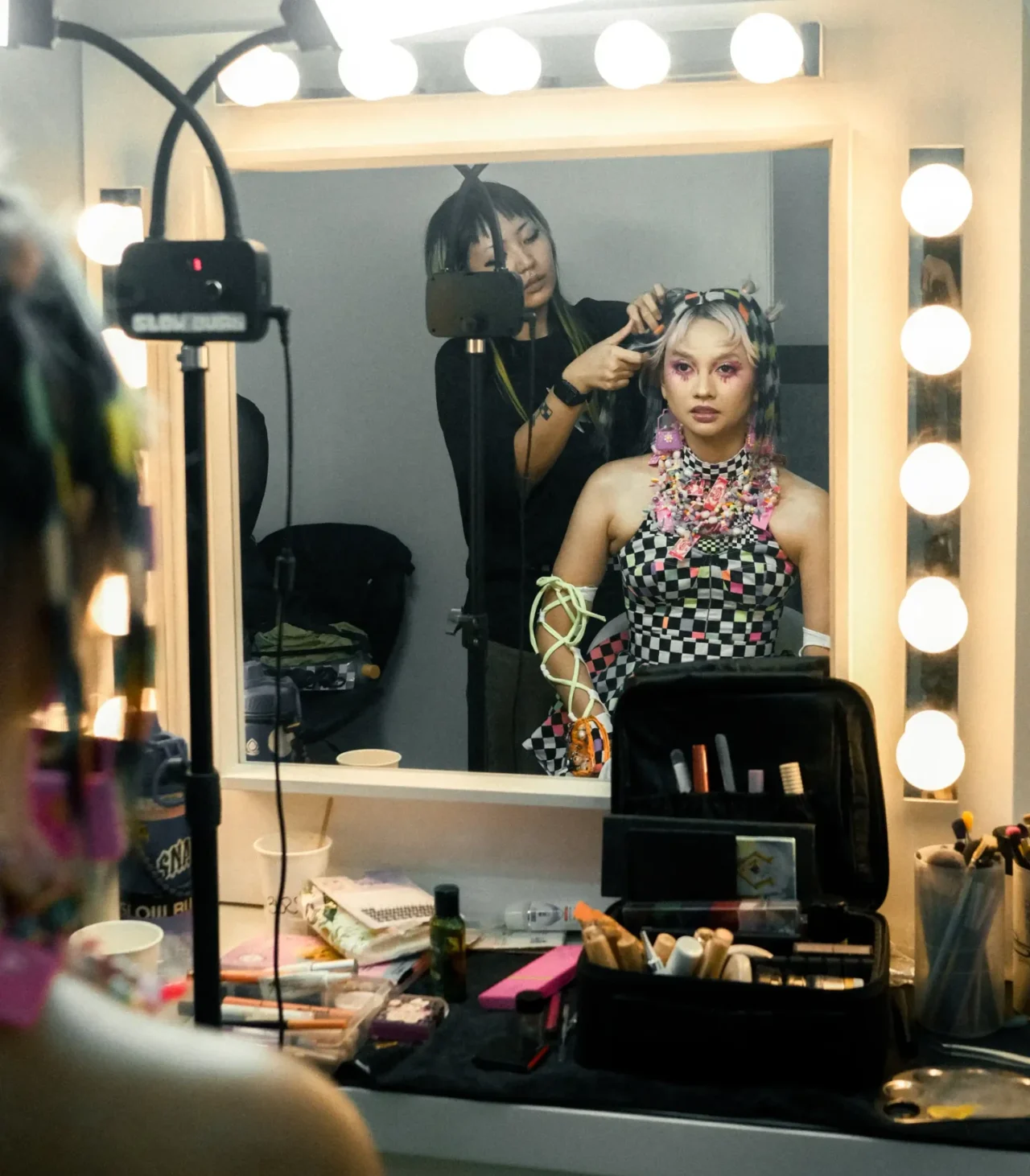
Photographed by Mayee Gonzales. Courtesy of subject.
Rej Hidalgo: Early Influences and Self-Taught Beginnings
Back in the early 2000s, Hidalgo sported the classic bowl cut that many kids of her generation grew up with. Because of her short hair, she dreamed of having long hair like her friends. But she was equally enthralled by unique hairstyles, especially Umi’s blue hair from the anime series Magic Knight Rayearth, whom she loved drawing as a child.
In the afternoons, she would often watch a group of skaters. And among them was one girl with bleached blonde hair and raccoon-striped highlights who left a lasting impression on her. “Hindi ko siya makakalimutan kasi siguro yun nga yung nag-spark ng interest ko sa colored hair na parang, ‘I’m gonna do that one day,'” she recalls. (“I’ll never forget her because I think she sparked my interested in colored hair, thinking, ‘I’m gonna do that one day’.”)
Between the skater girl and anime characters she admired growing up, colored and unconventional looks became something she associated with creativity, individuality, and self-expression. That fascination eventually extended to her own hair, which she began experimenting with—treating it as her personal canvas for different colors and styles. She was self-taught, learning through practice and personal exploration rather than formal training.
Unlike many creatives who can pinpoint a defining moment that set them on their path, Hidalgo confesses there was never a “day one”. She shared it was more of a slow burn, as she actually started doing services for her friends in 2013.
She was already coloring hair during this time, though the alternative aesthetic that Magpatina is now known for wasn’t exactly a conscious decision. She still catered to clients who preferred more glamorous, conventional styles. But over time, the work she shared online began attracting people from the alternative community, which gradually became her niche.
Even though she had been doing hair services for years already, the name “Magpatina” only came after.
What “Magpatina” Means: The Filipino Word Behind Rej Hidalgo’s Salon Name
In 2017, after years of working with regular clients, friends encouraged Hidalgo to create a dedicated social media account for her services. While brainstorming names, she drew inspiration from a word she often heard from her mom and titas: magpatina.
At the time, many of the popular hair dye brands had distinctly Western-sounding names. Hidalgo wanted something different, so she chose a Filipino word as a nod to the older generation, who would often use “tina”—which is derived from the English word “tint”—when referring to dyeing their white hair black.
It’s also a word that’s slowly disappearing from everyday vocabulary, replaced by other terms such as “magpakulay” among younger Filipinos. Some even thought her name was Tina because of it.
Even if the branding only came later, Hidalgo’s relationship with hair had already been years in the making. Still, by the time Magpatina was born, she was searching for that one creative medium that truly felt like her own.
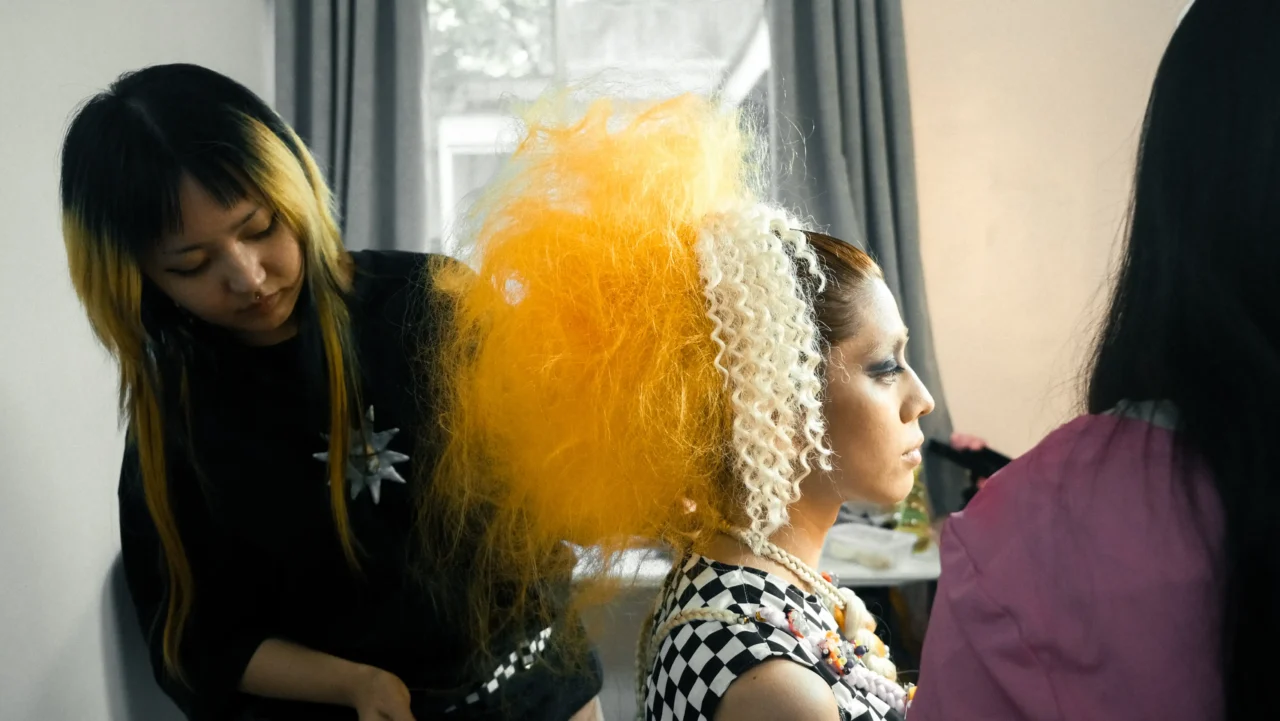
Photographed by Mayee Gonzales. Courtesy of subject.
Rej Hidalgo: From Fine Arts Student to Salon Owner
As a Fine Arts student at the University of the Philippines Diliman, Hidalgo tried a little bit of everything. While some of her batchmates in college found their passion in painting, art installations, and performance art, nothing seemed quite right for her. She even tried acting, but nothing ever really stuck. She continued exploring different art forms in hopes of finding her place. Little did she know that the answer was just around the corner—something she had been doing all along.
When the pandemic hit, Hidalgo had just stepped away from college. While many people discovered their love for painting during lockdown, she couldn’t pick up her brush despite being a painting major during her academic days. Stuck at home, she and her partner constantly experimented with different hairstyles and colors. “Akala mo pwede kami lumabas noon, pabago-bago pa hairstyle namin,” she laughs. (“You’d think we were actually allowed to go out back then, with how often we kept changing our hairstyles.”)
Amid the uncertainty of the pandemic, Hidalgo found herself reflecting on her future.
At the time, she was still doing hair services from a corner of her apartment in Las Piñas. But because work and home occupied the same space, the boundaries between the two slowly disappeared. She experienced burnout because she no longer had any work-life balance.
Like many artists, Hidalgo believes burnout is inevitable in one form or another—whether it may be creatively, socially, or emotionally. What matters is learning how to navigate it. As her client base continued to grow, her apartment could no longer contain the community forming around her work.
Even if regular clients were willing to travel long distances just to book an appointment with her, she realized it was time for Magpatina to grow beyond the corner of her apartment and find a home of its own.
Magpatina Salon in Escolta: How the First United Building Became Its Home
At first glance, Magpatina’s first branch feels like it naturally belongs in the First United Building in Escolta, Manila. But it almost didn’t happen that way.
In 2024, Hidalgo and her studio manager, Mayee Gonzales, had to let go of their dream of opening a space in the building after discovering a dealbreaker: the unit they wanted didn’t have a water source for the sink. So they had to move on and continue looking elsewhere.
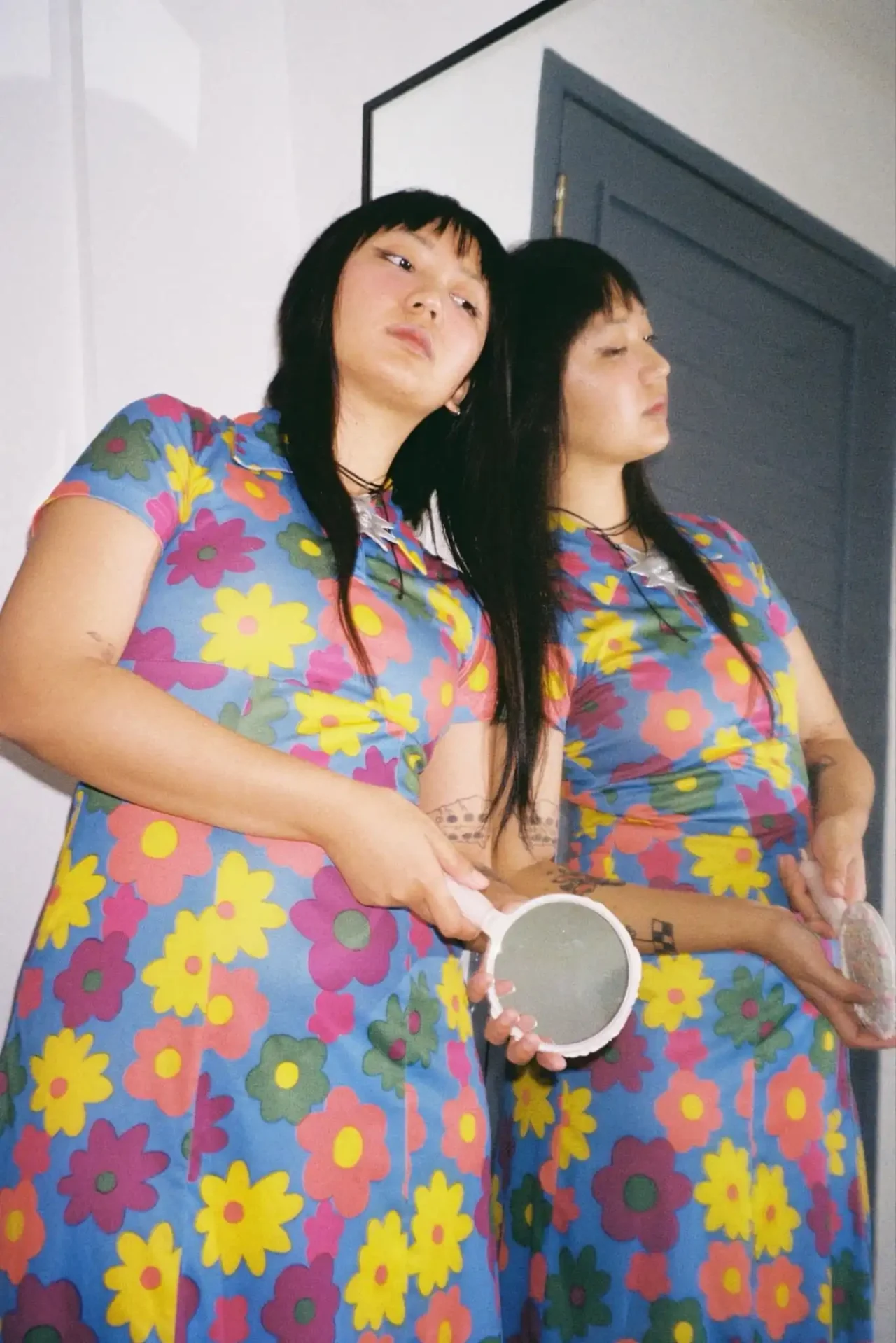
Photographed by Shayne Lopez. Courtesy of subject.
A year later, Gonzales found herself back in Escolta and stumbled upon another available unit that finally fit their needs. It seemed like fate was finally on their side.
For Hidalgo, it was a non-negotiable that the location had to spark inspiration. “Perfect yung Escolta kasi sobrang ganda at inspiring ng Old Manila,” she shares, noting how the area feels motivating no matter where you look because of its rich history. “Bonus na meron kaming mga kapitbahay na mga creatives din.” (“Escolata is perfect because Old Manila is so beautiful and inspiring. Having fellow creatives as neighbors is just an added bonus.”)
Magpatina’s Community: Hair Artists, Tattoo Culture, and Local Creatives
With a circle of creative friends and extra space in the studio, she began to imagine Magpatina as more than a salon—turning it into a platform where artists could showcase their work and reach new audiences. True to its alternative approach to hair, Magpatina goes beyond the typical salon setup, also hosting tarot readings, piercings, tattoos, artworks by local artists, and collaborations with other hair artists.
Even before they opened, one of Hidalgo’s goals was to focus on supporting other hair artists. They planned to invite hair artists from different salons to guest at their space, even if they currently work there full-time.
The idea was shaped by the kind of community she observed among tattoo shop owners. “Kahit na may kanya-kanya silang tattoo shops, magkakaibigan pa rin sila kasi magkakaiba naman yung style nila,” she says. (“Even if they had their own tattoo shops, they’re still friends because they all have different styles.”) For her, it was never about exclusivity, but about creating space for collaboration and allowing talent to circulate freely.
That sense of community comes instinctively to her. “Naturally, gusto ko mag-provide ng space kasi parang ito yung bumubuo sa akin na hindi ko mapigilan.” (“I naturally want to provide a space because it’s a big part of who I am, I can’t seem to help it.”)
Why Rej Hidalgo Wants to Redefine What a Beautician Means in the Philippines
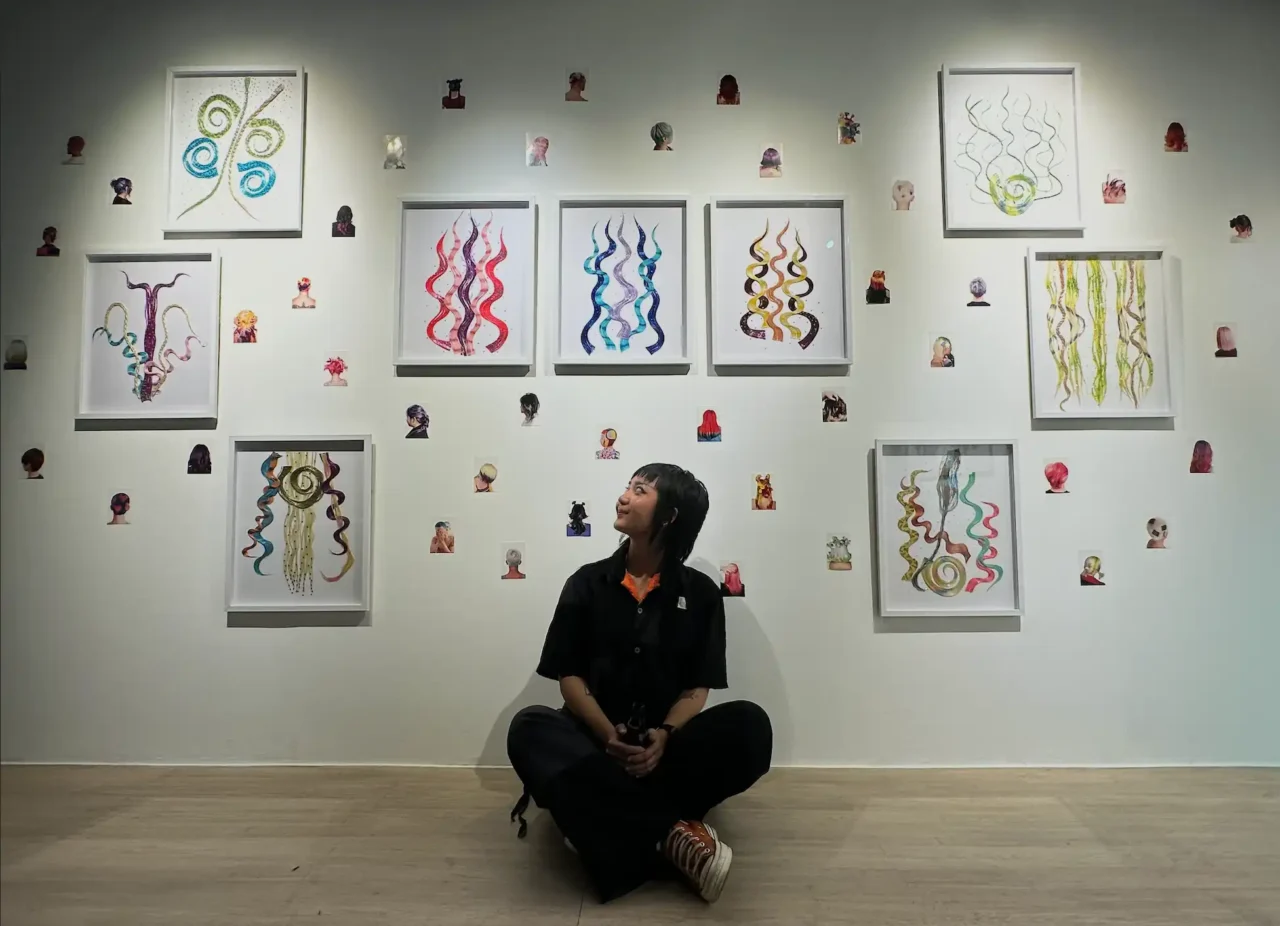
Photographed by Bijan Gorospe. Courtesy of subject.
From the very beginning, Magpatina has always been about more than just hair. It’s about creating a space where people can feel like they belong. Where they don’t have to explain or defend how they look or choose to express themselves.
That instinct traces back to Hidalgo’s own relationship with self-expression, shaped early on by unconventional influences and a career path that never really followed a straight line.
Even the word she uses for her profession reflects that intent. “Gusto ko lang i-reclaim yung term na beautician,” she says, as the label is often tied to stereotypes deeply rooted in Filipino salon culture and the LGBTQ+ community. (“I just want to reclaim the term ‘beautician’.”)
At Magpatina, that philosophy is visible in practice, and it shows in the way my white strands weren’t questioned, just appreciated.
In more ways than one, the space expands what beauty can be, and what a beautician can stand for: a creative, respected role rooted in expression, not limitation—one built on community.
Frequently Asked Questions
Rej Hidalgo is the self-taught owner and head beautician of Magpatina Salon in Escolta, Manila, known for its alternative approach to hair. The salon embraces styles and aesthetics that don’t conform to mainstream beauty trends, welcoming clients who don’t want to be pressured to change their initial ideas.
The name comes from a Filipino word Hidalgo often heard from her mother and aunts, derived from “tina,” the local term for dyeing white hair black. She chose it as a nod to older generations, opting for a Filipino name over the Western-sounding names common among hair dye brands.
Hidalgo, a Fine Arts student at the University of the Philippines Diliman, began doing hair services for friends informally in 2013 without a defining “day one” moment. During the pandemic, after stepping away from college, she and her partner’s constant hairstyle experimentation led her to fully embrace hair as her creative medium.
Hidalgo and studio manager Mayee Gonzales chose the First United Building in Escolta because the historic Old Manila setting felt inspiring and creatively motivating. An earlier unit in the same building fell through in 2024 due to a lack of a water source, and a suitable space was found a year later.
Hidalgo wants to reclaim “beautician” from stereotypes rooted in Filipino salon culture and the LGBTQ+ community, reframing it as a creative, respected role built on self-expression rather than limitation. This philosophy shapes Magpatina’s judgment-free approach to hair and beauty services.