
Face Value: How Beauty Filters Are Rewiring the Way We See Ourselves
Filters once made us playful. Now, they make us question what’s real.
By Leira Aquino


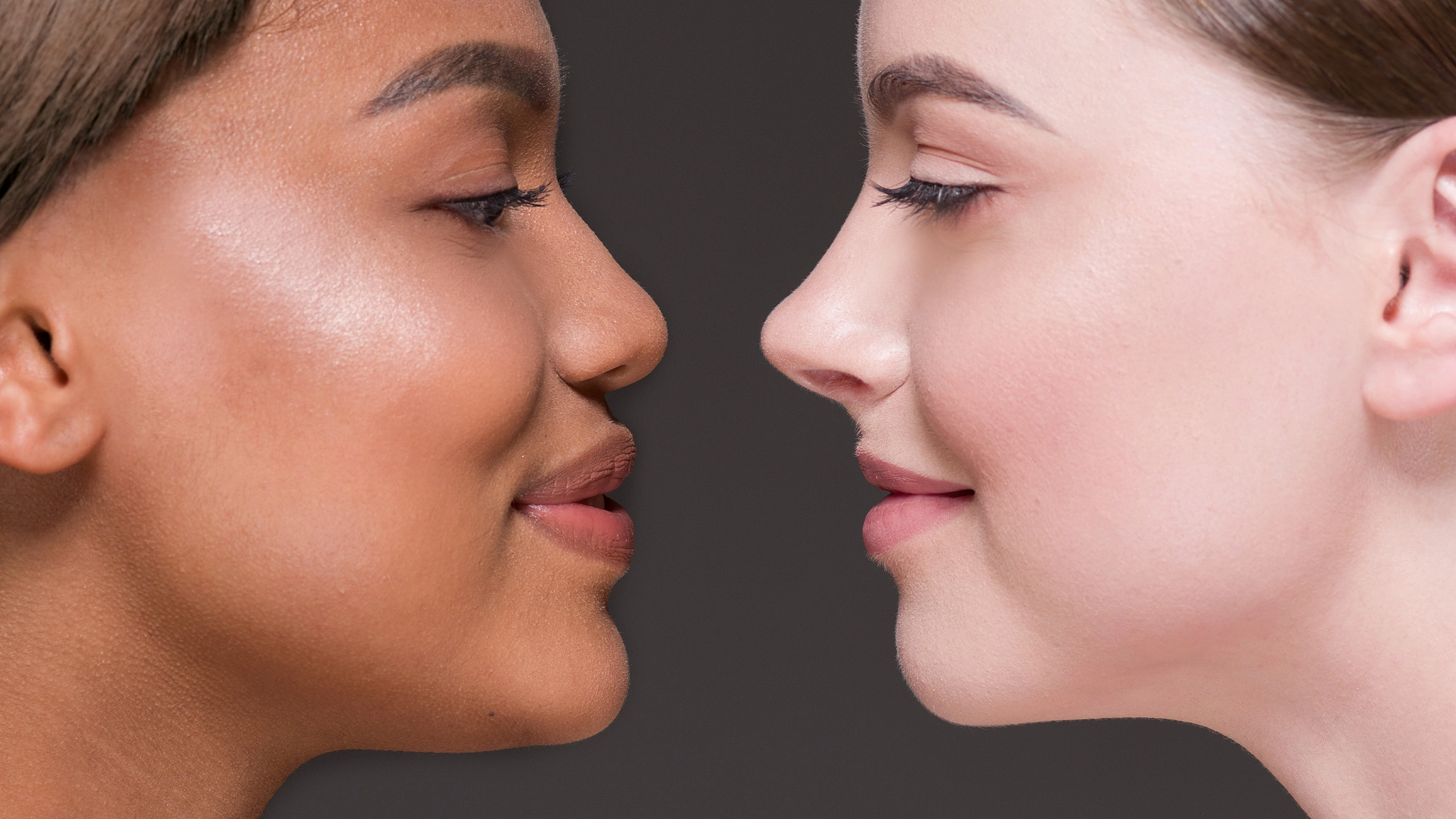
Open your TikTok camera and watch your face instantly transform. Your eyes get bigger, your lips more pink, your skin lighter, your pores gone, and your face significantly smaller. A gentle swipe and you look…different. Better, maybe? “Beautify” effects promise an enhanced version of you, one that’s more polished, more symmetrical, and more shareable. For a second, it feels harmless. But the more you use it, the more you get used to it.
And then that version starts to feel normal. It starts to feel like the standard, the baseline, the bare minimum. Until you stop recognizing the face in the mirror. Until photos taken by others feel unflattering, even wrong. Until every natural feature starts to feel like a flaw, and suddenly, the gap between your real and ideal self becomes impossible to ignore.
Filters were never meant to be this powerful. When they first appeared on the app Snapchat in the mid-2010s, they were gimmicks, fun, and cartoonish overlays that everyone could spot from a mile away. We wore them playfully (Remember the ones with flower crowns and dog ears?), fully aware of their artifice. Back then, filters were obviously filters. Today, they’ve evolved into something more insidious. They are hyperrealistic, hyper-customizable, and hyper-accessible.
In apps like TikTok, you can adjust your features one slider at a time: You can subtly tweak the size of your eyes, the slope of your nose, the fullness of your lips, and more. You begin to convince yourself it’s definitely just you, but “better.” A version so believable that it sets an impossible yet seemingly achievable standard you begin to chase offline.
The rise of “filter dysmorphia”
In 2018, British cosmetic doctor Tijion Esho coined the term “Snapchat dysmorphia” to describe a growing number of patients requesting cosmetic procedures to look more like their filtered selfies. By 2022, just after the height of COVID-19 pandemic (which intensified the need for virtual reality), a study published in the Journal of Cosmetic Dermatology noted that this had evolved into a wider phenomenon known as “filter dysmorphia.” It refers to a form of body dysmorphic behavior where constant exposure to beautified images online drives people to chase their own digitally-altered selves, often leading them to consult dermatologists in hopes of achieving similar results.
Jasmin Jamora, MD, FPDS, president of the Philippine Dermatological Society, has witnessed this shift firsthand. Many of her patients aspire to have skin so flawless that it appears filtered even without makeup. There’s nothing wrong with that, she notes, as long as the expectations remain realistic—within one’s time, budget, and skin type.
The problem, she says, is that filters often create standards that are far from achievable.
“There are many things that your board-certified PDS dermatologist can offer to improve your skin,” she assures. “But at the same time, we have to be realistic about what you want to achieve,” she reiterates.
For instance, some patients request glass-like skin, similar to what they see on social media, even before addressing active acne. Others would even ask for “poreless” skin, something that simply isn’t possible.
“There are many things that we can do to improve [the look of pores], but hindi naman pwede poreless,” Dr. Jamora says. “We need the pores. To make the texture look better, we can improve collagen stimulation, elastic fiber stimulation, and then overall skin texture smoothing,” she explains.
A discrepancy between the real and the ideal
Now, what happens when these unrealistic expectations aren’t met? Mentally, these filters don’t just smooth out skin. They smooth out identity. They create a subtle, yet persistent dissonance between how we look and how we think we should look.
“One of the most significant ways photo filters and editing apps affect how young
Filipinas see themselves is by creating what we call a discrepancy between the realself and the idealized self,” explains William Jo Se M. Billote, PhD, RPsy, RPm, RGC, lead psychologist and lead counselor at MindNation.
Dr. Billote describes how these digital tools encourage people—especially Gen Z—to develop a “perfect digital version” of themselves, one that’s unattainable yet addictively within reach. Over time, it leads to feelings of inadequacy. “Their real self never quite measures up to that online persona,” he says. “What makes this even more concerning is that self-worth becomes tied to external validation—the likes, shares, and comments.”
This cycle of digital approval breeds what Dr. Billote calls “appearance anxiety,” or the fear of being seen as you really are in real life. “They worry that people will be disappointed when they meet them in person, because they don’t look like their online images,” he adds.
This, according to Dr. Billote, creates self-destructive internal comparison: “The person begins to measure their real, human appearance against their own flawless, filtered version.” Their perceptions get distorted and they themselves get disappointed if they don’t look the same as the one in their photos.
And it’s not hard to see why. The emotional brain doesn’t differentiate between real and altered images. “Every time someone sees their face ‘perfected,’ that emotional impactoverrides logical awareness,” Dr. Billote explains. In other words, even when users know filters aren’t real, repeated exposure still rewires perception. “It sends a subtle, but powerful message that their natural self isn’t enough and needs to be digitally corrected,” Dr. Billote notes.
That “psychological tug-of-war between knowing the photo is fake yet craving the social validation it brings,” Dr. Billote says, is what psychologists call cognitive dissonance. This, according to him, fuels self-doubt, anxiety, and a fractured sense of identity.
The Filipino face vs the Eurocentric standard
In the Philippines, this struggle is layered. The filters we use are rarely neutral. They often lighten skin, narrow noses, and slim faces, echoing long-standing Western and colonial beauty hierarchies.
“I think the real issue is that filters don’t just create new body image problems,” Dr. Billote says. “They magnify the ones we’ve been struggling with for generations.”
For young Filipinas, these digital ideals reinforce the mestiza archetype that’s been idolized for decades. The result is a homogenized beauty that quietly suggests that brown skin, wider noses, or rounder faces are less desirable. “These filters function as everyday tools that quietly sustain and modernize deeply rooted, harmful beauty norms,” Dr. Billote explains. “The pressure to conform feels both constant and invisible.”
Dr. Jamora also feels for the younger generation. “There’s tremendous pressure, not just from peers, maybe even family and their own selves,” she says. “Ngayon, with social media, the pressure is even all the more intense for them to look good and to present themselves in a certain way.”
The inner critic online
Claudine Faye Tecson, MA, RPsy, a registered psychologist with a Master’s degree in psychology from the University of the Philippines Diliman, points out that this culture of comparison stems from our basic social instincts. “Humans are social beings,” she explains. “Part of our survival instinct is comparing ourselves to our cohort or people we aspire to be. When these points of comparison are constantly enhanced, it’s understandable that our perceptions become skewed and unfair towards ourselves and others.”
Tecson notes that this pattern often leads to unhealthy thinking habits and cognitive distortions. One of the most common? The “should” mindset. “[We start] applying ‘shoulds,’ ‘musts,’ and ‘dapat’ statements to ourselves,” she says. “Which is basically enforcing unrealistic expectations,” she continues. This highlights negatives, and discount positives, she says.
These mental filters, both literal and figurative, shape how we process beauty. Over time, they teach us not only to judge ourselves harshly, but others too. “We may also inadvertently apply the same unrealistic standards towards others,” she adds. “Which may perhaps be observed by sometimes harmless and quite unnecessary comments made towards loved ones, friends, and even strangers and celebrities.” In short, it’s projection born from the same distorted ideals.
Reclaiming the truth
Undoing years of digital conditioning takes both intention and resistance. All of our experts agree that the antidote lies in media literacy and self-compassion.
“We need to strengthen critical media awareness,” says Dr. Billote. “That means remindingourselves again and again that the images we see online, even our own filteredphotos are curated, edited, and far from reality.” Setting screen boundaries, unfollowing triggering accounts, and prioritizing real-life experiences can all help restore perspective.
Tecson echoes this: “It definitely helps to expand our consumption of information from social media to personal direct experiences to keep us grounded in our own realities.”
For younger patients, especially those who are financially limited, Dr. Jamora says dermatologists can help them realize that there’s more to life than how their skin looks. “I hope we can help by educating them to really understand who they are, and that their skin is just part of it,” Dr. Jamora says. Still, she understands why appearance plays such a big role in confidence.
In the end, the real work is inward, but not without collective effort from society. Rebuilding one’s sense of self means shifting from perfection to presence, and from performing beauty to living it.
“A gentle reminder,” Dr. Billote says, “In a world shaped by filters, comparisons, and constant digital pressure, it’s easy to lose sight of what’s real—including your own worth.”
And our worth? It was never meant to be measured by how “poreless” our skin is, how pointed our noses are, or how symmetrical our faces appear. We were never meant to conform to the beauty standards these filters reinforce. We were never even meant to constantly see our own reflection, much less judge it harshly or alter it to fit a narrow mold. Our bodies were meant to simply be, as our value has always been inherent, and free. That is the truth.
Frequently Asked Questions
Filter dysmorphia is a psychological phenomenon where constant exposure to digitally enhanced images drives people to obsessively chase their filtered appearance in real life. It creates a gap between the real and idealized self, leading to appearance anxiety, self-doubt, and a fractured sense of identity.
No — poreless skin is medically impossible, as pores are a biological necessity. Dermatologists can improve overall skin texture, stimulate collagen production, and reduce the appearance of pores, but board-certified specialists like Dr. Jasmin Jamora emphasize that patient expectations must remain realistic and achievable.
Filters frequently lighten skin, narrow noses, and slim faces — quietly sustaining colonial beauty hierarchies that have persisted for generations. Dr. William Billote notes these digital tools imply that natural Filipino features like brown skin, rounder faces, and wider noses are flaws requiring correction.
This is a form of cognitive dissonance — knowing a filtered photo is artificial while still craving the social validation it brings. Repeated exposure to a “perfected” face rewires emotional perception, sending a persistent message that one’s natural appearance is not enough.
Experts recommend strengthening critical media awareness, setting screen time boundaries, and unfollowing triggering accounts. Expanding personal experiences beyond social media and practicing self-compassion help restore a grounded sense of self that isn’t measured against digitally altered beauty standards.
Latest Stories


You might also like

To provide a customized ad experience, we need to know if you are of legal age in your region.
By making a selection, you agree to our Terms & Conditions.