How Celebrity Makeup Artist Juan Sarte Built a Career by Adapting to Change
Moving from advertising to makeup artistry, Juan Sarte has experienced the rhythms and shifts of the industry, but it is his consistency that has anchored his career.
By Liam Sanchez


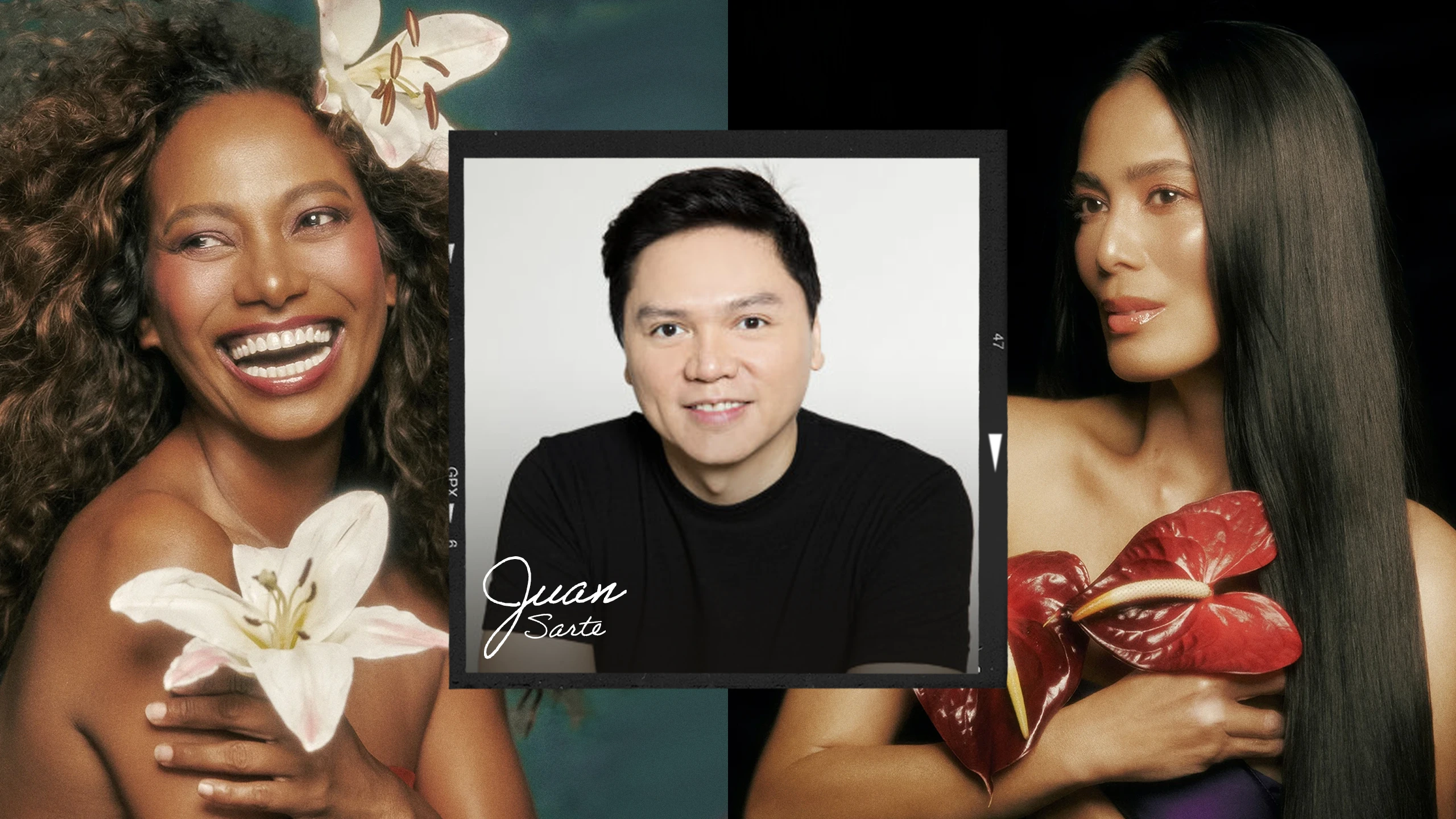
Juan Sarte always had an eye for beauty.
Before becoming synonymous with the title of celebrity makeup artist, Sarte was already part of the creative industry as a casting director for commercials in 1994, tasked with finding the next model or celebrity to front a new advertisement. While working as a casting director, he also helped models with their makeup before VTR auditions. “I would watch the makeup artists and how they prepared the talent on set,” he recalls.
It was during one of these moments that a producer’s friend noticed his work and asked him, “Do you want to be a makeup artist?” That simple question led him to his first official makeup gig.
“My first job was already a TV commercial. I was given this project na parang it was inspired by the movie Dangerous Liaisons, yung Renaissance period,” Sarte says. “Back then, we would do makeup and hair. So, it was really hard because it wasn’t normal beauty makeup. The face was powdery, and the hair was lumpy.”
But that moment marked the start of his rise to becoming an industry great, as he shifted from a career in advertising to makeup.
32 years later—and after countless commercials and editorial shoots—Sarte has cemented his status as a pioneering celebrity makeup artist in the Philippines, with no signs of slowing down—continuing to be the go-to makeup artist for some of the biggest names in entertainment, including Heart Evangelista and Bianca Gonzalez-Intal, and magazines like Allure Philippines (as seen in this editorial featuring morena icons Angel Aquino and Wilma Doesnt).
In this Allure Philippines exclusive, the celebrity makeup artist reflects on his long-spanning career, sharing moments that challenged him, moments that made him feel he had “made it,” and advice for those who wish to follow in his path.
What do you love about being a makeup artist?
What I love about being a makeup artist is, of course, you get to meet a lot of people. Famous, not famous. People who are artists, creatives. In terms of doing makeup, what I like about it is being able to transform someone and then suddenly you can give them confidence and they become a different person without really changing the way they look. Sometimes just a little tweak and then you’ll see a different personality.
At the same time it can also change somebody completely. If you’re doing a character that’s what I like about doing makeup.
What was the most difficult moment you encountered in your career?
This was back in the 90s. You could just go to the mall and everything was there—you could buy anything. All the brands were here. During that time, konti lang talaga yung brands, mostly drugstore brands lang na mabibili mo locally. Medyo challenging because you would make do with what you have.
There was one particular project that I was booked for. Wala pala ako noong gamit. Akala ko kaya kong gawin. So on set, noong ginagawa ko na, hindi ko siya magawa, because I needed pala a specific color of foundation, ‘yung clown white. But I couldn’t do it. I knew what I wanted to do, but I didn’t have the material because they weren’t available here.
So that was a difficult time for me because, during that time, to buy the makeup that you needed for a shoot—especially the professional makeup that you needed for a shoot, you’d have to go abroad to buy the stuff.
I was replaced on the shoot because I couldn’t deliver, only because I didn’t have the materials. A more senior makeup artist came to [replace] me. She had the materials. But I was still there. I watched it.
What’s the difference between makeup and advertising?
Well, you have to think of the brand. Of course, for advertising shoots, whatever character you’re doing makeup for, it should be on brand. But usually, during that time, in the 90s when I started, the requirement was, they always wanted clean makeup—no makeup-makeup when it’s a commercial. Unless there’s a requirement, like what I explained earlier, Dangerous Liaisons. But most of the projects always required the no makeup-makeup look.
What made it difficult was because it was shot on film during our time, and there wasn’t a lot of editing. It’s not like now, where you take it from your phone and then you can facetune.
Everything was shot on film. So even for stills, for photo shoots, you could only see what you were doing on the Polaroid on that day. And so, we did a lot of Polaroids. And then after 10 Polaroids, when everything was okay, makeup, costume, lighting, you couldn’t see anything. It was just the photographer who would see what was happening on set. He was the only one looking at the camera. You couldn’t see anything. You could only see when it came out.
And same with video, because film is more expensive, the rolls of film. Now, it’s just in the cards, right? The files are just in the memory cards, so you can do as many takes as you want. Before, the budget was really limited. And if you mess up the makeup, it’s really your fault because it’s hard to retouch it, you have to spend a lot to retouch it.
When was the moment you knew you finally made it?
There was not one moment that I can pinpoint.
But when you’ve been doing makeup for a long time and then for quite some time if you’ve been doing makeup for quite some time na and you realize na ‘yung mga napapanood mo lang before, ikaw na ‘yung tinatawagan para ayusan sila. At the same time in advertising if you get a beauty shoot for example personal care products shampoo, soap, skin care, hair care medyo tinatawag ka na for those projects, medyo nafefeel ko na parang top of mind na ako. At the same time nagstart na ‘yung mga glossy magazines.
So when I’d see my work na nasa cover na tapos pag cover, ikaw na ‘yung tinatawagan, parang you kind of made it na.
Who are your favorite people to work with?
Favorite people would be those who trust the process, who trust you with what you’re doing. Those are the favorite people that I’ve worked with because that means they’re open to collaboration.
What qualities should a makeup artist possess to make it in the industry?
The quality that one must possess to make it as a makeup artist is consistency. You should be able to adapt to the changes that are happening, like the trends. But still, you should have a signature, like a stamp.
I know that most of the makeup artists who made it, whom we know today, if you look at their work, you know there’s a stamp. Even if it’s a trend or what, I don’t know, maybe we makeup artists know that when you see it, you know whose style it is. And that’s what’s going to set you apart from the other makeup artists when you have identified your own style.
What is the most important thing an aspiring makeup artist should remember?
What you need to do is master the basics. The skin, how polished your work is. As long as everything is there, because trends will come and go, but it’s your style that will—it’s your style and how you’ve mastered all the basics. It’s what you need. That’s all you need.
If you could give any words of wisdom to any creative beginning in the industry, what would it be?
My tip is focus on your craft first, and everything else will follow.
Frequently Asked Questions
Juan Sarte started in 1994 as a casting director for commercials, where he observed makeup artists preparing talent on set. A producer’s friend then suggested he try makeup artistry, leading to his first job: a Renaissance-inspired TV commercial requiring elaborate period hair and makeup.
In the 1990s, Juan Sarte was replaced on a shoot after lacking a specific foundation shade, clown white, that wasn’t available locally at the time. A more experienced makeup artist who had the materials took over, teaching him the importance of preparation and access to proper tools.
Juan Sarte says advertising typically calls for a “no makeup-makeup” look unless a specific concept requires otherwise. Shooting on film with limited retouching also meant makeup had to be flawless in person, since editors could only judge results from Polaroids and the final footage.
Juan Sarte says consistency is essential: the ability to adapt to changing trends while maintaining a recognizable personal style. He notes that the makeup artists who endure in the industry are those whose work carries an identifiable “stamp,” setting them apart from others.
Juan Sarte advises mastering the basics first, particularly skin preparation and technique, since trends come and go but strong fundamentals last. His broader advice to creatives starting out is to focus on the craft first, and everything else will follow.
Liam Sanchez
Liam Sanchez is a registered medical technologist and Wellness Writer at Allure Philippines. Combining training in laboratory medicine with experience in science journalism, he specializes in evidence-based reporting on wellness, nutrition, longevity, and beauty trends. A Cum Laude graduate of the University of Santo Tomas, he previously served as Science and Technology Editor of The Varsitarian. At Allure Philippines, he translates complex health and beauty science into accessible, reader-first stories that help consumers make more informed decisions about their well-being.
Latest Stories


You might also like
To provide a customized ad experience, we need to know if you are of legal age in your region.
By making a selection, you agree to our Terms & Conditions.