

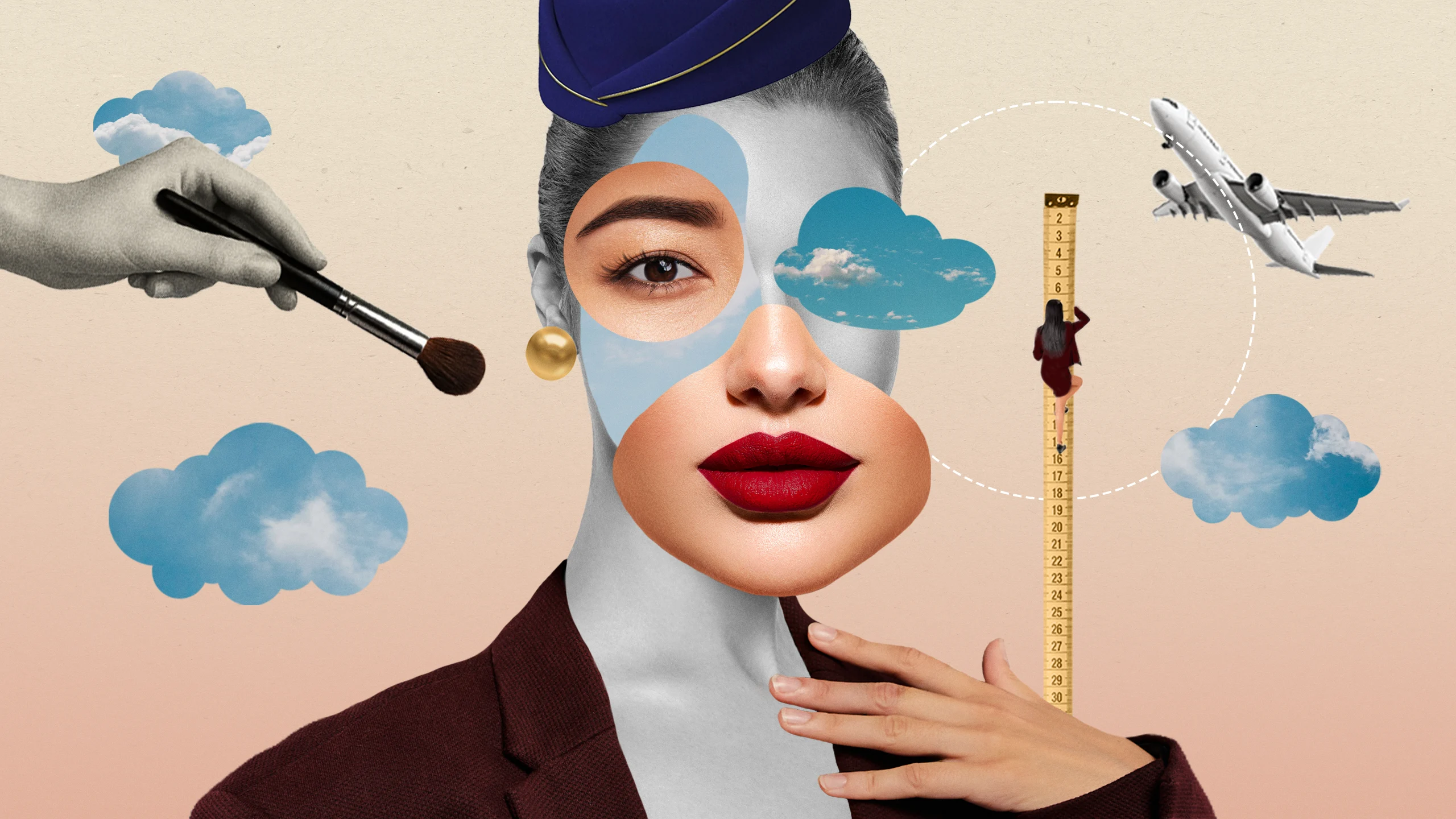
A TikTok user made a video with the question, “Do all Chinese flight attendants look like supermodels?” While the question was asked respectfully and without prejudice, it is both surprising and not that flight attendants are still judged by their looks. Few professions remain as closely associated with appearance as aviation, where grooming standards continue to shape the image airlines present to the world.
For former model and flight attendant Nicolette Bell, those standards began long before she ever boarded a plane as crew. “I remember that during the recruitment process in the Philippines, they checked things like visible tattoos, marks, and overall grooming.”
While many flight attendants struggled to lose weight, the airline looked at Bell and noticed that she was too thin. That may sound shocking, but a flight attendant has to be physically fit to withstand the pressures of the job, which include (but may not be limited to) being on your feet for hours, pushing that heavy trolley containing food and drinks, and assisting passengers. “The concern was not about beauty, but about whether I was physically strong enough to handle the demands of the job, such as assisting with luggage, working long flights, and staying steady during turbulence. I was advised to maintain a healthy weight, which I understood as part of being physically prepared for the role,” Bell says.
It raises a bigger question: how much of airline grooming is about safety, and how much is about image?
The Face of the Airline
Mikiyo Ricamora
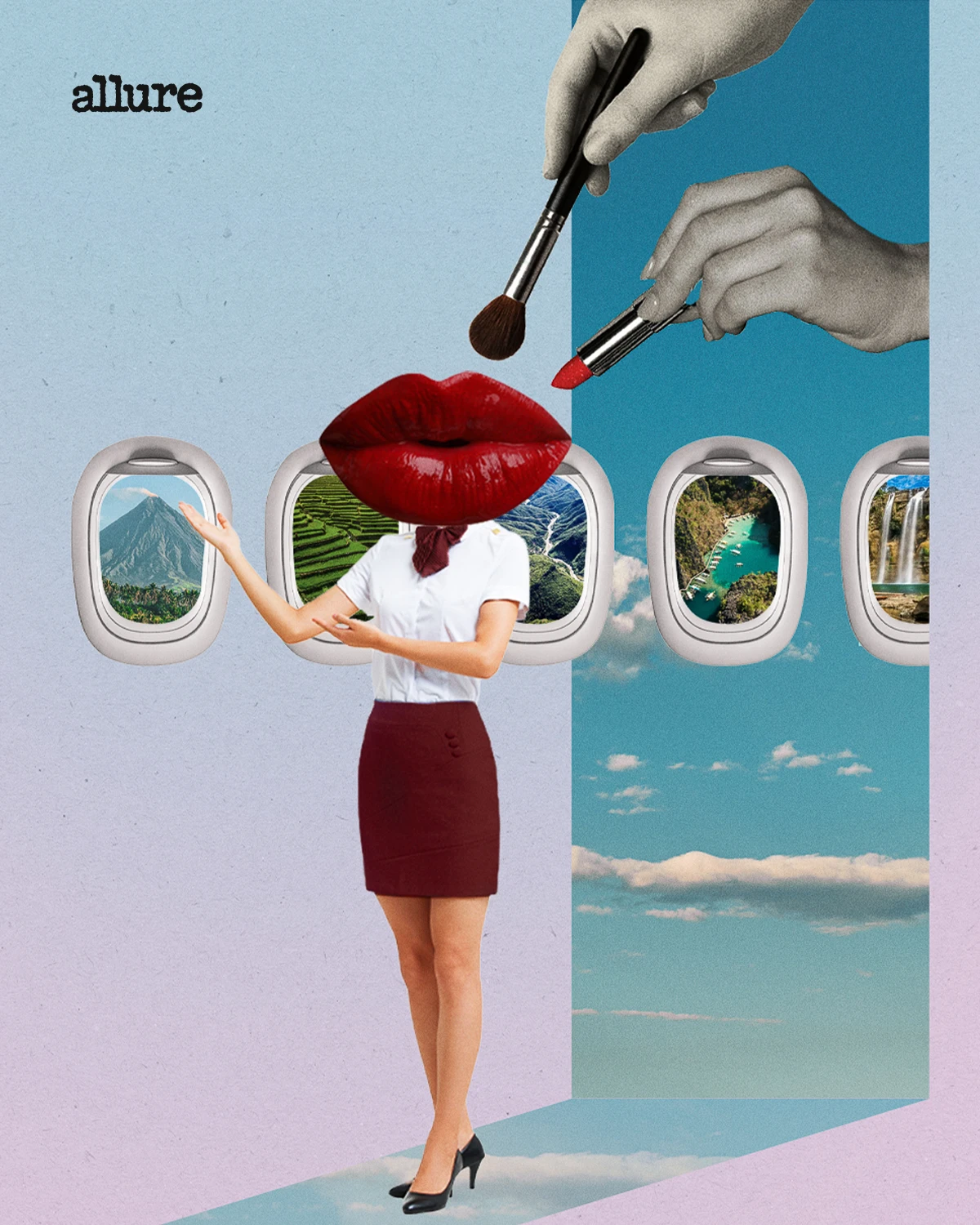
In the Philippines, being a flight attendant is a coveted job, especially for Gen Z, who see flight attendants as modern-day jet setters living aspirational lives. On different social media platforms, these beautiful women share hair and makeup tutorials, talk about their respective journeys, and give followers a glimpse of what it feels like to live their dream.
In many Filipino families, having a member who’s a flight attendant is a source of pride. The profession has long been associated with beauty, resilience, and resourcefulness. If you look at it, flight attendants have been held to the same standards when it comes to appearance for decades. They have to be good-looking, always smiling, and fit. Looking at this description, it’s fair to ask whether these expectations are rooted in safety, branding, customer service—or all three.
Tee (not her real name), has been with an international airline for over 25 years, and while she did not have the childhood dream of being flight attendant, she loves her job and understands the reasons why certain standards are imposed on them. And these reasons are not just for visuals.
Take weight, for example. Flight attendants need to maintain a certain height-to-weight limit, something that their Western counterparts are not subjected to. Tee sees the rigid height-to-weight requirement from a different perspective. “Being physically fit is essential in performing an FA’s inflight duties. Our job requires us to move a lot, like walking, lifting, pushing, bending. The heavier you are, the more effort is exerted doing these tasks,” she says.
The standards are really stringent. For a recruitment call, thousands of aspirants will show up but only 100 or so will make it. And that number will further be trimmed as actual training progresses. In a way, it is like a pageant except that more skills and knowledge are required of you.
Bell sees the standards as a combination of professionalism, branding, and pride in the uniform.
“Grooming was part of how the airline communicated consistency, discipline, and service. It was also connected to customer comfort because passengers often feel reassured when the crew looks prepared, calm, and professional. For me, it was never just about appearance. It was about representing the airline with care and respect.”
The Routine Behind the Role
Appearance, however, extends beyond uniforms. Hair, makeup, and grooming have also become part of how airlines present themselves to passengers.
Reina (not her real name), has been a flight attendant for six years. She was furloughed during the pandemic but is now back in the same airline. She has the same point of view as Tee when it comes to weight.
“I was once three pounds overweight (and this is a lot for me as I am always on my feet) and since our job requires a lot of physical activity, I had backache at the end of each day. After that, I made sure to stay within my weight limit for my height,” Reina says.
Tee’s favorite part of getting ready for work is applying makeup. “It sets the mood and it feels good when you’re all dolled up. Also, I love red lipstick because it instantly brightens the face,” she says.
Reina takes about two hours to apply her makeup and do her hair. Before being a flight attendant, she did her hair and makeup simply, for practical reasons. The airline she works for allows flight attendants to have short hair but Reina finds that wearing her long hair in a tight bun is more efficient for her. “When my hair is up, I don’t need to worry if it’s messy and I need to fix it. The bun also lessens the likelihood of my hair being in the wrong places, like food and drink.”
With her hair out of the way, she just needs to worry about red lipstick not getting into her teeth.
Reina does not see the need to maintain a certain weight and wear full coverage makeup as restrictive parts of her job. “Even if I worked in corporate, I know I would still wear makeup. Maybe not this much but I’d still wear it to look polished. I’d wear heels and still try to be fit.”
Beyond the Uniform
Mikiyo Ricamora
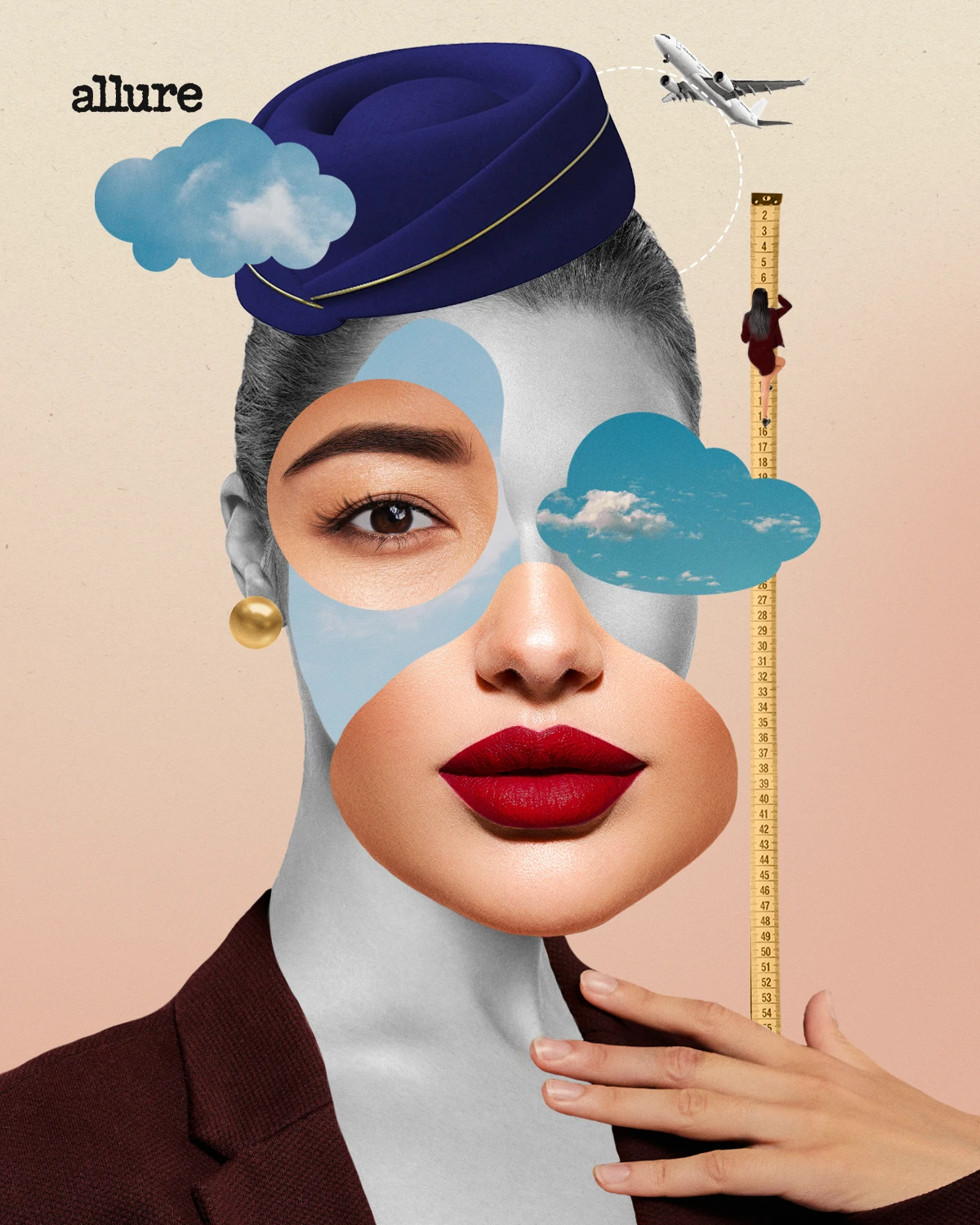
Sometimes, Reina wishes that “we’d be seen for more than just our looks. We are onboard as part of the airline’s safety team. We’ve gone through rigorous training for different situations and we don’t stop training. In my personal experience, I felt that the standards were strict for both women and men, although the grooming requirements were different. Female crew had guidelines for hair, makeup, nails, and uniform presentation, while male crew were expected to be clean-shaven, have well-kept hair, wear a polished uniform, and maintain polished shoes.”
That tension sits at the heart of the profession. Flight attendants are among the most visible representatives of an airline, yet behind the polished uniforms is rigorous safety training that passengers rarely see.
Tee, on the other hand, considers the height-to-weight requirement and the need to wear makeup as just parts of what are required of her. “Physical appearance is a factor in terms of looking pleasant, warm, and approachable when you are a flight attendant. But beyond that, our personality and communication skills are also considered, along with how we deal with pressure. Our looks matter but they aren’t the only things that matter.”
Perhaps that is why airline beauty standards continue to endure. They communicate professionalism, reinforce an airline’s image, and reassure passengers before a word is spoken. But as ideas of beauty continue to evolve, the bigger question is no longer whether flight attendants should look polished. It is which standards still serve a purpose—and which ones deserve a second look.
Frequently Asked Questions
Airlines cite physical demands—lifting luggage, pushing trolleys, staying steady during turbulence—as the basis for weight standards. Flight attendants and airline staff describe the requirement as safety-driven rather than purely cosmetic, though it also shapes the airline’s public image.
No. Female crew typically follow guidelines covering hair, makeup, nails, and uniform presentation, while male crew are expected to stay clean-shaven with well-kept hair and a polished uniform—standards that differ in specifics but remain equally strict for both.
Yes. Many Filipino families view a flight attendant in the family as a source of pride, and the role is widely seen as aspirational, especially among Gen Z, who associate the job with travel, glamour, and financial independence.
It varies by individual, but some flight attendants report spending up to two hours on hair and makeup before a flight, often opting for a tight bun and full-coverage makeup to stay polished throughout long-haul shifts.
Both, according to flight attendants interviewed. Weight and fitness requirements are tied to physical job demands, while grooming and makeup standards also reinforce consistency, professionalism, and passenger reassurance—making the rules a blend of safety and branding.
- 10 Key Moments in Philippine Beauty History
- Back to Our Roots: How the Color Brown Is Key to Unlocking the Soul of Filipina Beauty, One Dimensional Shade at a Time
- Editor-Approved: These Are The Most Flattering Red Lipsticks For Filipinas
- Face Value: How Beauty Filters Are Rewiring the Way We See Ourselves