
9 Common Hair Loss Myths, Debunked by a Dermatologist
Can hats cause hair loss? Do hair oils actually work? A board-certified dermatologist separates fact from fiction on shampooing, supplements, genetics, hair transplants, and more.
By Nina Cortez


There is no shortage of “expert advice” when it comes to why we are losing our hair. A few extra strands in the shower drain will have us pointing fingers at everything: a new shampoo, shifting hormones, unmanaged stress or simply family genetics catching up. And the internet has no shortage of supposed solutions, either: some recommend a miracle oil, a trendy scalp scrub, or—wildly enough—shaving your head completely bare. When these claims are repeated often enough, they can start to sound less like old wives’ tales and more like clinical fact.
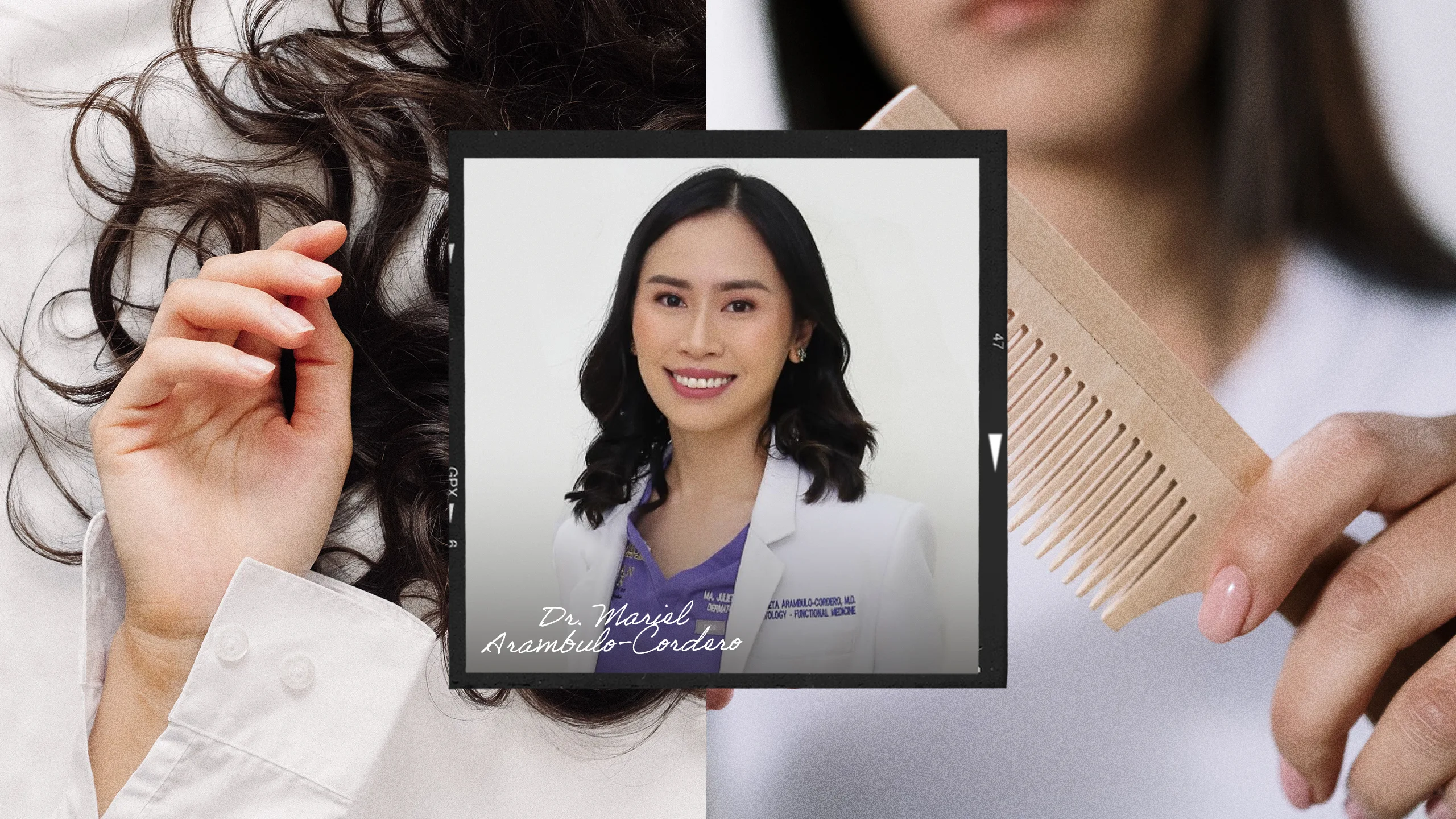
But when it comes to hair loss, the truth is rarely as simple as a new product or a quick habit change. To set the record straight, Allure Philippines asked board-certified dermatologist Maria Julieta Arambulo-Cordero, MD, FPDS, IFMCP to separate fact from myth by addressing some of the most common misconceptions surrounding hair loss—from everyday shampooing and oils, to genetics and hair transplantation.
Myth #1: Wearing hats can cause hair loss.
It’s an easy connection to make: if your scalp is trapped in a dark, friction-heavy environment all day, surely it has to be affecting your follicles, right? But wearing a hat alone isn’t generally considered a cause of hair loss. “The most common causes of hair loss are stress, inflammation, and hormonal problems,” Arambulo-Cordero says. In fact, she notes that her practice may even advise patients to wear hats after a hair transplant.
Myth #2: Shaving your head makes your hair grow thicker.
One of the oldest pieces of beauty advice in the book: shave it all off to reset the system, to make way for denser, stronger strands. Freshly shaved hair can make it look as though it’s growing back thicker, but shaving doesn’t actually change the hair follicle or how quickly hair grows. “Hair grows about one centimeter per month,” Arambulo-Cordero says. Looking inwards is probably the best solution than to shave your crowning glory off, as “It’s probably something inside [the body] that is causing the hair loss.”
Myth #3: Hair oils can regrow hair.
As hair oils have become a fixture in the conversation around hair growth, Arambulo-Cordero says the answer isn’t quite black-and-white. “Somewhat a myth,” she notes. “It depends on what ingredient is [found in the oil.] Sometimes, oils like rosemary can help with hair growth, but oils like castor oil—I don’t think so. We need to see scientific evidence for that, but it depends on the ingredients, and whether the patient is receptive to it.”
Myth #4: Supplements alone can stop hair loss.
The wellness aisle loves to frame hair loss as a simple deficiency waiting to be corrected: take the gummy, add the right mineral to your vitamin intake, and wait.
But supplements are not a one-size-fits-all solution.
Dr. Arambulo-Cordero says certain supplements, including vitamin D, antioxidantsAntioxidantsIngredients such as vitamin E, green tea, and resveratrol that help neutralize free radicals from UV rays and pollution. Layered under sunscreen, antioxidants support brighter, more resilient skin, which makesGo to Antioxidants Glossary, and iron, may help when deficiencies are contributing to hair loss. The important part, however, is figuring out whether you actually need them in the first place.
“Every person is different; every person has a different cause of hair loss,” she explains. She recommends seeing a doctor to determine which type of hair loss you have before taking supplements, “because if you start taking supplements without doing any lab work or taking a thorough medical history—it defeats the purpose of doing so.”
Myth #5: Hair transplantation is only for men.
Hair transplantation is often associated with male pattern hair loss, but the procedure is not exclusive to men. “Myth!,” she tells us. Arambulo-Cordero says women experiencing certain types of permanent hair loss may also be candidates, depending on the cause and pattern of their hair loss.
Myth #6: Once you lose hair, nothing can be done.
“Whether the patient has vitamin deficiencies, hormonal changes, inflammation, or genetics—everyone still has a chance for their hair to grow.”
Hair loss can feel definitive, especially when a bald spot or clump of hair is staring back at you. But whether hair can regrow—and which treatments might help—depends largely on what is causing the loss in the first place. Arambulo-Cordero recommends seeking a proper diagnosis before deciding on treatment.
Myth #7: Washing hair every day causes hair loss.
For anyone who has watched strands of hair collect in the shower drain, washing your hair every day can seem like the obvious suspect. However, the strands we see going down the drain aren’t necessarily caused by shampooing.
“The majority of my patients come to the clinic with oily hair, with severe dandruff because they think that shampooing every day is causing their hair loss. I think it depends on the shampoos—or on the chemicals found in the shampoos.”
Arambulo-Cordero adds that shampooing itself generally isn’t the underlying cause of hair loss; factors such as hormonal changes, inflammation, and nutritional deficiencies may instead be involved.
That doesn’t mean your shampoo has no place in the conversation. The right formula still depends on what’s happening on the scalp, particularly when oiliness, dandruff, or other scalp concerns are involved. The difference is knowing when the bottle in your shower is actually part of the problem—and when it’s simply being blamed for something else.
Myth #8: If your parents have a history of hair loss, there’s nothing you can do.
Genetics can certainly influence hair loss, but having family history of it doesn’t necessarily mean you’re destined to lose your hair in the same way—or that nothing can be done about it.
“Genetics is one factor, but there are other triggering events that can precipitate hair loss,” Dr. Arambulo explains. Other factors may influence when hair loss begins or how it progresses, which is why understanding a patient’s history is important when determining treatment.
She adds, “Genetics is not your destiny.” Understanding the full history behind a patient’s hair loss can help determine whether—and how—it can be addressed.
Myth #9: Expensive shampoos can cure hair loss.
A higher price tag on a remedy can make it feel more potent, especially when paired with promises of thicker, lusher, fuller-looking hair. But price alone doesn’t determine whether a hair-loss treatment will work.
“Not all hair growers have to be branded or expensive,” Arambulo-Cordero says. Rather than judging a product by its price or packaging, she recommends paying closer attention to its active ingredients—such as minoxidil—what they’re actually meant to address, and whether they’re appropriate for the type of hair loss being treated.
Frequently Asked Questions
Dermatologist Maria Julieta Arambulo-Cordero identifies stress, inflammation, and hormonal problems as the most common causes — not external habits like wearing hats. Proper diagnosis of the underlying trigger matters more than assuming a cosmetic cause before starting treatment.
No. Shaving doesn’t change the follicle or growth rate, which averages about one centimeter per month. Freshly shaved hair only looks thicker from the blunt cut — the real cause of hair loss is typically internal.
It depends on the ingredient. Rosemary may support hair growth, while oils like castor oil lack strong evidence, says Arambulo-Cordero. Effectiveness also depends on whether the patient’s specific hair loss type responds to it.
Often, yes. Whether caused by vitamin deficiency, hormonal change, inflammation, or genetics, dermatologists say hair can still grow back. Getting a proper diagnosis first is key, since treatment differs by underlying cause.
Not necessarily. Price doesn’t determine effectiveness — check active ingredients like minoxidil instead. Supplements such as vitamin D, antioxidants, and iron only help when a deficiency is confirmed through lab work, not as a default fix.
Nina Cortez
Nina Cortez is a Digital Content Writer at Allure Philippines. With a background in editorial writing and cultural commentary, she specializes in digital culture and online communities, exploring how they influence beauty trends and consumer behavior. Her academic research on the credibility of beauty reviews on social media further informs her understanding of how products and trends are discussed, discovered, and consumed online. At Allure Philippines, she covers beauty and culture through a digital-first lens, examining the trends and conversations shaping the industry.
Latest Stories


You might also like




To provide a customized ad experience, we need to know if you are of legal age in your region.
By making a selection, you agree to our Terms & Conditions.