The Beauty of Success: 5 Powerful Lessons From the ASEAN Inclusive Growth Summit
Angelina Jolie, Lea Salonga, Tessie Sy-Coson, Jaime Augusto Zobel de Ayala, and Jaime Alfonso Zobel de Ayala share powerful lessons on ambition, reinvention, leadership, and what really matters when you’ve reached the top.


Success looks different when you’re standing at the top.
For some, it’s a global career, a business empire, or a name that has become synonymous with excellence. For others, it’s the freedom to pursue meaningful work, create opportunities for others, or simply live a life that feels fulfilling.
But achievement comes with its own questions. How do you stay relevant when the world keeps changing? What does it take to build something that lasts? And once you’ve reached a level of success most people only dream about, what keeps you moving forward?
These questions surfaced at the 2026 ASEAN Inclusive Growth Summit, held in Manila on November 11. Organized by the Mastercard Center for Inclusive Growth in partnership with the ASEAN Business Advisory Council Philippines, the summit brought together leaders from business, government, civil society, and philanthropy to explore how Southeast Asia can build a more inclusive and resilient future. Under the theme Resilient and Rising, discussions examined everything from entrepreneurship and financial inclusion to technology, innovation, and the creative economy.
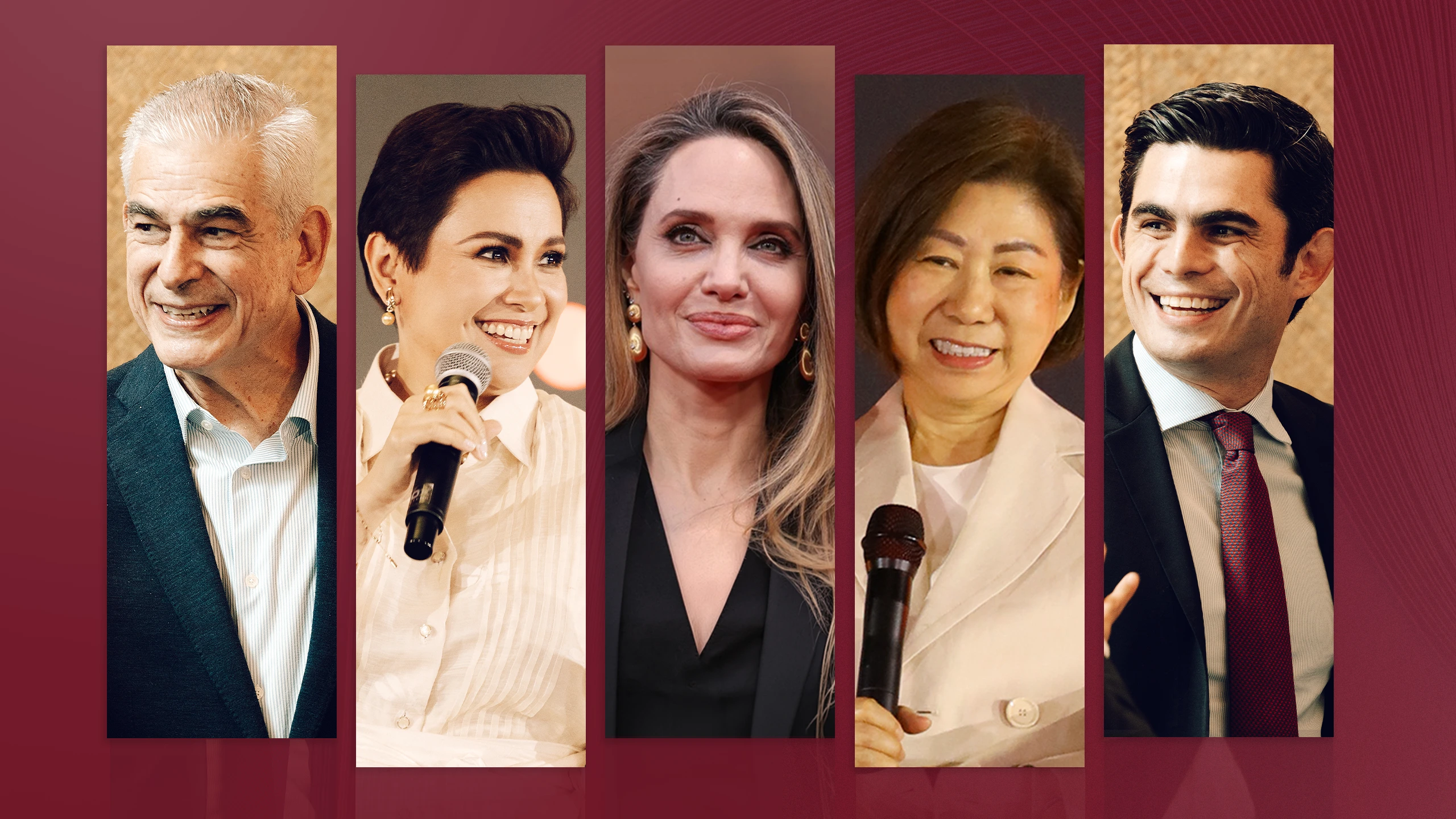
Among the speakers were Academy Award-winning actress, filmmaker, and humanitarian Angelina Jolie, Tony Award-winning performer Lea Salonga, SM Investments Corporation Vice Chairperson Tessie Sy-Coson, Ayala Corporation Chairman Jaime Augusto Zobel de Ayala, and ACMobility CEO Jaime Alfonso Zobel de Ayala.
Their achievements span different industries and generations. Yet their conversations revealed a common thread: Lasting success is rarely just about personal achievement. It’s about what you continue to learn, the people you empower, and the impact you leave behind.
Angelina Jolie: The greatest measure of success may be the life you build
Excel Panlaque
After decades in the public eye, Angelina Jolie has little left to prove professionally. But when asked what she hoped her life would look like 10 years from now, her answer had little to do with Hollywood.
“I just want to be here, and I just want to be healthy,” she said, speaking about her desire for a simpler, more peaceful life surrounded by family.
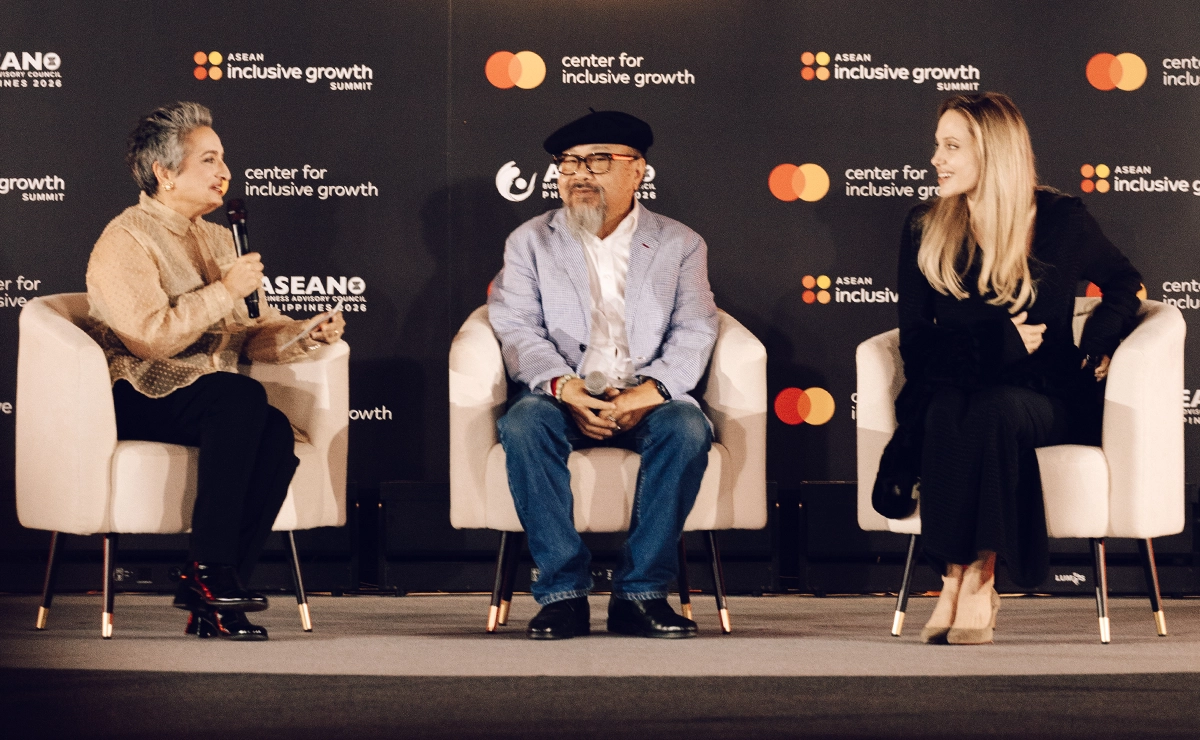
Appearing alongside Cambodian filmmaker Rithy Panh in a conversation moderated by Mastercard Center for Inclusive Growth founder and president Shamina Singh, Jolie reflected on her relationship with Cambodia, a country she first visited 25 years ago while filming Lara Croft: Tomb Raider.
She admitted arriving with preconceived notions shaped by the country’s history of war and suffering. Instead, she encountered something entirely different.
“I couldn’t believe their spirits were so strong after all they had suffered,” she recalled. “Just being among them was already a huge life lesson for me.”
The experience profoundly changed her understanding of resilience, community, and human connection. Jolie later returned to Cambodia, the birthplace of her eldest son, Maddox, and established conservation and community initiatives that have continued for more than two decades.
Her relationship with the country also shaped her approach to filmmaking. When she returned to direct First They Killed My Father, she sought the guidance of Panh, whose work has been devoted to preserving Cambodian history and storytelling.
“I wanted to do the film with the country,” Jolie explained.
Panh reinforced that distinction with one of the conversation’s most powerful statements: “Don’t make a film about Cambodia. Make a film with Cambodia.”
The difference is more than semantic. It speaks to the importance of listening, respecting lived experiences, and allowing communities to tell their own stories.
Jolie also challenged the tendency to define developing countries by what they lack rather than what they possess. “These are not poor cultures, not poor countries,” she said, emphasizing their rich histories, extraordinary talent, natural resources, and creative potential.
Her creative endeavor, Atelier Jolie, reflects that philosophy. Through collaborations with artists and makers, she hopes to create opportunities for cultural exchange and connect local craftsmanship with international audiences.
But perhaps her most compelling observation was about the meaning of service.
“It’s not a sacrifice to live a life for others,” she said, describing the fulfillment that comes from meaningful human connection.
For Jolie, success isn’t measured solely by professional milestones. It’s also about using what she has to create opportunities for others while protecting what matters most in her own life.
THE TAKEAWAY:
Success isn’t just about what you achieve, but the life you build along the way. Ambition opens doors, but purpose gives success meaning. The greatest rewards aren’t always measured in accolades, but in the connections we make, the freedom we find, and the peace we create.
Lea Salonga: Excellence is never a solo performance
Excel Panlaque
Few Filipino performers have achieved the international recognition of Lea Salonga.
From her Tony Award-winning performance in Miss Saigon to her work on Broadway and as the singing voice of Disney’s Jasmine and Mulan, Salonga has built a career synonymous with excellence.
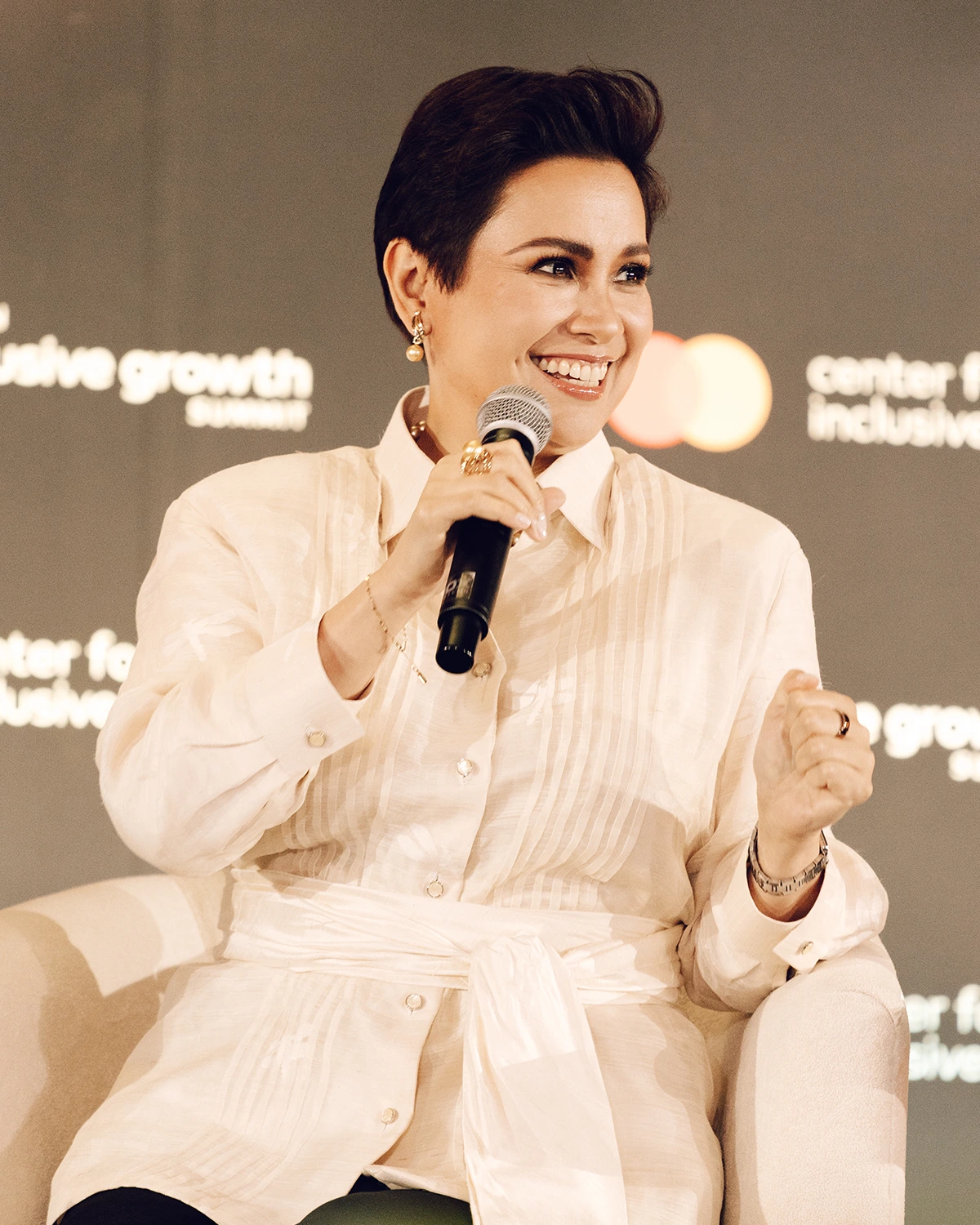
Yet at the summit, during a conversation titled In Unison: Amplifying Every Voice in ASEAN, she offered a perspective that challenged the idea of individual greatness.
“A chain is only as strong as its weakest link,” she said, recalling a lesson associated with theater director Zenaida Amador.
For someone who has spent much of her career in the spotlight, Salonga understands that even the most celebrated performance depends on people the audience may never see.
“I am but a cog in a machine,” she said.
It’s a humble way to describe the role of a performer whose name alone can sell out theaters.
In theater, the importance of collaboration is impossible to ignore. A successful production requires not only exceptional performers but also musicians, directors, designers, technicians, stage managers, and countless others working toward a shared vision. One person’s brilliance cannot compensate for a team that isn’t functioning together.
As artificial intelligence transforms creative industries, Salonga emphasized the irreplaceable value of live human performance.
Technology may be capable of replicating sounds, images, and even aspects of artistic expression. But the emotional exchange between a performer and an audience—the spontaneity, vulnerability, and human presence—remains something fundamentally different.
For young people hoping to follow a similar path, Salonga offered a reminder about the realities of pursuing a creative career.
“You better make sure that this is what you want to do,” she said.
It’s advice that goes beyond the performing arts.
Talent alone is rarely enough to sustain a career. There must also be commitment, discipline, and a genuine desire to keep doing the work, particularly when it becomes difficult.
But when that passion is real, Salonga’s encouragement was equally clear: “If that is what makes your machine tick, then, by all means, go for it.”
Her words present two sides of the same idea: pursue what genuinely matters to you, but recognize that excellence requires both individual dedication and collective effort.
THE TAKEAWAY:
Talent may put you in the spotlight, but excellence is never a solo act. The greatest achievements happen when people recognize the value of everyone’s contribution and bring out the best in one another.
Tessie Sy-Coson: Curiosity should have no expiration date
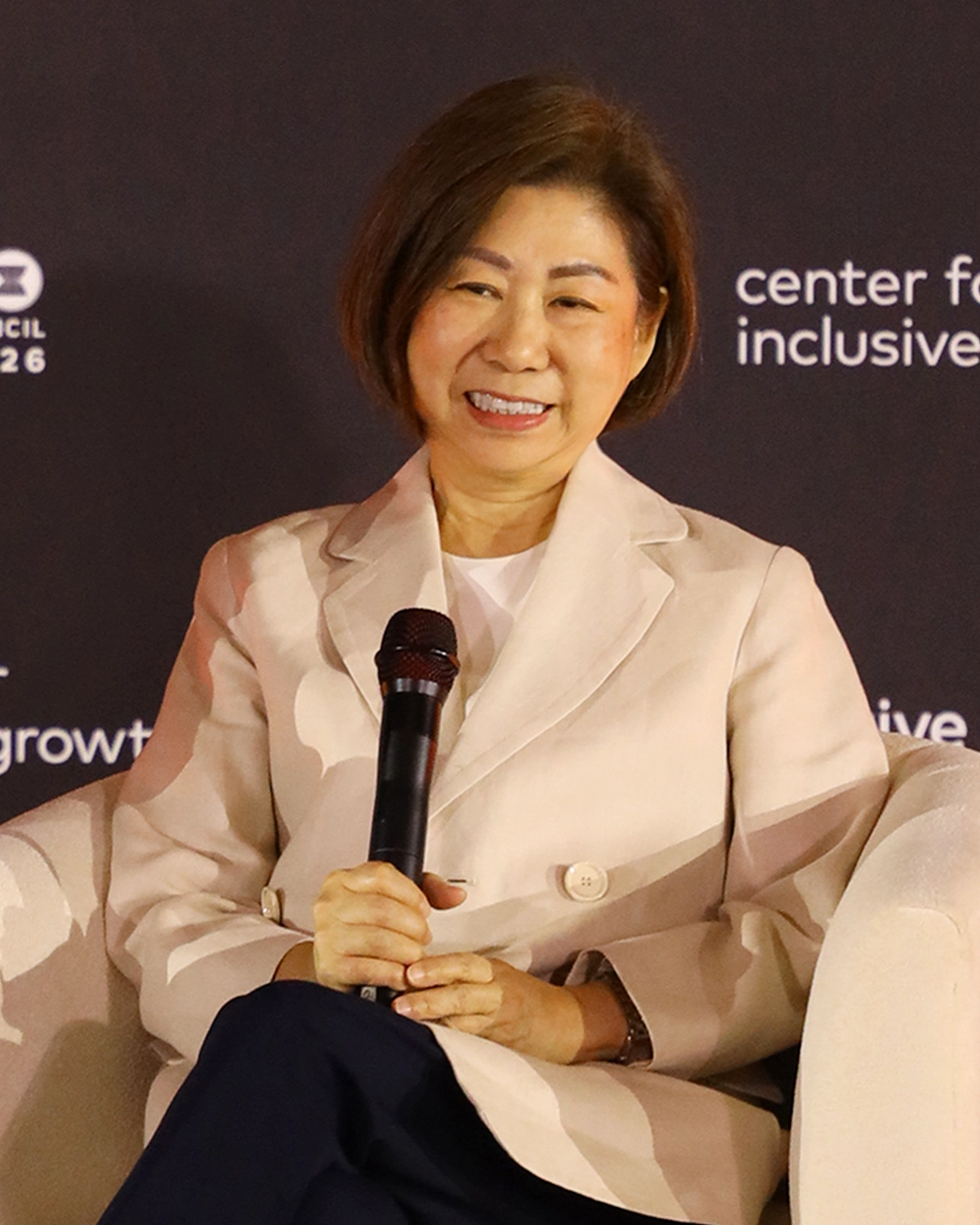
Excel Panlaqu
Tessie Sy-Coson has witnessed the transformation of a small family business into one of the Philippines’ largest conglomerates.
The daughter of SM Group founder Henry Sy Sr., she began helping in the family business as a child, eventually taking on leadership roles across retail, property, and banking. Today, she serves as Vice Chairperson of SM Investments Corporation and Chairperson of BDO Unibank.
Yet despite decades of experience, what continues to motivate her isn’t simply maintaining the scale of the businesses she oversees. It’s discovering what’s next.
“In this business, you always look for something new,” she said during a fireside conversation with journalist Rico Hizon. “The newness of the things that you’re doing will keep you going.”
For Sy-Coson, curiosity remains as important today as it was when she first entered the family business.
Sy-Coson spoke about researching consumer behavior, following developments on social media, and understanding what younger generations are interested in. Rather than dismissing unfamiliar trends, she makes an effort to understand them. That willingness to keep learning is especially significant in an era when industries, consumer preferences, and technology can change almost overnight.
Experience offers perspective, but it doesn’t automatically guarantee relevance.
Sy-Coson also recalled the lessons she learned working alongside her father, particularly the importance of financial discipline. “The financial statements tell a lot of stories,” she said. Behind the expansion of any successful business, she suggested, is the ability to understand its fundamentals.
But some of her most meaningful remarks concerned the entrepreneurs who started small and eventually built businesses of their own. Speaking about the micro, small, and medium enterprises operating within SM’s ecosystem, she explained how many began as small tenants before growing into larger businesses.
“We grow, they grow,” she said. Her philosophy reflects how the growth of a large business can create opportunities for smaller enterprises.
Sy-Coson also recalled her father’s encouragement to aspiring entrepreneurs. “If he can do it, you can do it, too.”
And when asked what advice she would give small businesses navigating economic uncertainty, she emphasized the importance of staying focused. “Look into the market, serve your market, work hard, and you’ll be able to get over it.”
The message wasn’t that challenges would disappear. It was that entrepreneurs shouldn’t allow every external uncertainty to distract them from understanding their customers and improving their businesses.
For someone whose family enterprise began with a shoe store, the value of small beginnings remains deeply personal.
THE TAKEAWAY:
Staying successful isn’t just about what you already know, but what you’re still willing to learn. Relevance isn’t defined by age or experience, but by curiosity and the ability to adapt. And success becomes more meaningful when it creates room for others to succeed.
Jaime Augusto Zobel de Ayala: The courage to change is what keeps a legacy alive
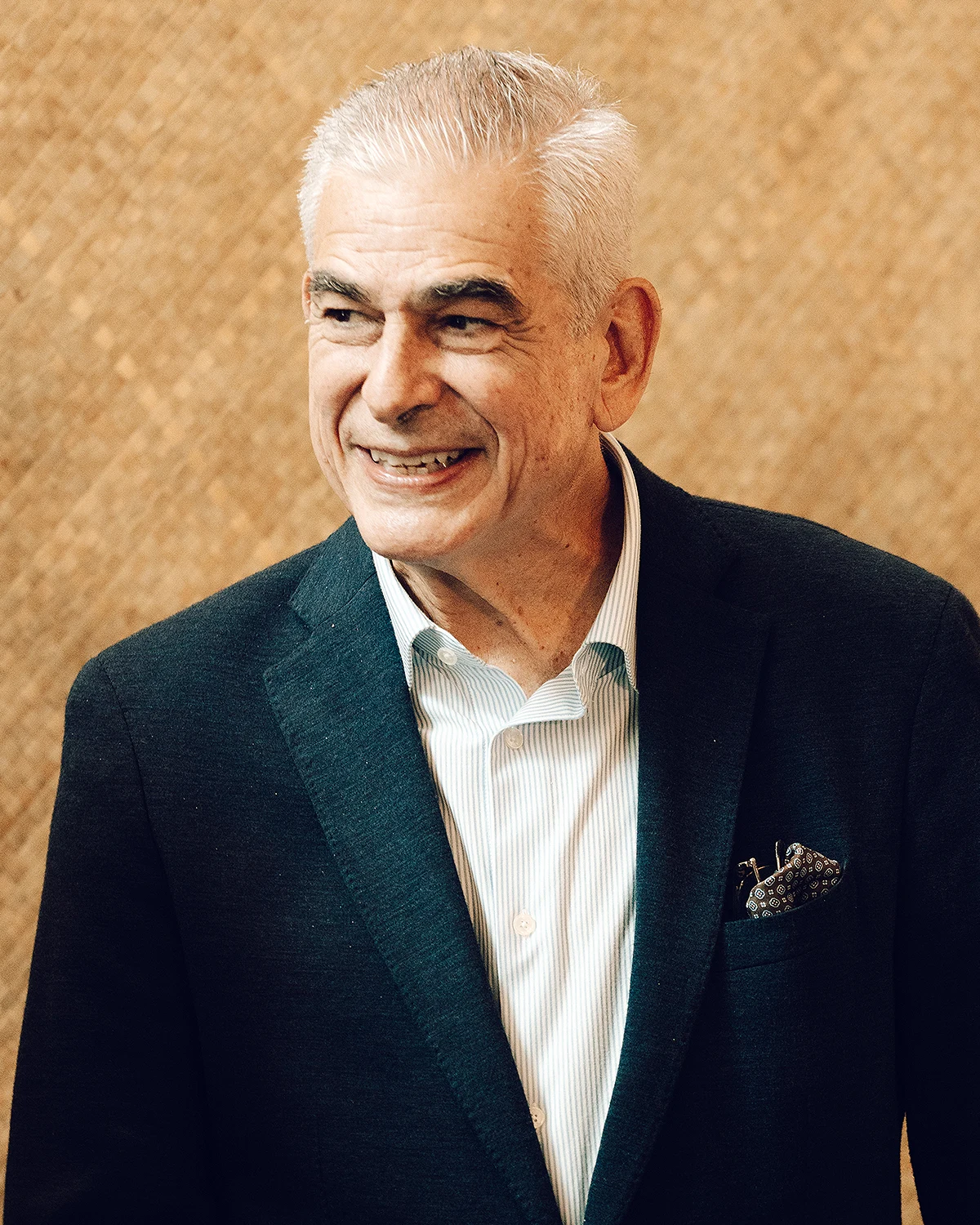
Excel Panlaque
Ayala Corporation has been part of Philippine business for nearly two centuries. Founded in 1834, the company has navigated changing governments, economic crises, technological revolutions, and the evolving needs of Filipino society.
Its longevity raises an important question: What allows an institution to remain relevant across generations?
For Chairman Jaime Augusto Zobel de Ayala, the answer comes down to “staying relevant to the needs of the time.”
His answer challenges the idea that longevity is achieved by preserving the status quo. A long history can establish credibility, but it cannot guarantee continued success. Organizations must be willing to question familiar practices, embrace new opportunities, and adapt to changing circumstances.
During a conversation with his son, Jaime Alfonso Zobel de Ayala, Jaime Augusto reflected on how the family business evolved from a partnership into a corporation and eventually a publicly listed company. Each transformation required the organization to respond to the demands of a different era. But his philosophy of adaptability extends beyond business.
When discussing how he prepared his children for the future, he emphasized resilience and the importance of learning to navigate unfamiliar situations. Rather than simply preparing them to inherit responsibilities, he wanted them to develop the confidence to solve problems independently.
He recalled encouraging his children to explore different experiences, including sending his son to work in the Australian outback as a teenager. The objective wasn’t to prepare him for a particular corporate position. It was to expose him to situations outside his comfort zone.
“We all have cards that are given to us,” Jaime Augusto said. “We have to play with those cards and find ways of being creative.”
His observation offers a different way to think about resilience: it isn’t just the ability to endure difficult circumstances, but also the resourcefulness to make the most of whatever circumstances you’re given.
Not everyone begins with the same opportunities, resources, or advantages. But the ability to adapt, solve problems, and make thoughtful decisions remains essential regardless of circumstance.
And when asked what he hoped Ayala would become in another 200 years, he returned to the importance of remaining relevant. Even the most established institutions cannot afford to assume that yesterday’s achievements will guarantee tomorrow’s success.
THE TAKEAWAY:
Reinvention doesn’t mean abandoning what made you successful. A lasting legacy isn’t built by holding on to everything that worked in the past. It’s built by recognizing which values are worth preserving—and having the courage to change what no longer serves the future.
Jaime Alfonso Zobel de Ayala: A powerful name doesn’t replace the need to earn trust
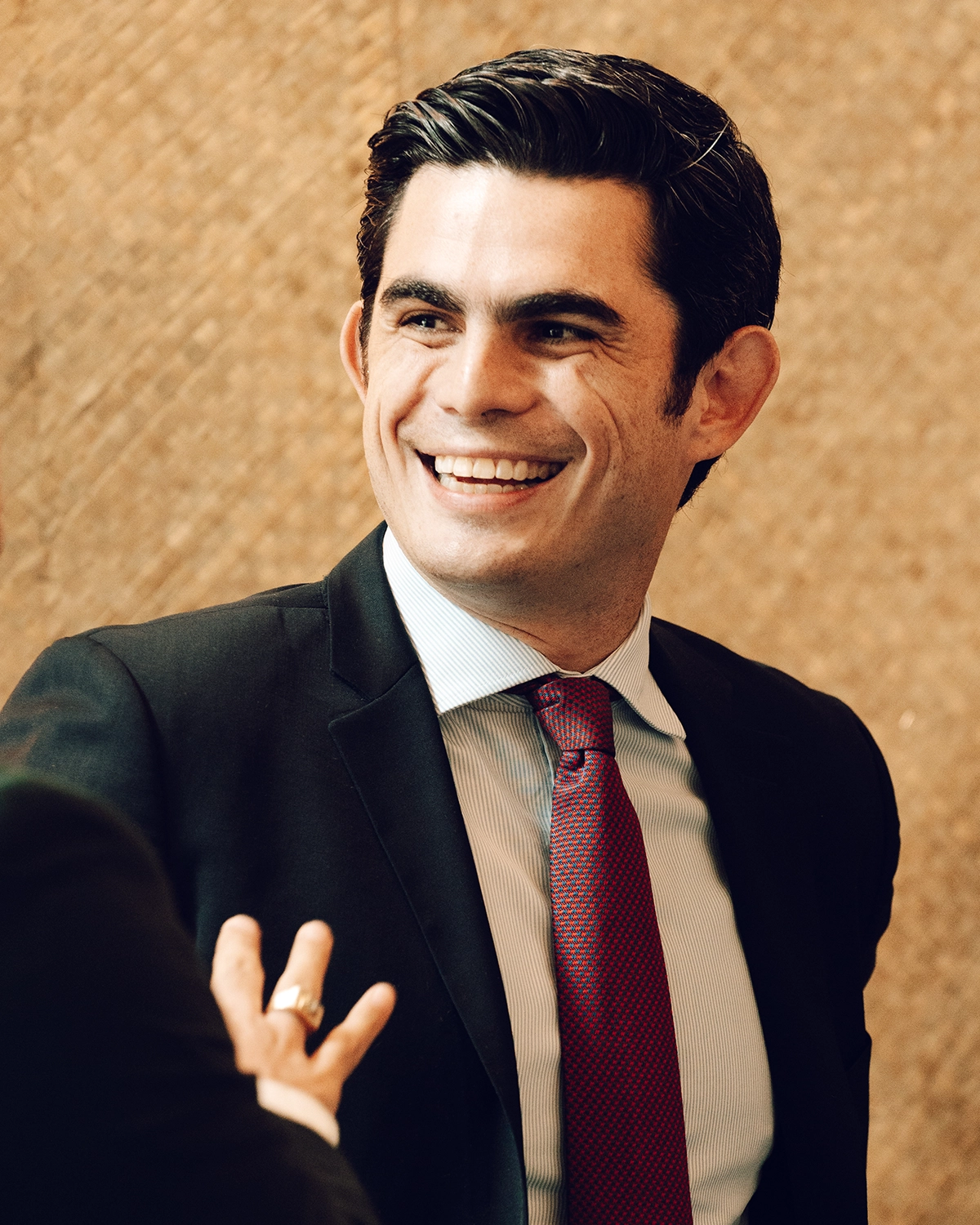
Excel Panlaque
For Jaime Alfonso Zobel de Ayala, being part of one of the country’s most established business families comes with both opportunity and responsibility.
As CEO of ACMobility, he represents a new generation of leadership within the Ayala Group. But when discussing the company’s most valuable assets, he didn’t begin with its size, history, or financial resources. He pointed to something less tangible.
“We think Ayala has a very unique component of its brand, which is trust,” he said. Trust, he explained, is built through the promises an organization makes to its different stakeholders—and its ability to deliver on those promises.
For shareholders, that might mean investment returns. For employees, meaningful opportunities to build careers. For partners and customers, it means consistently providing the value they expect.
“If you meet those propositions more often than not, you develop trust.”
In an age of carefully curated reputations and personal branding, visibility can be mistaken for credibility. But trust works differently. It develops over time, through consistency between what people say and what they actually do.
Jaime Alfonso also spoke about the importance of entrepreneurial thinking within an established institution. Despite Ayala’s long history, he described a culture that encourages people to confront new challenges rather than retreat into familiar ways of working.
“A lot of the professionals, a lot of the family members, we’re not afraid of the future,” he said. “We want to attack it.” That willingness to confront uncertainty reflects a determination to build on the company’s legacy rather than simply rely on it.
A legacy can provide a foundation, but each generation must prove that it remains deserving of people’s confidence.
He also credited his father’s leadership approach, particularly the ability to provide guidance while empowering others to make decisions. It’s a reminder that effective leadership isn’t always about maintaining control. Sometimes, it’s about creating an environment where others have the confidence and authority to lead.
THE TAKEAWAY:
A respected name may open doors, but what you consistently deliver determines whether those doors stay open. Trust isn’t something you inherit or claim. It’s earned through your actions, your accountability, and your ability to deliver on what you promise—and it’s something you must continue earning every day.
The most meaningful success goes beyond the individual
These aren’t lessons reserved for celebrities, executives, or people leading billion-peso businesses. They apply to anyone building a career, pursuing a passion, leading a team, starting a business, or navigating a new chapter in life.
What matters is whether our achievements create opportunities for others, whether experience makes us more open to learning, and whether ambition remains connected to something larger than ourselves.
The most enduring kind of success isn’t simply measured by how far someone rises. It’s measured by what they build, what they stand for, and how many people are given the opportunity to rise with them.