Why We Need To Stop Saying “Holy Grail” When Recommending Products
Philippine Dermatological Society president Jasmin Jamora explains why beauty’s favorite phrase promises more than any product can deliver, and how to give (and read) a recommendation worth trusting.


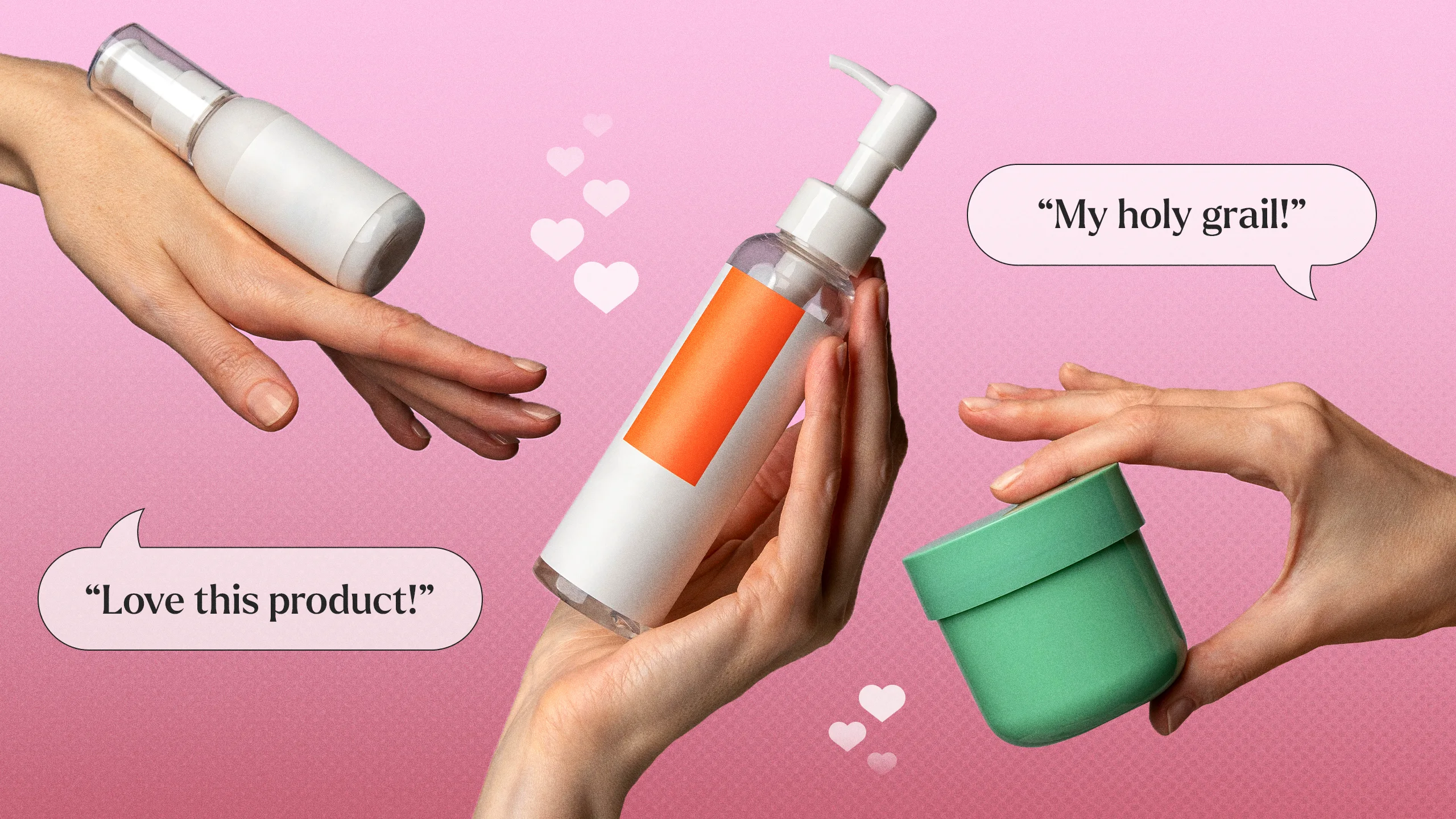
Scroll through any beauty feed, and you’ll see a whole search page of content creators sharing their “holy grails:” foundation, sunscreen, moisturizer, serumSerumA lightweight, concentrated treatment applied after cleansing and before moisturizer to target specific concerns, such as dark spots, dehydration, or fine lines. Because serums are potent, introducing one at aGo to Serum Glossary, anything.
Holy grail used to be the highest compliment in beauty circles, reserved for the one product you’ve stopped searching replacements for. Now it’s more of a reflex. In fact, sometimes people attach the phrase to a product they’ve only used for a week.
However, Filipino skin lives through heat, humidity, pollution, and long commutes, and it comes with a spectrum of tones and sensitivities that a viral recommendation can’t always cover.
A base that stays on in an air-conditioned room can melt off by noon in Manila traffic. A “gentle” moisturizer may sting one person and feel unremarkable on the next. Calling a product the holy grail turns “this worked for me” into “this will work for you,” and the person who gets budol-ed with that claim might be left with a vanity filled with expensive disappointments and regrets.
That’s why we at Allure Philippines never use the phrase—these so-called holy grail products are almost always just driven by virality.
So should the use of holy grail be retired? To find out, Allure Philippines spoke to Jasmin Jamora, MD, FPDS, and president of the Philippine Dermatological Society.
What a “holy grail” actually is
According to religious and historical literature, the Holy Grail refers to the cup that Jesus Christ was said to have used at the meal before His death. The object is also important in Arthurian legends, where it is thought to be imbued with magical powers. But today, holy grail refers to a product someone loves.
Dr. Jamora calls the term “a bit overwrought to begin with. Holy grail means it’s a product that you’ve been trying to get the balance right on,” she says.

Envato Images
She mentions some examples: retinoids that work without the sting and peeling, brightening products that don’t rely on hydroquinone, wrinkle-smoothing with a Botox-like effect sans the injections, and tightening without any procedures. And the cherry on top: a sunscreen with no white cast and no greasy finish.
Dr. Jamora explains, “The reason it’s called ‘holy grail’ is because you’ll never find it. Some products will closely approach ideal, but nothing will ever be ideal. But I think as people keep on doing research and keep on doing studies, we will get there eventually.”
Better think twice
When you come across posts reviewing products they call the holy grail, Dr. Jamora’s advice is to pause. “You have to think twice and think, why are they endorsing this product?”
She also said to keep the following questions in mind whenever you see posts like that: Who is this person? What’s their background and training? What do they gain from the recommendation? Is it a paid post, an ambassadorship, or genuine excitement from the product?
The risks vary depending on the type of product. Clothes are one thing. A toner that goes on your face every day, or anything that affects your health, is another.
You can generally depend on doctors for unbiased recommendations, “In the Philippines, physicians are not allowed to endorse products—especially health products and products that impact your skin and health,” Dr. Jamora says. The Philippine Dermatological Society’s Code of Ethics also states that dermatologists may not commercially endorse any medical or health product.
How long should you test before you judge
Giving an in-depth review about certain products needs time—and consistent use. Dr. Jamora says a week is a good start, but you need more caution if you have allergies to consider.
“If you’re not sure if you’re going to be allergic to a product, you can apply it twice a day on the inner arm for a week to see if you’re irritated or not,” she says. “But otherwise, if you’re not irritated, then try it for a week or so, and generally, you’ll see if a product suits you.”
Dr. Jamora also suggests stopping use if you notice the following signs: stinging, pain, or irritation after applying the product; swelling or red patches; and scaling or cracking.
What evidence-based reviews actually look like
In dermatology, a product earns its claims through a series of rigorous reviews and measurable outcomes: transepidermal water loss and skin hydration, moisture readings from a corneometer, oiliness from a sebumeter, and wrinkle depth through profilometry.
Dr. Jamora recalls using profilometry in her early research. “You know, there are ways for us to study the impact of products on the skin that [are] very scientific. So I would watch out for people who are so enthusiastic and have zero basis for their claims.”

Envato Images
For more evidence-based takes, Dr. Jamora advises readers to rely on dermatologists, physicians, and experts who study products scientifically—from ingredients to performance under different conditions.
She does find fun in dramatic reviews, though. “Honestly, the drama is fun,” she shares. “But if you’re a serious consumer and you’re serious about your health, then you know, try to find more evidence-based reviews.”
What makes a good recommendation
But reviews and recommendations don’t have to be entirely clinical, either. Instead, you can lean toward reviewers who provide results over those who bring only emotion and drama to their critiques.
A useful review, according to Dr. Jamora, covers what the product claims to do (lightening, brightening, moisturizing, etc.), whether any evidence backs it up, and what results were measured. “As well as the feel of the product on your skin, any side effects that you experience, any complications, any allergies that you have experienced, comments on packaging, and maybe even pricing,” she adds.
Dr. Jamora shares her own template of what she considers a good review: “You can put your own spin on it, or whatever you experience. For example, ‘I found this product very lightweight. It wasn’t greasy, the hydration lasted a long time, and I didn’t get irritated.’ End of story.”
No flowery words needed.
The next time you feel the urge to describe your newest product hyperfixation as a holy grail, or get budol-ed by a TikTok video, ask yourself, “What is the review based on?” A simple “It worked for me, and here’s how,” is a great example of a good recommendation.
It’s a more honest and more useful way of sharing your views on a product, rather than simply referring to it as a holy grail.
Frequently Asked Questions
Dermatologist Jasmin Jamora, MD, FPDS, and PDS president, says “holy grail” implies a product works for everyone, when skin response varies per person. Filipino skin also faces heat, humidity, and a wide range of tones and sensitivities, so one viral recommendation rarely performs the same way twice.
Dr. Jamora recommends testing a new product for about a week to judge general suitability. For products that may trigger allergies, she advises patch testing twice daily on the inner arm for a week first, then watching for stinging, swelling, redness, or scaling before continued use.
No. Dr. Jamora explains that physicians in the Philippines cannot endorse health or skin-related products commercially. The Philippine Dermatological Society’s Code of Ethics explicitly bars dermatologists from endorsing any medical or health product, which is why unverified endorsement claims deserve extra scrutiny.
Evidence-based skin care testing relies on instruments such as a corneometer for hydration, a sebumeter for oiliness, and profilometry for wrinkle depth, alongside transepidermal water loss readings. Dr. Jamora says these measurable results matter more than enthusiasm when judging whether a product truly performs.
According to Dr. Jamora, a useful review states the product’s claims, any supporting evidence, measured results, how it felt on the skin, side effects or allergic reactions, packaging, and price. She notes reviews do not need to sound clinical to be credible or useful.