How Kara Magsanoc-Alikpala Turned Her Breast Cancer Journey Into a Lifelong Mission to Help Others
After her diagnosis, the cancer survivor and ICanServe Foundation co-founder continues to champion early detection, patient support, and better cancer care in the Philippines.



“My former boss, Cheche Lazaro of the Probe Team, once asked me to do a story on cancer, and I told her our ratings might dip,” says Kara Magsanoc-Alikpala.
The award-winning broadcast journalist and Emmy-nominated documentary filmmaker shares that it was a moment she wishes she could revisit. She admits having once avoided the subject, but after her breast cancer diagnosis in her early thirties, she wishes she had produced the story. “I wish I had taken the time to learn about breast cancer, its signs and symptoms, and the importance of early detection. Perhaps I would have discovered it earlier,” she admits.

Image courtesy of subject.
When Magsanoc-Alikpala asked her doctor if there was anything she could do to prevent hair loss, he told her no, adding that “losing her hair was a small price to pay to save her life.” Although she says her doctor meant well, the response stayed with her. “People who have never had cancer may not realize how hurtful that can sound,” she says. “Losing your hair is not just about losing your hair. It feels like losing a part of your dignity. It’s like having your sickness on display for everyone to see.”
When she asked a fellow cancer survivor the same question, she received the same answer. But hearing it from someone who had lived through the experience made it easier to accept. “There is something about the sisterhood of cancer that is difficult to explain to anyone who hasn’t experienced it,” she says. “With other survivors, you can speak freely. You don’t have to explain every fear or worry. You don’t feel judged, and you don’t have to pretend to be strong all the time.”
Finding the support she didn’t know she needed
Connecting with fellow survivors formed a lifeline for Magsanoc-Alikpala. “Back then, especially if you were young, you hardly knew anyone who had survived breast cancer. The internet wasn’t what it is today, and reliable information was much harder to find,” she says. “There were few places to turn to for answers, and even fewer opportunities to connect with other survivors who could understand what you were going through.”
That sense of sisterhood led Magsanoc-Alikpala to co-found ICanServe Foundation with fellow cancer survivors Crisann Celdran, Bet Lazatin, and the late Becky Fuentes. “In the beginning, we simply met over coffee, lunch, or dinner with newly diagnosed patients referred to us by friends. We listened, shared what we had learned from our own experiences, and tried to reassure them that they weren’t alone.”

Image courtesy of ICanServe Foundation, Inc.
The reassurance that she found in this sisterhood became one of its greatest gifts: the knowledge that no one had to face cancer alone, and that being understood by people who had walked a similar path could make even the hardest days a little easier.
As they listened to patients and their families, the founders encountered challenges that extended beyond emotional support.“First, we saw the lack of information. Then, the lack of support. And behind these were bigger problems: inadequate funding, not enough trained people, and a lack of facilities,” she says.
Magsanoc-Alikpala points out how cancer facilities and oncology professionals were mostly based in Metro Manila, leaving patients in provinces with fewer options. “Our advocacy kept growing as we tried to address the various gaps in cancer care that we witnessed and experienced through the years,” she says.
Building a better path to cancer care
The inaccessibility to afford cancer care, which leads to not knowing the signs and symptoms, and waiting too long to be accommodated in public hospitals, is a common pain point for many Filipino patients, shares Magsanoc-Alikpala. One case, which underscored the importance of proper access to cancer care, particularly stayed with her.
“We had an elderly patient who was being treated for breast cancer. She even underwent a mastectomy. But in the middle of her chemotherapy, her doctors discovered that she didn’t have breast cancer at all. She had lung cancer,” Magsanoc-Alikpala says. “That experience was a painful reminder that getting patients into treatment is not enough. They need the right diagnosis, the right treatment, and timely access to quality care.”

Image courtesy of ICanServe Foundation, Inc.
That story was a painful reminder of how breast cancer goes beyond just individual support and treatment—it requires systemic change. This led to ICanServe Foundation’s community-based cancer control program, Ating Dibdibin, created in 2008, which partnered with local cities. “Where you live can still determine how quickly you get diagnosed, whether you can see a specialist, and whether the treatment you need is available,” she says. “This partnership, enshrined in a local ordinance, brings services to the community. We help women through the continuum of cancer care—early detection, diagnosis, treatment, survivorship care, palliative care, and hospice care.”
Today, this first-of-its-kind community program has seven city partners. This program, Magsanoc-Alikpala shares, “makes sure there are clear referral pathways and adequate funding in place, so patients have minimal to zero out-of-pocket expenses. We train the medical team, we help shape the governance structure.”
Policymaking as a catalyst for change
The foundation also expanded into policy advocacy. Magsanoc-Alikpala helped establish the Cancer Coalition Philippines, which worked toward the passage of the National Integrated Cancer Control Act of 2019.
“We brought to the policy process concerns that might otherwise have been overlooked,” she says. One of these was the need to give patients and survivors a place in cancer policymaking. The coalition advocated for the inclusion of a cancer survivor in the National Integrated Cancer Control Council, putting into practice a principle central to patient advocacy: “Nothing about us without us.” The coalition also fought for cancer survivors, whether undergoing treatment or in remission, to receive the same 20% discount extended to senior citizens and persons with disabilities.
For Magsanoc-Alikpala, these efforts reflect the importance of involving patients not only in decisions about their own treatment, but also in shaping the systems designed to care for them.
Why patients must have a say
Magsanoc-Alikpala’s experience of cancer care in the United States had shaped her advocacy. “It was such a welcome change. For the first time, I felt that my opinion mattered and that I had a say in my own care,” Magsanoc-Alikpala recalls of her experience at Stanford Hospital.
That newfound sense of agency also came with responsibility. “I had to do my homework. I had to learn as much as I could about breast cancer so I could ask the right questions, understand my options, and take part in making decisions about my treatment. That was one of the first lessons I brought home with me,” she says.
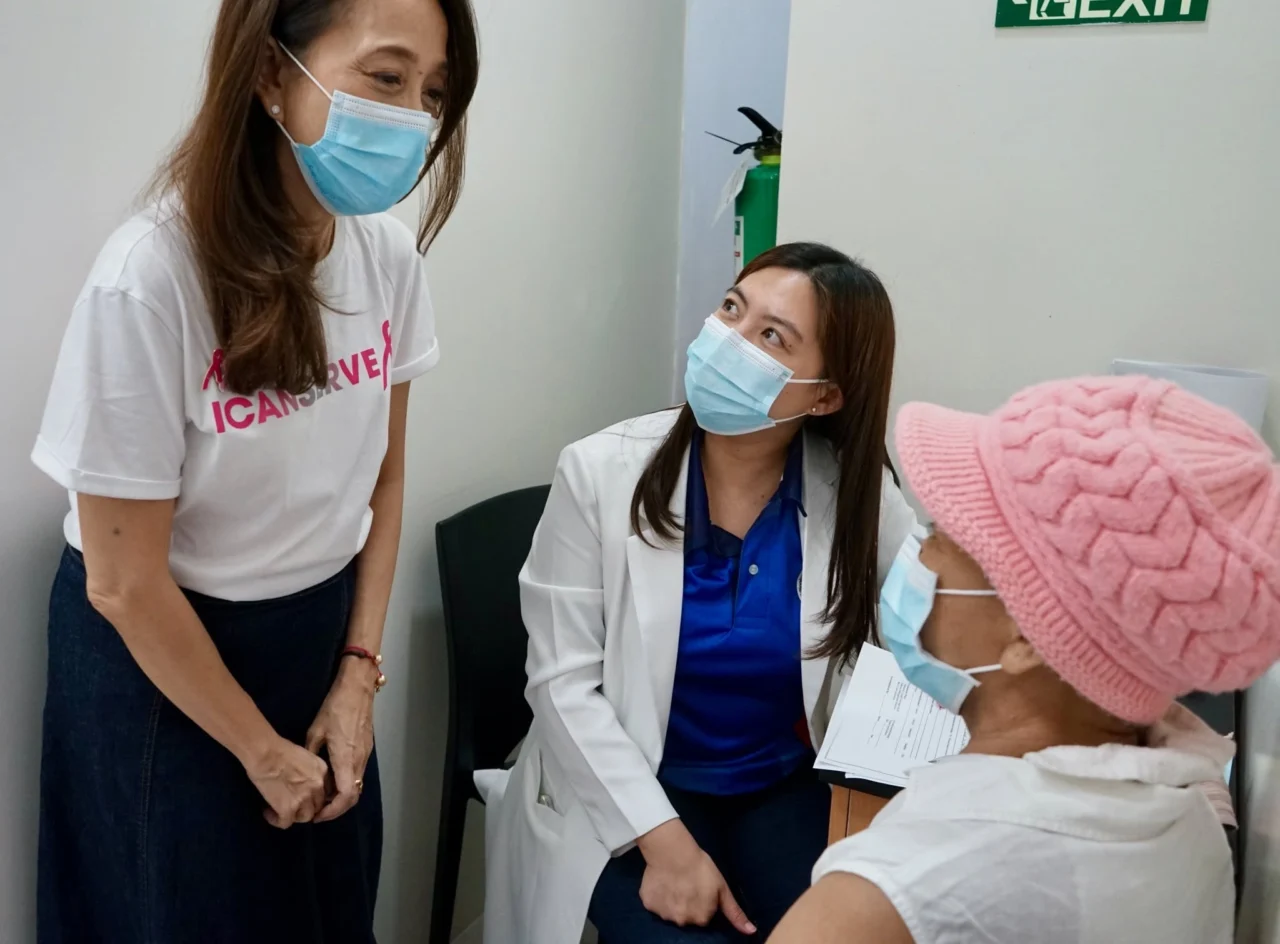
Image courtesy of ICanServe Foundation, Inc.
It was a lesson that would shape ICanServe Foundation’s advocacy. “We pushed for a partnership between doctors and patients. We encouraged patients to ask questions, shared checklists to help them prepare for consultations, and reminded doctors to make time to listen and answer those questions,” she says.
A mission shaped by meaning
For Magsanoc-Alikpala, the end of treatment does not necessarily mean the end of the cancer journey. “First of all, there is never really the absence of disease,” she says. “The cancer journey doesn’t end when treatment ends. Many experience fear of recurrence, some slip into depression, others have PTSD. I just want to acknowledge that it’s not really over for some just because treatment ended.”
Her understanding of healing has become closely tied to faith, purpose, and service. “Part of healing is knowing your mission and your meaning,” she says. “It boils down to all of us grabbing all opportunities to love and serve. We just do it through different platforms. Mine is through my cancer advocacy and work as a storyteller. And of course, my most important platform is through my loved ones.”
She also draws strength from barangay health workers, grassroots cancer survivors, and community groups that help patients with transportation, financial assistance, and other everyday needs. “You don’t need to have much to give much,” she says. “In fact, I think they are giving something far more valuable than something material: their time and compassion.”
Asked what she hopes to leave behind through Icanserve, she answers simply. “My dream is for the ICanServe Foundation to become irrelevant because breast cancer is no longer a major threat to women’s lives.”
Until then, ICanServe continues to advocate for mandatory breast cancer screening, dedicated and paid community-based patient navigators, wider adoption of Ating Dibdibin by local governments, and a health system that enables women to receive timely care without the constant fear of how they will pay for it. “Because saving lives takes more than awareness,” she says. “It takes a whole community, a responsive health system, and a shared commitment to making quality cancer care accessible to every woman.”
Frequently Asked Questions
ICanServe Foundation was co-founded by breast cancer survivor Kara Magsanoc-Alikpala along with fellow survivors Crisann Celdran, Bet Lazatin, and the late Becky Fuentes. The group began by meeting newly diagnosed patients over coffee to share their own experiences and reassure them they weren’t alone.
Ating Dibdibin is ICanServe Foundation’s community-based cancer control program, launched in 2008 and now active in seven city partners. It supports women through early detection, diagnosis, treatment, survivorship, and palliative care with minimal out-of-pocket costs.
The National Integrated Cancer Control Act of 2019 is Philippine legislation that Kara Magsanoc-Alikpala and the Cancer Coalition Philippines helped pass. It secured a seat for cancer survivors on the national cancer council and extended senior-citizen discount rates to patients and survivors.
According to breast cancer survivor Kara Magsanoc-Alikpala, treatment ending doesn’t mean the cancer journey is over. Many survivors continue to experience fear of recurrence, depression, or PTSD, and ongoing emotional support remains essential well beyond active treatment.
Patient involvement ensures treatment decisions reflect real needs, not just clinical protocol. Kara Magsanoc-Alikpala’s advocacy pushed for partnerships between doctors and patients, encouraging patients to ask questions and take an active role in understanding their own care options.