If there’s one beauty product I “can’t” live without, it’s blush. Give me cream, powder, or something-in-between — I will apply it with abandon in pursuit of looking like a glowier, less-tired version of myself.
But, shock of all shocks, “apply with abandon” isn’t necessarily the most efficient path to achieving that goal. I was reminded of this when I was lucky enough to find myself in the chair of makeup artist Mariela Bagnato, who offered up a blush application tip I’d never heard before.
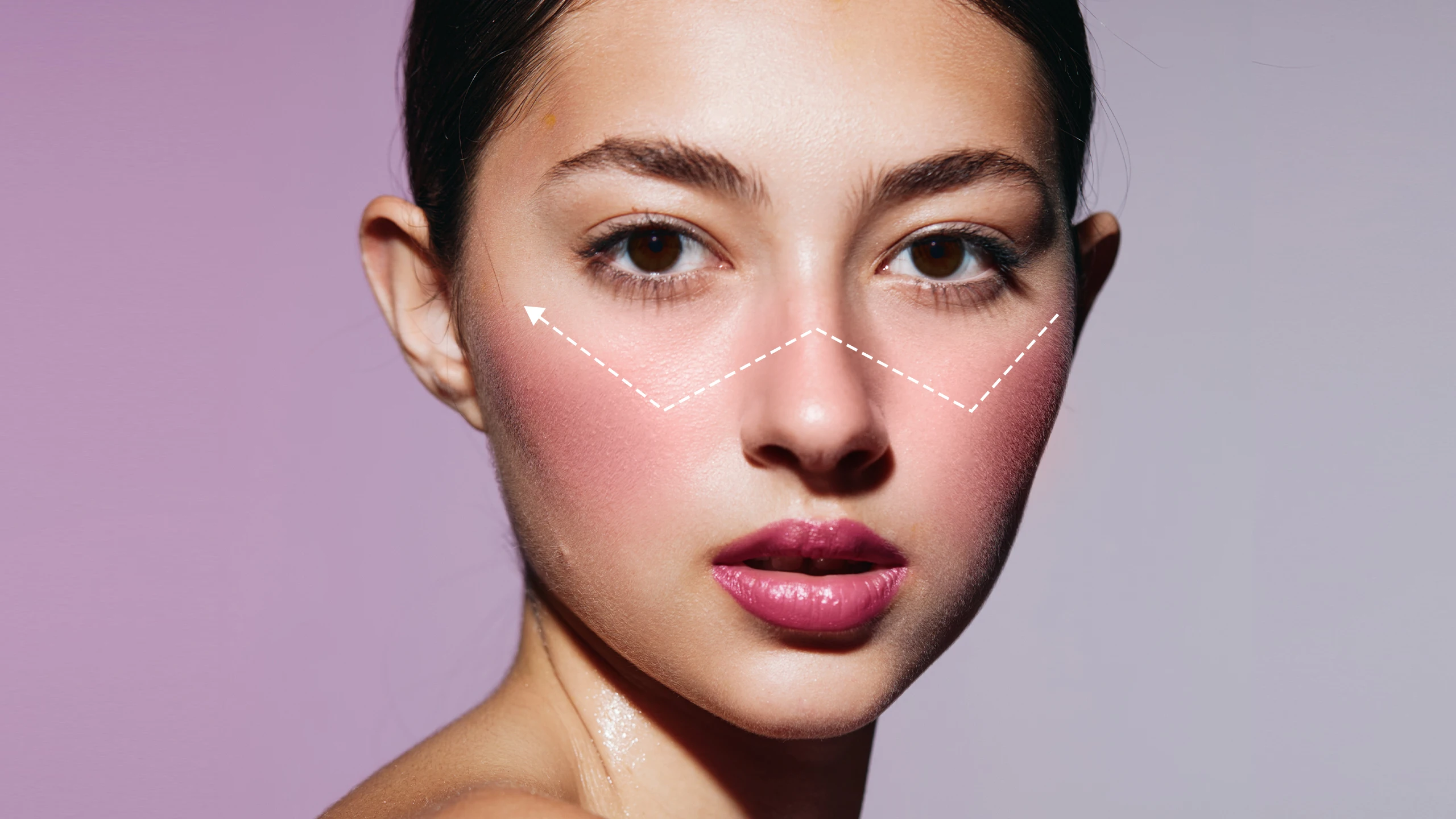
To create a healthy-looking flush that also visually lifts the face, apply your blush in the shape of the letter ‘W,‘ says Bagnato. Imagine the letter is plastered squarely in the center of your face: “Sweep or blend blush near your temple, down to the middle of the cheek, up to the bridge of the nose and back down [and up] the other side,” she says.
The end result is a subtle glow on the areas of your face where the sun would naturally hit. And because the color sits up near your temples and swoops downwards, this technique also “helps contourContourA makeup technique that uses a shade slightly deeper than your skin tone to add shadow and structure to the cheekbones, nose, and jawline. Blend carefully and choose an undertoneGo to Contour Glossary your face by creating a lifting effect,” says Bagnato.
That said, the ‘W’ technique is not to be confused with the ‘C’ technique—also known as draping—in which blush is swept from the top of the cheekbone around the outer eye and up towards the temple. “This motion brings a beautiful brightness to the face,” makeup artist Elisa Flowers has previously told Allure. And while I don’t disagree, draping can sometimes look a little too makeup-y for my liking — whereas the ‘W’ method provides a fresher, more natural-looking result.
Bagnato demonstrated on me using Mary Kay Gel Cream Blush, a limited-edition formula that melts seamlessly into skin. “I love to apply this technique using cream blush because it creates a second skin finish that simulates the sunkissed effect much better,” adds Bagnato. (You can shop a few Allure editor favorites below.) But if you prefer powder, Bagnato recommends using a fluffy blush brush and exercising a light hand.
And… that’s it! No bells, whistles, or special tools required—just a little knowledge of the alphabet and the willingness to spend an extra moment or two next time you apply your blush. One move, major payoff.
The W blush technique involves applying blush in the shape of the letter W across the center of the face: sweep from the temple down to the middle of the cheek, up to the bridge of the nose, and back down and up the other side. The result is a flush that lands where the sun would naturally hit the face, creating a healthy, sun-kissed glow. Because the color sits near the temples and sweeps downward, the technique also creates a subtle lifting and contouring effect on the face.
Draping — also called the C technique — involves sweeping blush from the top of the cheekbone around the outer eye and up toward the temple in a C-shaped motion. It delivers a bright, editorial effect but can read as more overtly made-up. The W technique, by contrast, places blush in a path that mirrors where natural sun exposure would hit the face, producing a fresher and more natural-looking flush. The W method also creates a lifting contour effect that draping does not.
Makeup artist Mariela Bagnato recommends cream blush for the W technique because it creates a second-skin finish that better simulates a sunkissed effect — the formula melts into skin rather than sitting on top of it. For powder blush, Bagnato advises using a fluffy blush brush and applying with a light hand to avoid over-depositing color. Both formats work with the technique, but cream delivers the most seamless result.
The W technique is suited to most face shapes because it works with the face’s natural light-catching planes rather than restructuring them. Because color is placed at the temples and sweeps inward and downward toward the nose bridge, the technique creates a contouring and lifting effect that is particularly beneficial for faces that want more definition without the appearance of heavy contouring. The natural sun-hit placement makes it universally flattering across Filipino skin tones and complexions.
Standard blush application typically focuses color on the apples of the cheeks or sweeps it back toward the hairline in a single horizontal motion. The W technique distributes color across a wider, more vertical path — from temple to cheek to nose bridge and back — which creates dimension across more of the face rather than concentrating it in one area. This multi-point placement mimics the way natural color and warmth fall across the face after sun exposure, making the result look less like applied product and more like intrinsic skin tone.