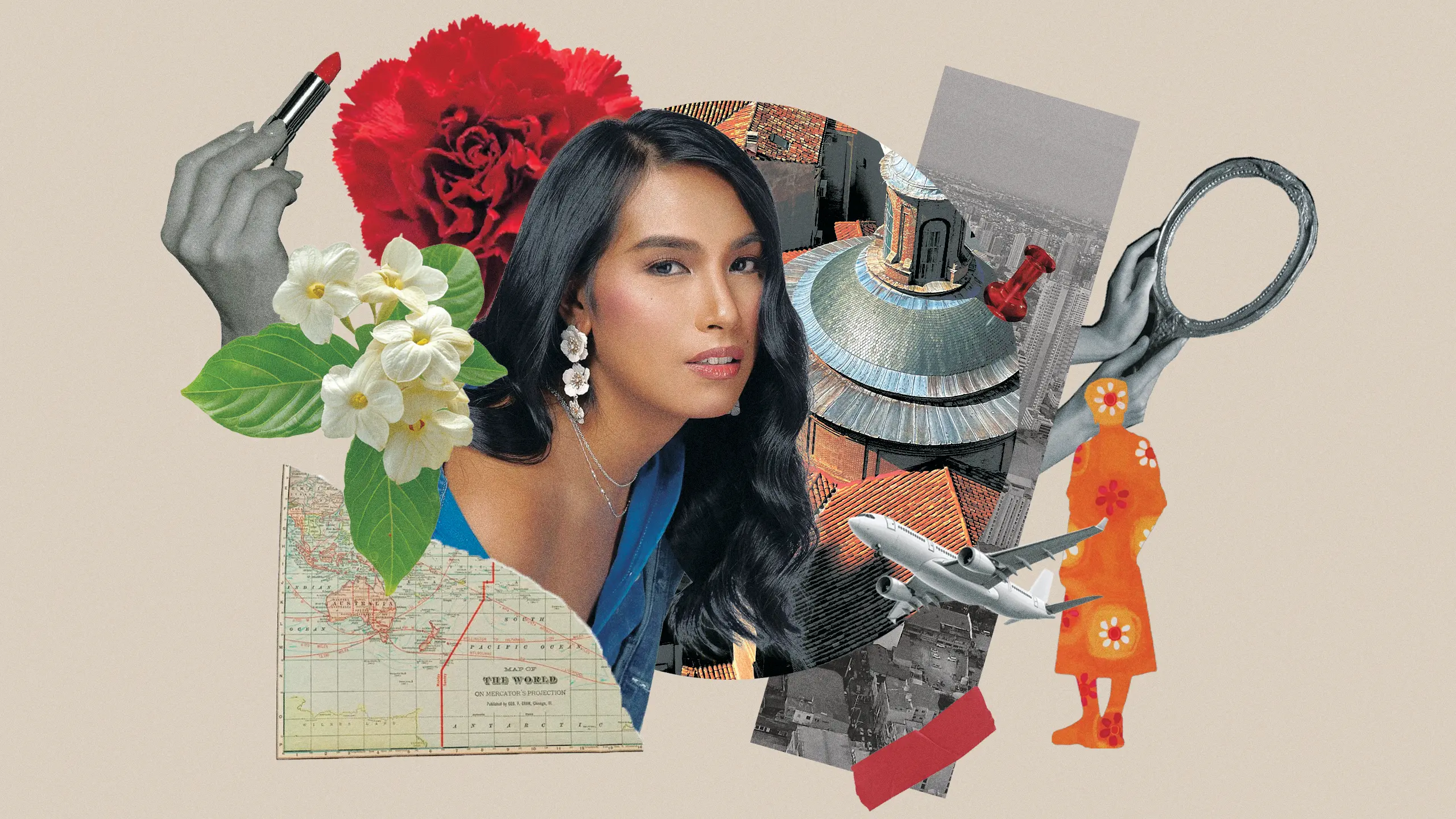
How I Took a Chance to Live More Freely as Myself in Madrid
Trans woman and Madrid transplant Miss Mela Habijan opens up about moving abroad, learning what it means to be truly seen and to belong, and why she believes leaving the Philippines doesn’t mean leaving yourself behind.


In the Philippines, I learned to love and be proud of myself as a trans woman. In Spain, this self-love has been reciprocated; this self-respect is being celebrated.
A few weeks after arriving in Madrid, I went to City Hall to register myself as a new resident with student status. After submitting my requirements, the attendant looked at me and said, “I’m sorry. But I have to write the name and the gender stated on your passport. I’m really sorry.”
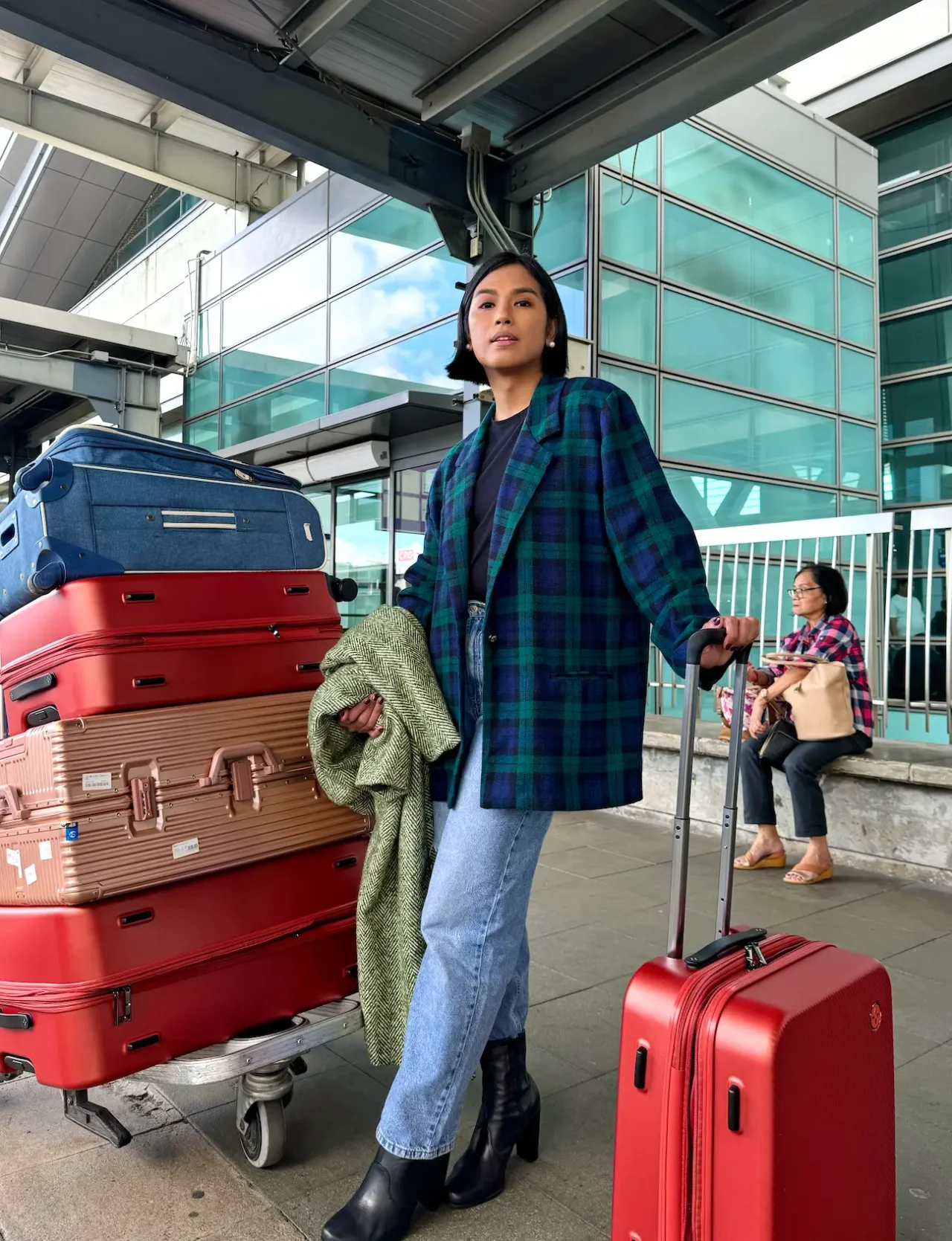
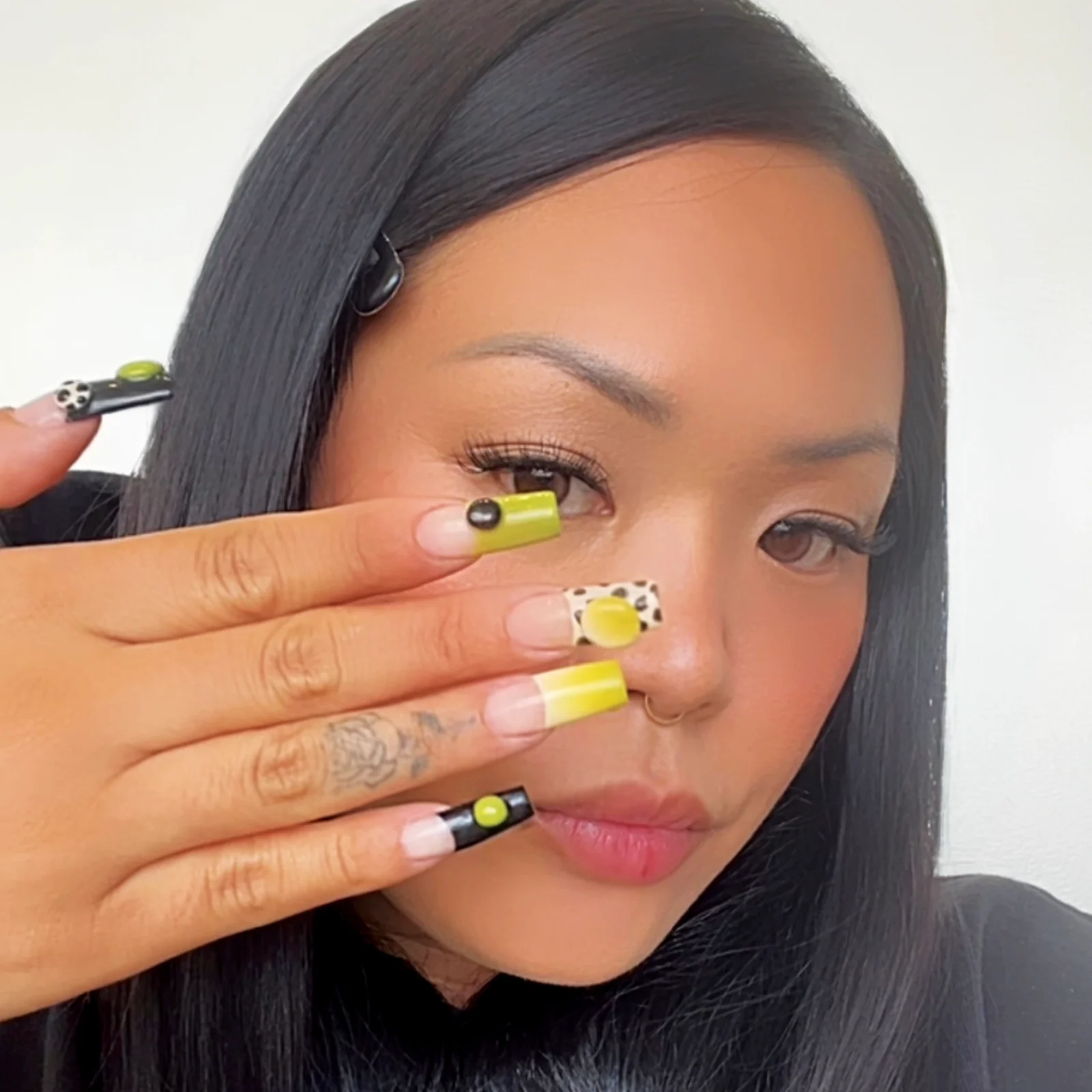
Mela before leaving Manila. Courtesy of subject.
I was stunned.
Not just by the apology itself, but by what it meant. I was not used to a government employee apologizing for writing my legal name and gender marker.
As a trans woman who grew up in the Philippines, being deadnamed and misgendered were always expected—sad realities I learned to endure. I remember getting a head to toe look and being called “sir” while applying for an account with a government bank — the kind of moment that strips you down to what your documents say you are, not who you actually are.
So I was not prepared for that moment, in a city I had just arrived in, in a culture that was seemingly familiar yet one I barely knew, in a language I was just learning.
Yet inside the walls of Madrid City Hall, I felt seen and safe. The attendant might have met me for the first time, but she understood who I was — a trans woman. And she treated me with the utmost respect and recognition.
“You don’t have to apologize, señorita. But thank you,” I replied.
I expressed my gratitude with all my heart, for in that brief exchange, she made me feel that I belonged. That moment also taught me something I had understood conceptually but never truly experienced: laws make an impactful difference.
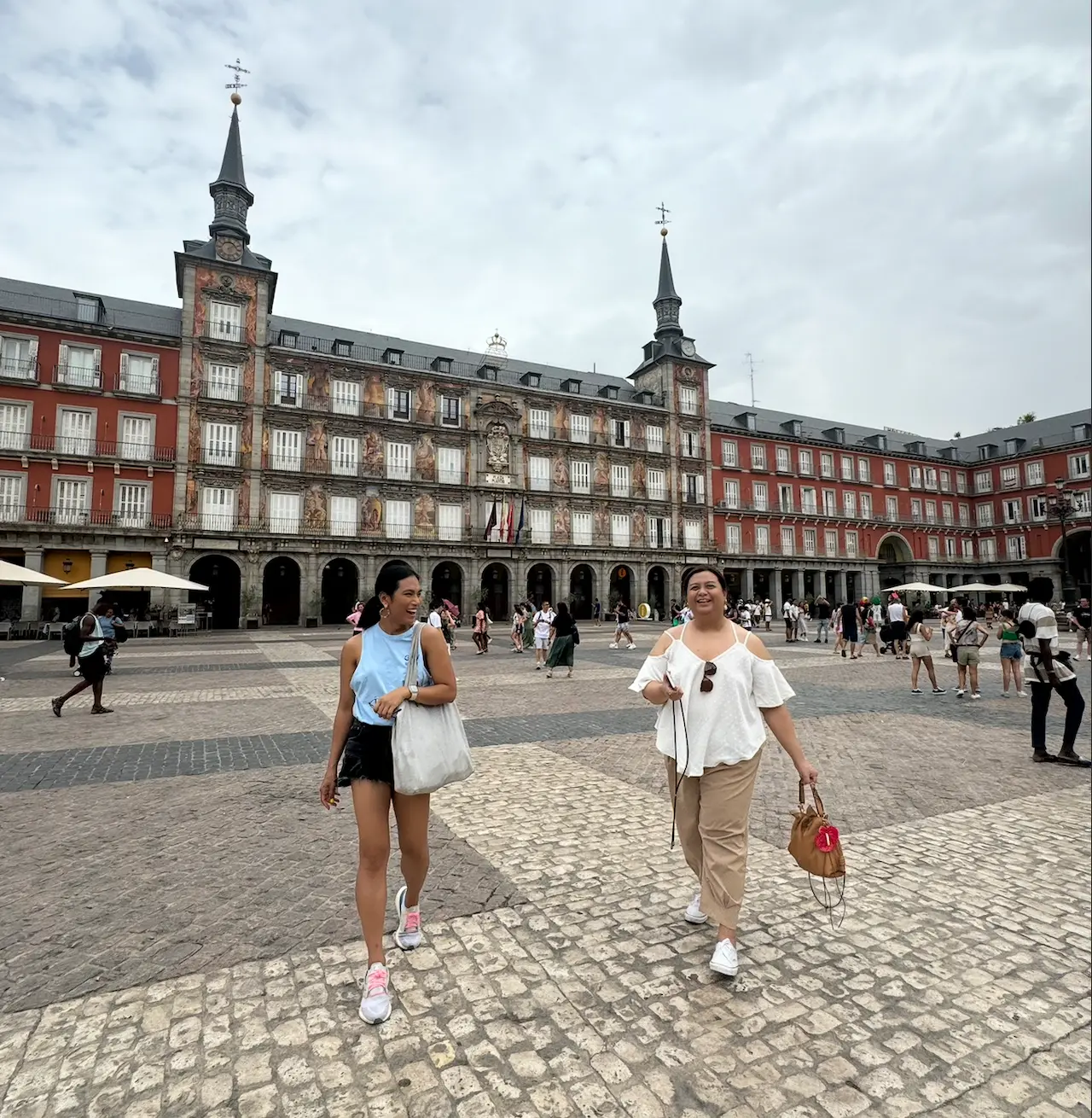
Mela at Plaza Mayor. Courtesy of subject.
How laws make an impact
Before moving to Spain, I already knew that it was one of the most progressive countries in the world with strong legal protection for LGBTQIA+ people.
It was the third country in the world to pass marriage equality. It has a comprehensive Anti-Discrimination Law that protects LGBTQIA+ people. And it has a Trans Law that allows trans people to self-identify—to legally change their name and gender marker with ease, have access to trans-specific healthcare, and enjoy the right to family and legal protection in the workplace.
But beyond knowing, being able to experience them first-hand gave me a clear, concrete picture of how existing legal frameworks shape societal treatment and understanding of a marginalized community.
Gay and lesbian couples are free to hold hands and kiss in public. Madrid Pride March is one of the largest in the world. Government-funded LGBTQIA+ organizations exist that assist queer locals and immigrants. And there is a recognized neighborhood in Madrid for queer people—the vibrant and lively Chueca.
On my end, the Spanish people I meet for the first time call me “Señorita”, “Guapa”, “Miss Mela”—with warmth, confidence, and without hesitation.
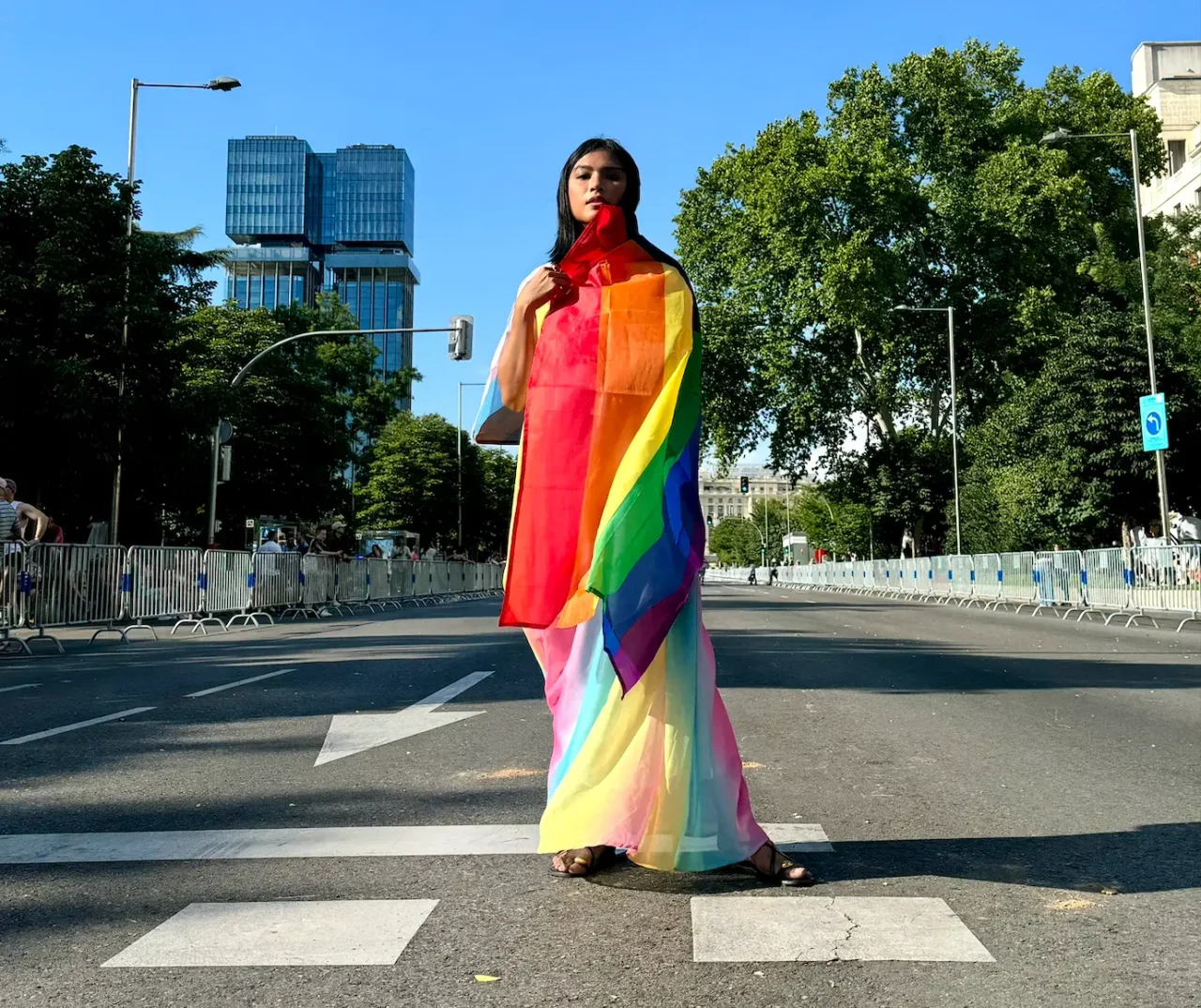
Mela at a pride celebration. Courtesy of subject.
At the municipal health center and laboratory clinics, whenever I say I’m a trans woman, they write my lived name “Mela” in the alias field—the name the staff will call me. And they tick the gender marker “mujer,” which means “woman.” Nobody makes it a moment; nobody makes it a debate.
When I was admitted to IE University, they assured me that with the Spanish laws in place, I would be addressed as “Miss Mela” and recognized as a woman. They even told me that my legal name would only appear where it was legally required.
And as I walked across the stage during my graduation ceremony, they called me by my name “Miss Mela Franco Habijan” and handed me my diploma bearing my dream legal name: Melaia Ericka Franco Habijan.
Melaia Ericka means “a brown-skinned, well-spoken, and powerful ruler who brings people together and leads them to freedom.”
In all these encounters, I couldn’t help but ask, “Can I hug you?” It’s my way of expressing gratitude for being included.
This is what legal protection looks like when it filters down from legislation into daily life. It becomes usual—a normal way of life, where no one feels alone and left on the sidelines. And for a trans woman like me, this is everything.
Inclusion is possible
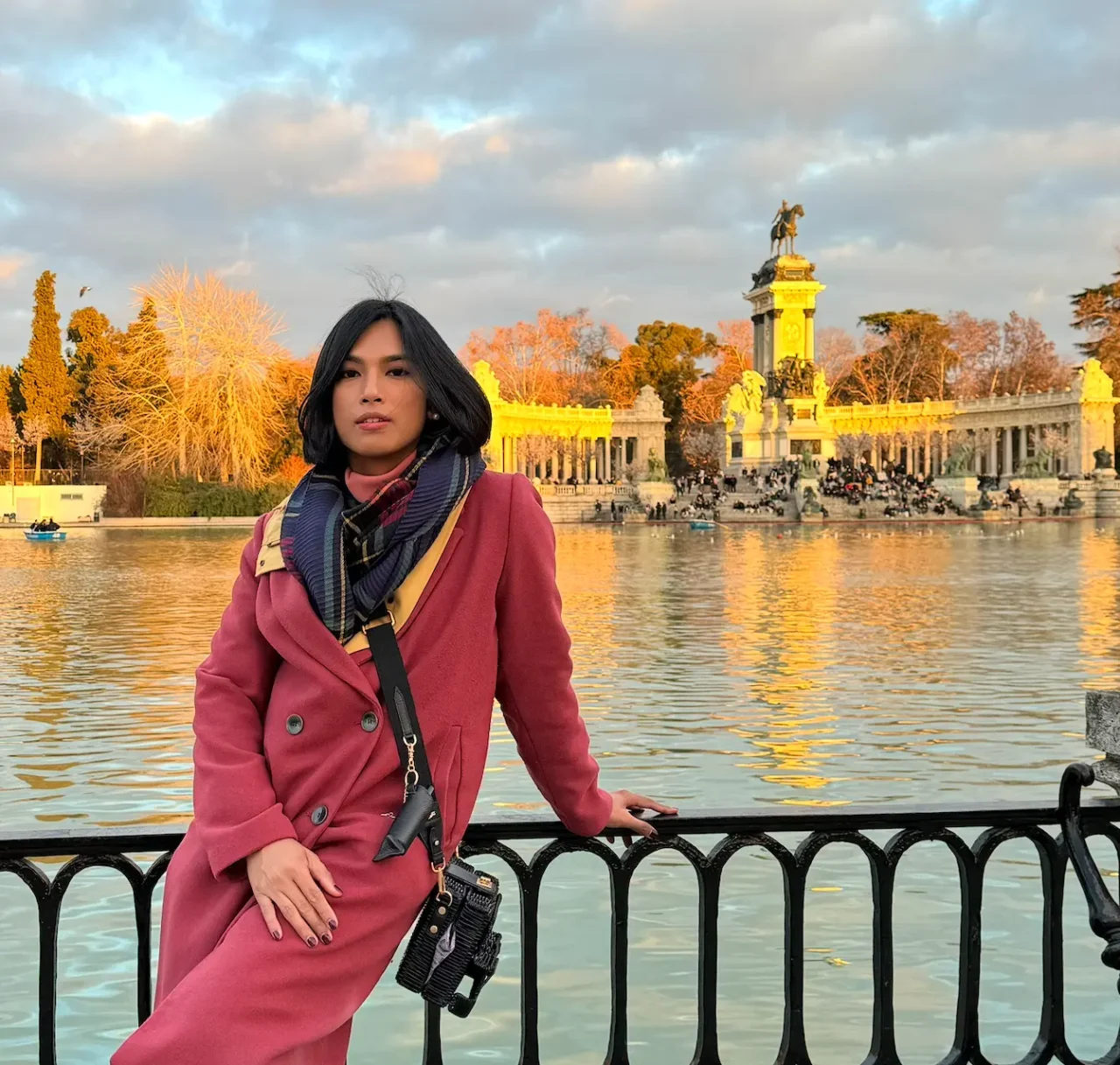
Mela at Retiro Park. Courtesy of subject.
Living in Madrid for a little over two years now, I have only been misgendered once—interestingly and ironically, by a Filipino. And that single instance made something very clear to me: culture truly influences behavior, just as much as law does.
This is precisely why I feel compelled to share my experience in Madrid—how an entire city, an entire culture, has embraced a trans woman and an immigrant like me.
Whenever I speak at DEI conferences, I underscore this: in environments where I don’t have to explain myself, and in spaces where I am valued for who I am, what I can do, and how I treat others, I soar and I thrive.
Inclusivity is not a gesture. It is not a campaign. It is the accumulation of small, ordinary moments—a title, a name on a diploma, a gender marker on a form—that tell a person, “You belong here.”
When leaving meant living
After finishing my MBA and Master’s in Creative Direction, Content, and Branding at IE University, I made a pivotal life decision: I would stay in Madrid and make it my new home.
It was not an easy choice, because it meant leaving the Philippines. I had to sacrifice by being at a distance from the people who matter most—my family and friends, the community who shaped the trans woman I am today. It meant feeling FOMO for missing milestones, ordinary days, the warmth of familiar people. And it meant walking away from a career and professional credibility I had spent years building, and starting over.
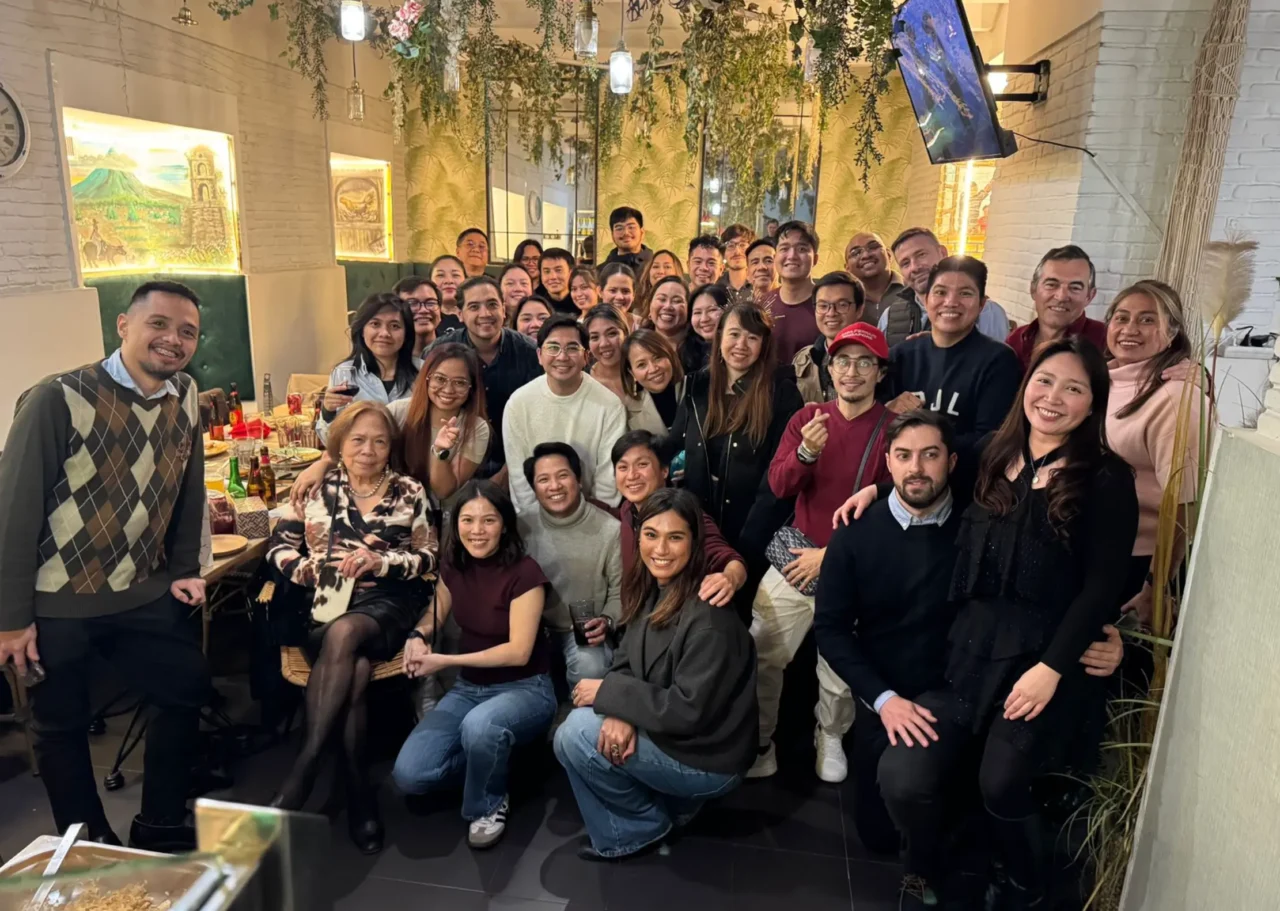
Mela’s Filipino Family in Madrid. Courtesy of subject.
But leaving also paved the way to choosing myself—to live. It meant waking up each day not worrying about my safety and sanity. It meant enjoying functional public transportation and a universal healthcare system. It meant growth through learning a new language and culture. And it meant taking the chance to one day see “Melaia Ericka Franco Habijan” on my passport—with an “M” that stands for “mujer.”
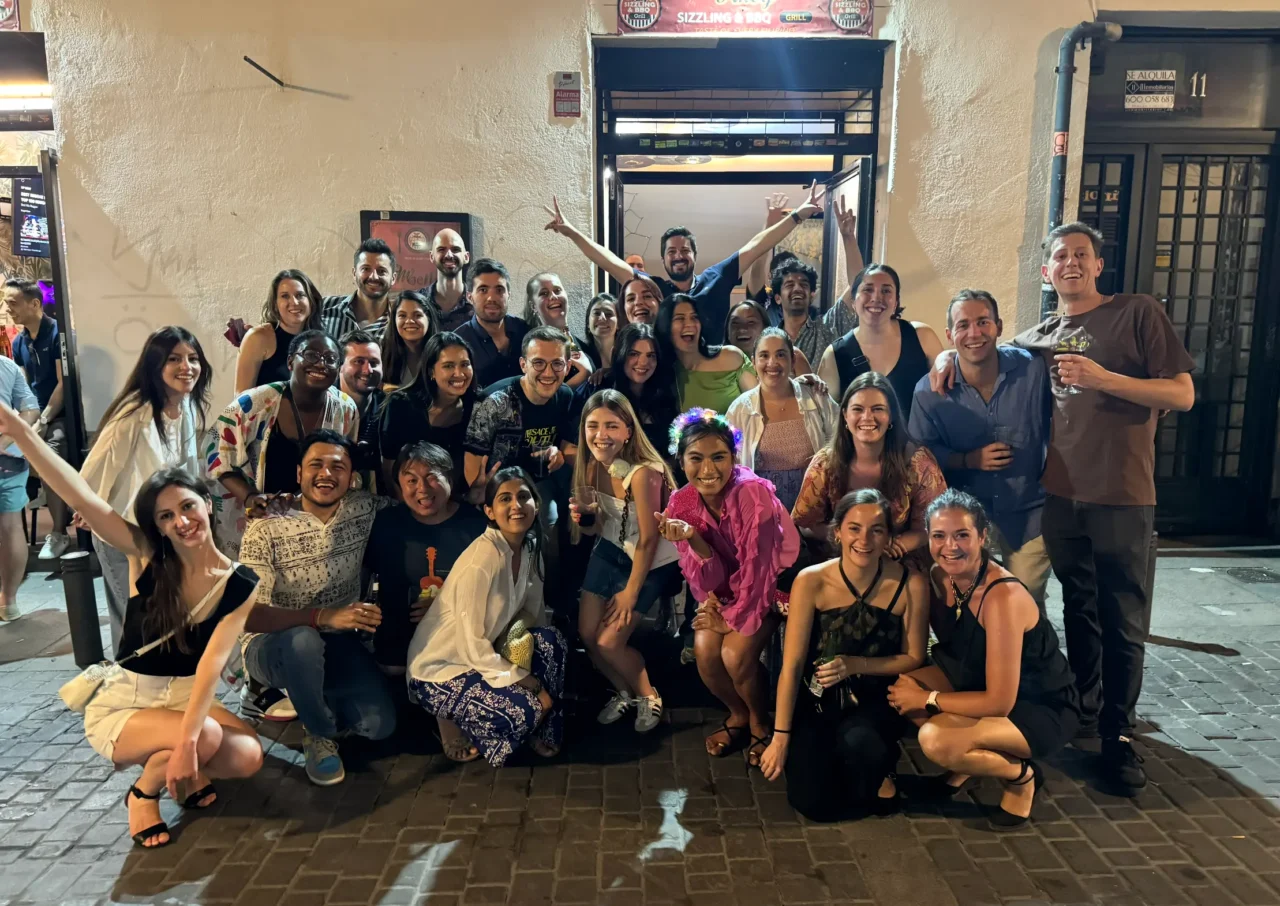
Mela celebrating her birthday with herMadrid Family. Courtesy of subject.
I proudly carry the Philippines with me
Despite the contrast, the relief, the grief, and the growth, I remain deeply, proudly Filipino.
I carry the Philippines in every room I walk into, every stage I stand on, and every story I tell. In fact, I tell people that I love the Philippines so much that I am motivated to make it proud.
I hold onto what my friend Missy Maramara told me when I asked her: “Is it selfish to leave the Philippines?” She assured me, “No! The Philippines isn’t just a piece of land that you stand on. Wherever you go, you carry the Philippines with you. You are the Philippines!”
So no, I did not leave the Philippines behind; I have brought it with me. After all, it shaped Miss Mela—a beauty queen, a reality show host, a content creator, a DEI speaker, a proud trans Filipina who had fought hard for her place in the world.
The Philippines gave me my voice, my purpose, my community, and my pride. But I get to foster these fully in my safe haven, Madrid.
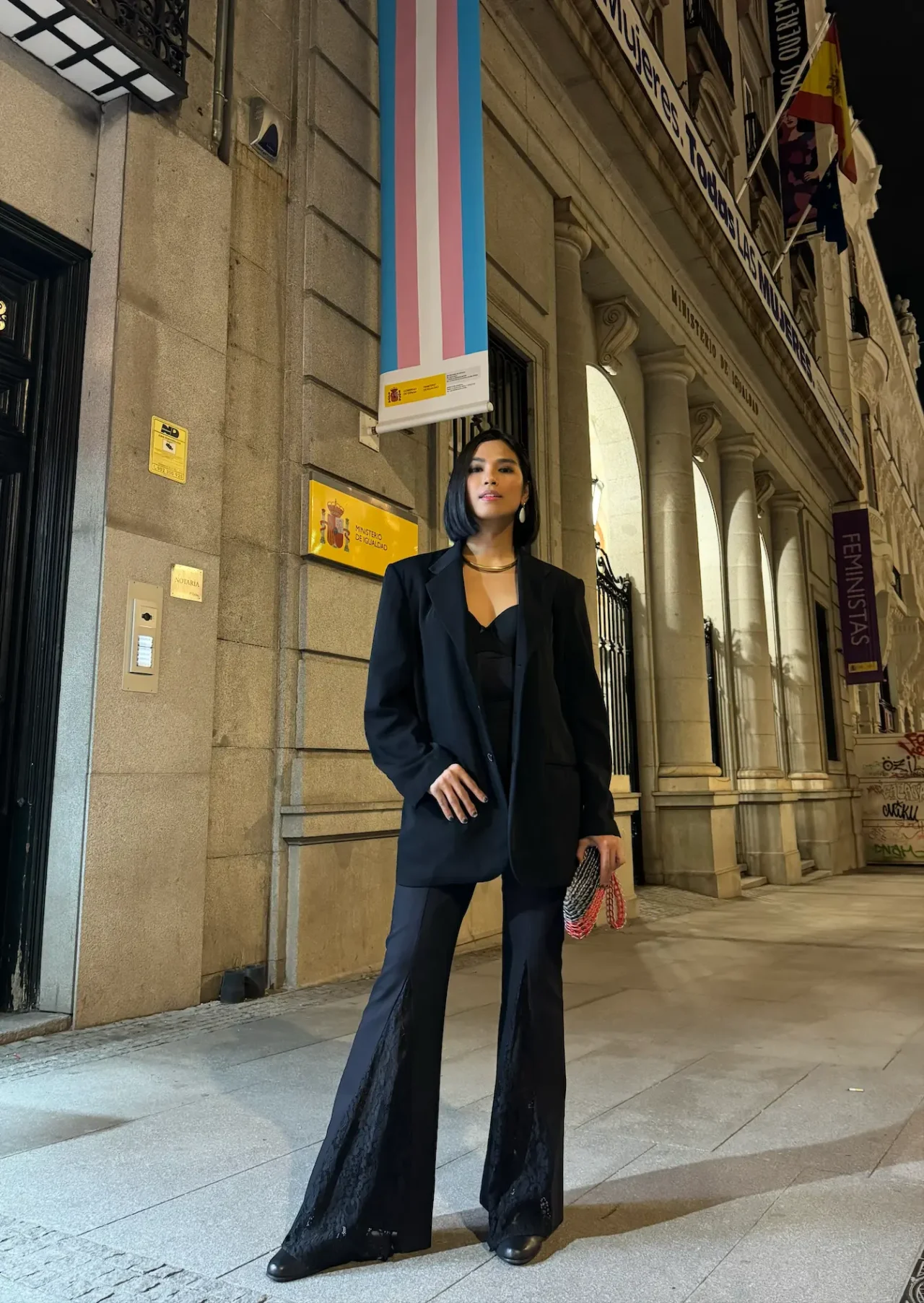
Mela at the Ministry of Equality. Courtesy of subject.
Me siento muy segura en Madrid
In my final written exam for my A1 Spanish class, I wrote: “Me encanta vivir en España porque me siento muy segura aquí. Madrid es como un cálido abrazo,” which means “I love living in Spain because I feel truly safe here. Madrid is like a warm embrace.”
It has given me peace and clarity. The laws here protect me. The culture here affirms me. The acceptance here—as a señorita at a government counter, a name called out at a graduation, a “mujer” ticked on a form, and a chance to be legally “Melaia” — have made me realize how much energy I had spent simply surviving, when all along, I deserved to be thriving.
And with this big move, I’ve learned that freedom is a decision. I choose to be fully, unapologetically, gloriously “Melaia”—in Manila, in Madrid, and wherever the world will lead me.
Frequently Asked Questions
Miss Mela Habijan is a trans Filipina beauty queen, reality show host, content creator, and DEI speaker. She relocated to Madrid after completing her MBA and Master’s in Creative Direction, Content, and Branding at IE University, where she now advocates for LGBTQIA+ inclusion and trans visibility.
Spain was the third country to pass marriage equality and has enacted a comprehensive Anti-Discrimination Law and a Trans Law allowing trans people to self-identify — legally changing their name and gender marker, accessing trans-specific healthcare, and receiving workplace and family legal protection.
Miss Mela Habijan moved to Madrid to pursue graduate studies at IE University and ultimately chose to remain permanently, citing Spain’s legal protections for trans people, the cultural acceptance she experienced daily, and the safety and sense of belonging that her life in the Philippines did not fully afford her.
Miss Mela Habijan documents a marked contrast: in the Philippines, deadnaming and misgendering by government institutions were normalized experiences. In Madrid, healthcare providers, university administration, and government offices addressed her by her lived name and correct gender marker without hesitation, reflecting the direct impact of Spain’s trans legal framework.
Miss Mela Habijan identifies proudly as Filipino and carries her Philippine identity into every professional and personal space she occupies in Madrid. She describes the Philippines as having given her her voice, purpose, community, and pride — and views her life in Spain as an extension of, not a departure from, that identity.