
Does Your Male Colleague Always Seem To Talk Over You? Here’s How Women Can Take Command of a Room
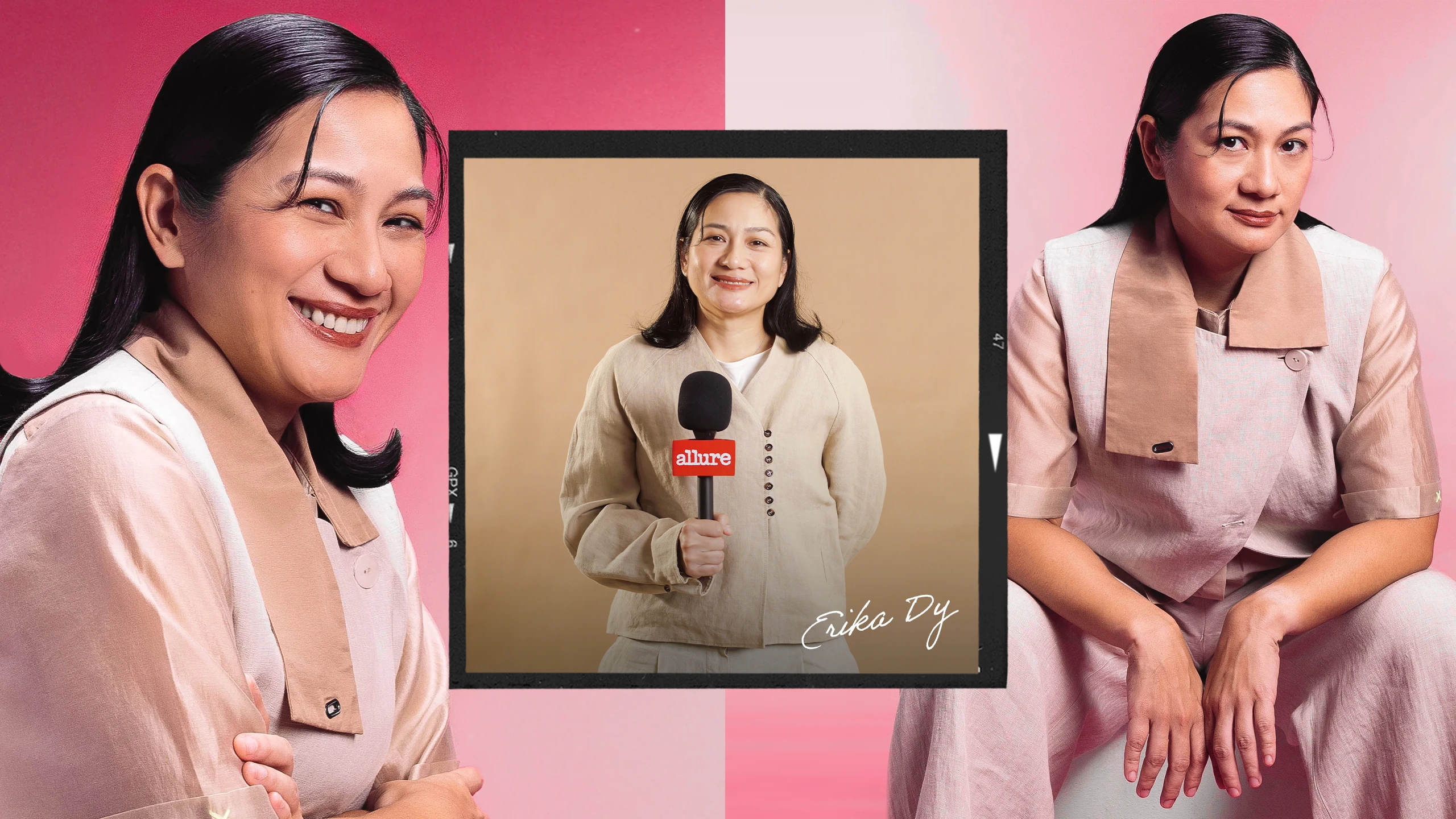
Samahang Basketbol ng Pilipinas Executive Director Erika Dy shares lessons she has learned on how women can fight for the space they rightfully deserve in male-dominated fields.


We’ve seen it, or perhaps you’ve even lived it: a male colleague talking over you in a meeting, hearing your workmate mansplain something at the pantry while you’re just trying to eat your lunch—or worse, trying to work twice as hard only to get paid less than them. Women, especially those in male-dominated fields, tend to lose their voice in the room—unable to speak up, made to feel small or insignificant.
But in the Philippines, a country where men are usually seen playing basketball in almost every street corner, the national sports association for basketball is actually led by a woman. Samahang Basketbol ng Pilipinas Executive Director Erika Dy shares her lessons on leadership and how women can fight to make their presence felt at work.
Use your uniqueness as your strength.
Dy shares that when she walks into the room, she sometimes wonders why she is the only woman there. But she quickly flips the script and turns it into motivation. “At the same time, I see it as an advantage. I tell myself that, you know, it’s more likely that they will listen to me because I’m unique in the room.”
Being the only woman in the room is something she reframes rather than resists. “The feedback that I hear is that they have an impression that I’m tough. So they tend to listen more and open their ears wider for me.” In spaces where women are often outnumbered, authority is not always given outright—it is shaped by perception. That perception becomes something she learns to work with.
Choose when to speak and when to hold back.
However, commanding the room is not something Dy has always experienced from the beginning. She has also experienced not being taken seriously. “The only time that I felt that being a woman was a handicap was when I was coaching. And I felt some of the referees would tend to abuse women who are coaches because they feel that they would argue less or complain less. And so they wouldn’t be as serious when they are officiating in your game,” she recalls.
After her coaching career, she says she now works with officials and referees and reflects on how her being reserved actually made people pay closer attention to her. Because she rarely spoke up, she found that when she did, her words carried more weight and were taken more seriously. Restraint has become its own form of authority.
Always be prepared
Confidence, she says, is built through experience and preparation. Drawing from her time as a basketball player, she recalls how lack of preparation often translated to uncertainty on the court, while consistent practice gave her the assurance to perform at her best. “I felt that for the games where I didn’t practice as much, I would not be as confident playing on the basketball court. But when I know I’m really prepared for something, then I feel like I can do anything I would want to do during that game.”
She carries this same principle into her professional life today—when she takes time to prepare for meetings or discussions, she finds it much easier to speak with clarity and confidence in the room.

Gail Geriane
Be compassionate
Now as a leader, she explains what makes people listen to her. “What has worked a lot for me was showing compassion. I think when I’m talking to even just staff members in the office, if you can show them and they actually feel that you really care and you’re authentic, then they tend to listen more,” she says.
For her, leadership extends beyond authority; it is anchored in authenticity and care, and in the ability to make people feel genuinely seen and heard.
Embrace your womanhood
Dy, who has often been perceived as tough, shares that her womanhood is something she embraces—something she also notices other women tend to suppress.
“I think we underestimate our beauty.” She reflects on how presence often begins even before a word is spoken, noting that people are naturally drawn to how someone carries themselves. She points out that when women present themselves properly, it can shape how they are perceived in the room—often drawing attention and holding it. For her, this is something women should be more conscious of, not to downplay, but to use more confidently as part of how they show up and take up space.
Don’t try to be another man
Both men and women bring their own natural strengths to the table. “Don’t try to be another man. Don’t duplicate what they’re already bringing to the table. Just be yourself,” she says.
Success in a male-dominated field comes from authenticity—leaning into one’s own strengths rather than trying to mirror those around you. It is about showing up fully as oneself, even in spaces that may not always make that easy. It’s not about fitting into the boys’ club—it is about refusing to shrink within it. In doing so, leadership becomes natural for a woman, allowing her to own the room without needing to conform to it.
Frequently Asked Questions
Erika Dy is the Executive Director of Samahang Basketbol ng Pilipinas, the national sports association governing basketball in the Philippines. She is notable for leading a male-dominated sporting institution, having previously built her career as a basketball player and coach before moving into sports administration.
According to Erika Dy, the most effective approach is to lead from personal strengths rather than replicate what male colleagues already bring. Authenticity, compassion, and preparation are the foundations she identifies — qualities that build genuine credibility rather than a performance of authority borrowed from a different leadership model.
Strategic restraint — the deliberate choice of when to speak versus when to hold back — can increase the weight and credibility of contributions when they are made. Dy notes that because she spoke infrequently in certain professional settings, her words were taken more seriously when she did choose to use them, making restraint a form of authority rather than a sign of passivity.
Dy draws directly from her experience as a basketball player: games where she was underprepared produced uncertainty, while consistent practice produced confidence. She applies the same principle to professional settings — thorough preparation before meetings or high-stakes discussions enables clearer communication and reduces the self-doubt that can silence women in rooms where they are already outnumbered.
Dy identifies compassion as a practical leadership tool — not a softening of authority, but a mechanism for building genuine trust. When staff and colleagues feel that a leader is both authentic and invested in their wellbeing, they are more receptive and attentive. For Dy, this has been one of the most consistently effective approaches in her role at SBP.