

It is no secret that beyond fancy hair serums, masks, and basically the trendy hair care products churned out online today, keeping our hair healthy means looking beyond the strands and paying closer attention to the scalp. For some, that may mean dealing with itching, flaking, or excess oiliness; for others, it may come with the more concerning challenge of hair loss. But when scalp and hair concerns persist, what medical treatments are available to address the scalp, manage hair loss, and support hair growth?
To find out, Allure Philippines spoke with Filipino board-certified dermatologists Julieta Peralta-Arambulo, MD, FPDS, DABHRS, FISHRS; Maria Julieta Arambulo-Cordero, MD, FPDS, IFMCP; and Jasmin Jamora, MD, FPDS, president of the Philippine Dermatological Society, who explain why we should not take our scalps for granted, how scalp health can affect hair, the medical treatments available to address scalp concerns and hair loss, and when it is time to seek professional help.
Medicated shampoos
“Good scalp health will decrease hair loss,” says Dr. Arambulo-Cordero. “If you treat the scalp health, then hair loss will be minimized.” She shares several scalp conditions that can contribute to hair shedding, including contact dermatitis, seborrheic dermatitis, and scalp psoriasis.
“Those with irritated scalp, that [could be] contact dermatitis,” Dr. Arambulo-Cordero explains. She adds that scalp health can also be affected by everyday products we use on our hair, which include shampoos, hair dyes, pomades, and other styling products that may contain allergens or irritants that can trigger contact dermatitis.
For mild dandruff to the more severe seborrheic dermatitis, Dr. Jamora recommends medicated shampoos. For flaky scalp caused by dandruff, she recommends to “just use mild anti-dandruff shampoo, anything that has zinc pyrithione [as an ingredient].”
Dr. Jamora’s expert advice? “Wet your hair, leave it on for five minutes, and then rinse it off. Then you can put conditioner on the tips of the hair.” For more severe symptoms, she says, “If you have full-blown seborrheic dermatitis, where your scalp is also itchy, red, flaking, you can use shampoos with or without ketoconazole.”
“If it doesn’t work for like two weeks, go see your board-certified dermatologist because you may need more treatment, like anti-inflammatories, anti-fungals, and they have to check if you’re just having seborrheic dermatitis or something else,” advises Dr. Jamora.

Pexels
Topical and oral treatments
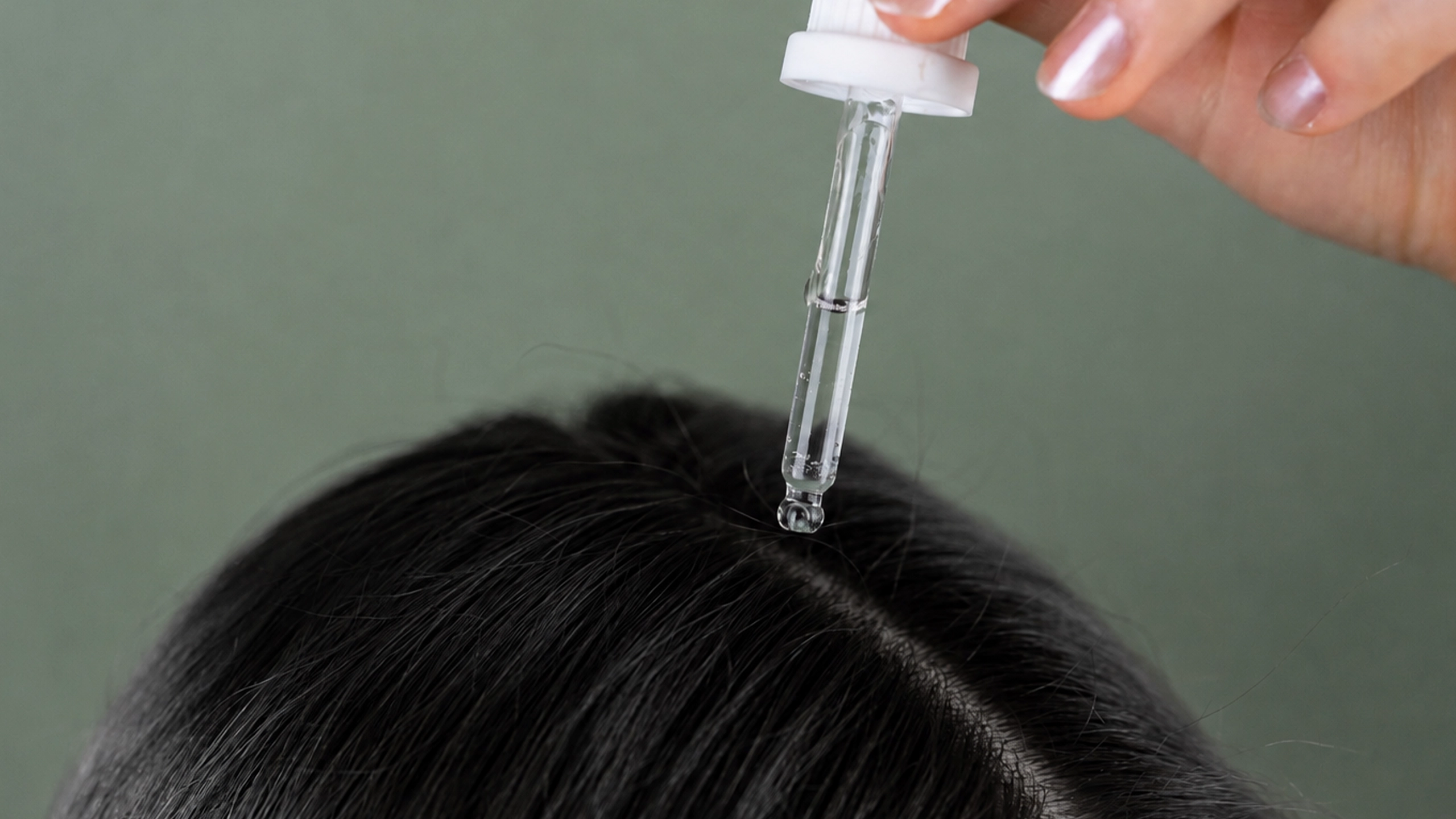
According to Dr. Arambulo, hair loss treatment also depends first on identifying the type of hair loss. “First is the diagnosis,” she says. “If it’s just a temporary hair loss, then we rejuvenate. For scalp and hair rejuvenation, the approach may involve supporting the scalp with nutrients, herbs, and probiotics to “stimulate the hair to grow thicker and delay the hair loss.”
Meanwhile, Dr. Jamora also shares several topical treatments that are being used for hair growth. “For instance, caffeine, saw palmetto, pumpkin seed, some anti-androgenic medications that can help with hair growth, especially with androgenic alopecia or the male or female pattern baldness.” She also notes that “more and more people are becoming open-minded to herbals and supplements for hair health.”
However, experts caution that the growing popularity of hair supplements should not replace professional guidance, particularly when determining whether supplementation is actually needed.
Injectable and device-based treatments
There are also procedures and devices that dermatologists may use as part of a hair-growth treatment plan. “There are a lot of different machines that are coming out,” says Dr. Jamora. “There are some [hair] tapping machines that can help infuse hair more, which use iontophoresis.” According to a published study in the National Library of Medicine “Iontophoresis is a method of non-invasive transdermal drug delivery based on the transfer of charged molecules using a low-intensity electric current.”
“There are also injectables that can be done,” Dr. Jamora continues. “People have been using microneedling with exosomes to also grow hair.” She explains, “Exosomes are extracellular vesicles, they are growth factors that signal your cells to do whatever it wants to do, [for example] to grow more hair.”
Pexels
Regenerative hair treatments
Also among the newer approaches, according to Dr. Jamora, is the autologous micrograft technology (AMT). “You take a piece of skin from your scalp, you crush it up, and then you inject it into your own scalp. It really helps with hair growth because it has a lot of growth factors, stem cell factors, and exosomes.”
But Dr. Jamora stresses the importance of discussing these treatments with a qualified medical professional. “You have to make sure that you have good quality exosomes,” she says. “Talk to your board-certified dermatologist or your licensed Filipino physician about these.”
Hair transplantation
For patients who have already lost their hair permanently, transplantation may become an option. Dr. Arambulo makes the distinction between patients who are qualified for transplantation and those who still have existing native hair. “If it’s clean already, bald already, hair transplantation is the only permanent way to restore,” she says. And for patients with existing native hair, the priority is to preserve it. “If there’s, again, an existing native hair, we [should] take care of that,” Dr. Arambulo emphasizes.
Caring for your hair also means loving your scalp
Ultimately, though, there isn’t one treatment that works for everyone. “It’s personalized,” Dr. Arambulo-Cordero says. “So of course, we do a thorough history first and documentation, laboratory tests, and also genetic testing. We treat it based on our assessment.” And caring for the scalp doesn’t end with medical treatments. “It’s also about the proper habits,” she says. “Shampooing every day with the right shampoo. Nothing too strong, nothing too harsh.”
Pexels
Dr. Jamora also supports regular shampooing because of the tropical climate. “Shampoo every day or not every day, but don’t shampoo once a week,” she says. “Because we live in the Philippines, we’re very oily. There’s a lot of dirt, pollution. We tend to grow a lot of fungus on our scalp.” If you’re afraid of dry hair, she advises putting conditioner to bring back the moisture.
Take it from these board-certified dermatologists: caring for your scalp can start with basic steps like shampooing, but if there’s anything that concerns you—including excessive itching, hair loss, or flakiness—knowing when to seek expert guidance and understanding the available treatments can make all the difference.
Frequently Asked Questions
Dermatologists note that scalp conditions like contact dermatitis, seborrheic dermatitis, and scalp psoriasis contribute to hair shedding. Treating the scalp condition itself, rather than the hair alone, is the first step in managing hair loss.
For mild dandruff, dermatologists recommend shampoos with zinc pyrithione, left on for five minutes before rinsing. For severe seborrheic dermatitis, marked by itching and flaking, ketoconazole-based shampoos are advised, with a dermatologist visit if symptoms persist.
Options include iontophoresis, a non-invasive treatment using low-intensity electric current to push hair-growth nutrients into the scalp, and microneedling with exosomes, extracellular vesicles that signal skin cells to stimulate new hair growth.
Autologous micrograft technology involves taking a small piece of the patient’s own scalp skin, processing it, and reinjecting it into thinning areas. The technique delivers growth factors and exosomes from the patient’s own tissue to stimulate hair growth.
Dermatologists recommend hair transplantation once hair loss becomes permanent and the scalp is fully bald in the affected area. Patients who still have native hair are advised to address and preserve it before considering transplantation.